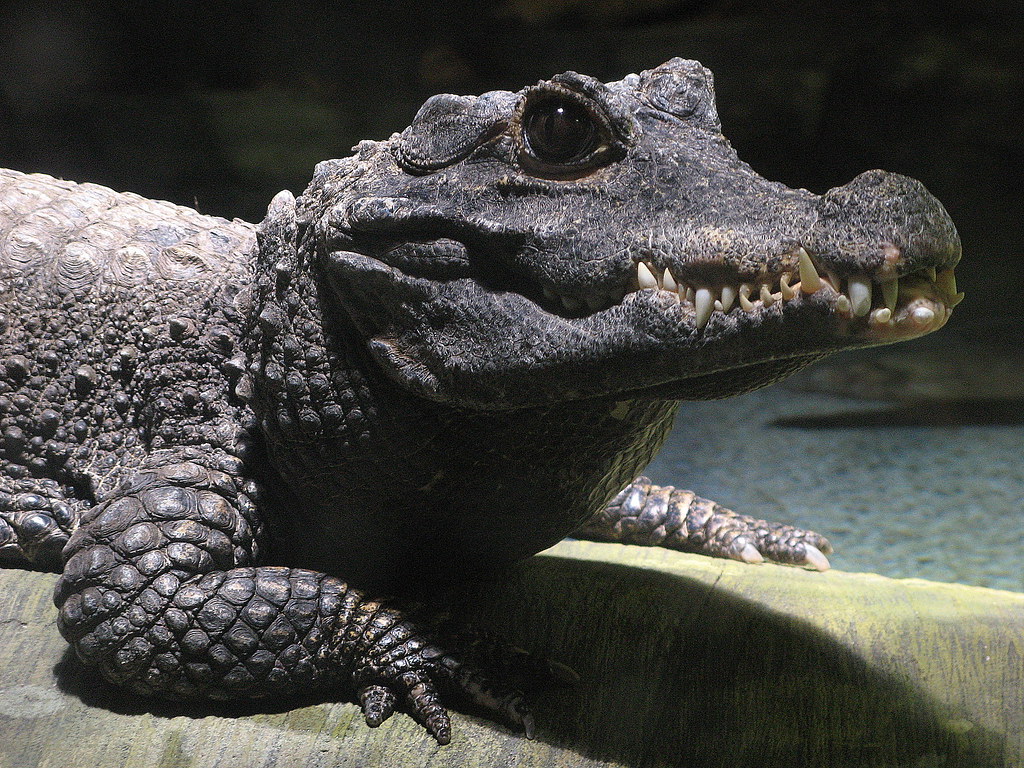
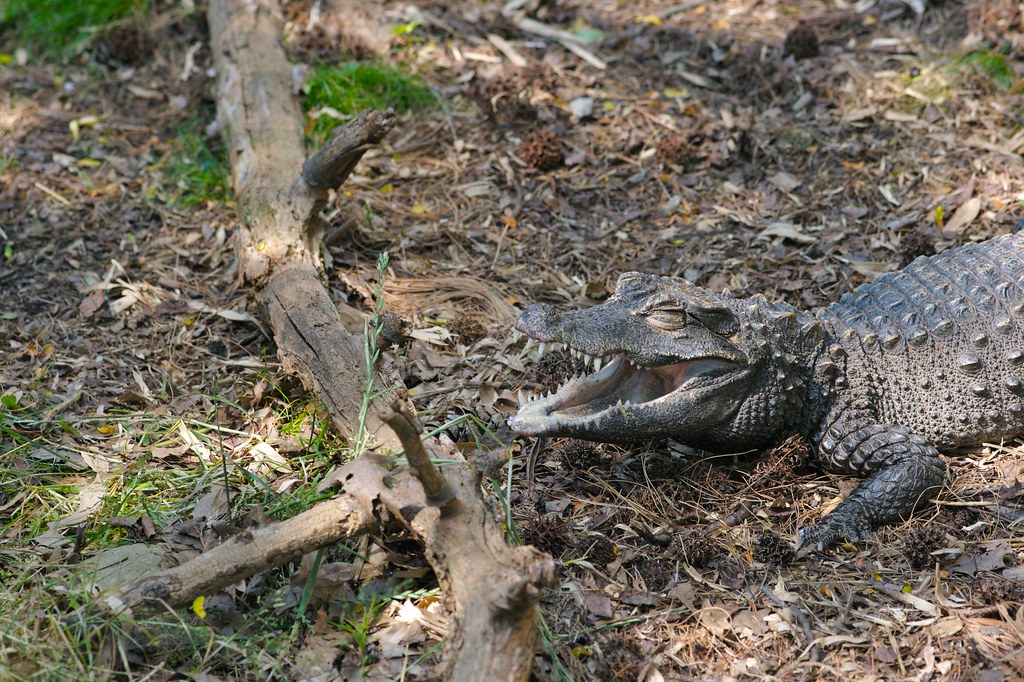
African Dwarf Crocodile

Scientific name: Osteolaemus tetraspis

Type: Reptile Main biome: Rivers and Wetlands Difficulty: Alta

Discrete reptile with nocturnal habits that frequents ponds and shaded rivers under forest cover.

Quick facts

  • Approximate size1.3–1.9 m
  • Average weight18–32 kg
  • Life expectancy40–60 years (estimated)
  • ActivityMainly nocturnal
African Dwarf Crocodile

Basic information

  • 🏡Habitat: inhabits slow rivers, swamps, and forested ponds in the rainforests of West and Central Africa.
  • 🍏Diet: feeds on fish, crustaceans, amphibians, and small vertebrates that it captures in the water or on the bank.
  • 👫Sexual dimorphism: males usually reach larger size and have more robust heads than females.
  • 🐾Predators: in juvenile stages, they are prey to birds, large fish, and other crocodilians; in adults, the main threat is humans.

Life in the wild

How this species lives in its natural environment, with the climate, shelters and resources it needs.

Species overview

The African dwarf crocodile is the smallest of the African crocodilians, adapted to forested areas and shaded wetlands.

Natural habitat

It is found in slow rivers, swamps, and ponds within tropical forests, using burrows on the banks and dense vegetation as shelter.

Behavior

It is mainly nocturnal and discreet. During the day, it usually remains hidden in the water or in cavities, emerging at dusk to hunt.

Special features

Its relatively small size allows it to use smaller spaces than other crocodiles, although it maintains the typical strength and structure of the group.

Conservation and threats

Hunting for its meat and skin, along with the loss of forest wetlands, threatens the species in several regions. Protecting swamps and riparian forests is key.

Curiosities

Striking details about this species that show its biology and ecology in a different way.

  • 🌍It is smaller than other African crocodiles, but is still a formidable predator.
  • It spends much of the day hidden in water or in burrows along the bank.
  • 🔎It regulates populations of fish and aquatic invertebrates in the wetlands where it lives.
  • 🧠Hunting and wetland destruction have reduced many of its natural populations.

Welfare profile

Aspects to consider if this species is kept in captivity in specialized centers.

Enclosures and spaceHigh

Needs large semi-aquatic enclosures with a generous proportion of water and terrestrial areas for resting and thermoregulation.

Light, temperature, and environmentHigh

Water quality and the ability to hide are essential to reduce stress. Overly exposed enclosures generate fearful or aggressive behaviors.

Handling and stressHigh

Direct handling is dangerous for both the animal and people; it requires trained staff.

African Dwarf Crocodile in captivity

General information aimed at professional facilities and authorized centers.

⚠️ The capture and trade of reptiles like this species are regulated in many countries. It is essential to verify the legal origin of animals and prioritize responsible breeding programs and habitat conservation.

Suitable enclosures

Enclosures include deep pools, gentle exit ramps, and dry resting areas where it can bask under heat lamps.

Feeding in responsible centers

Its captive diet consists of fish, aquatic invertebrates, and other animal-origin foods, offered in a varied and controlled manner.

Handling and welfare

Veterinary interventions require specialized physical restraint and often sedation, so they must be carefully planned.

Ethical message

From an ethical standpoint, its maintenance is mainly justified in conservation, education, or rescue programs.

Imagen ampliada