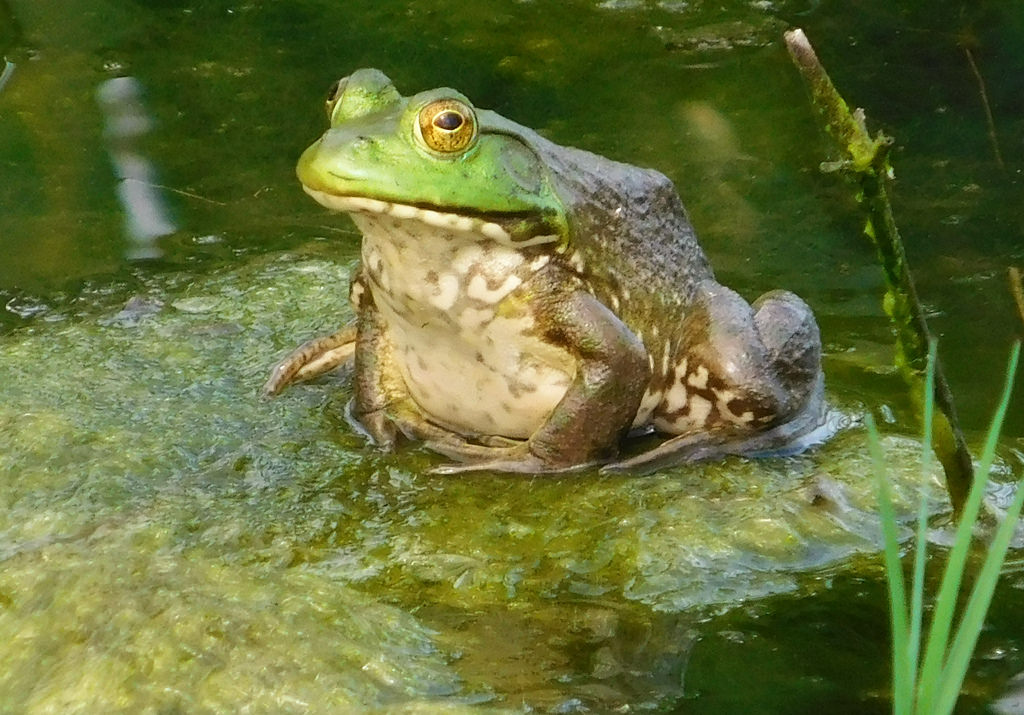
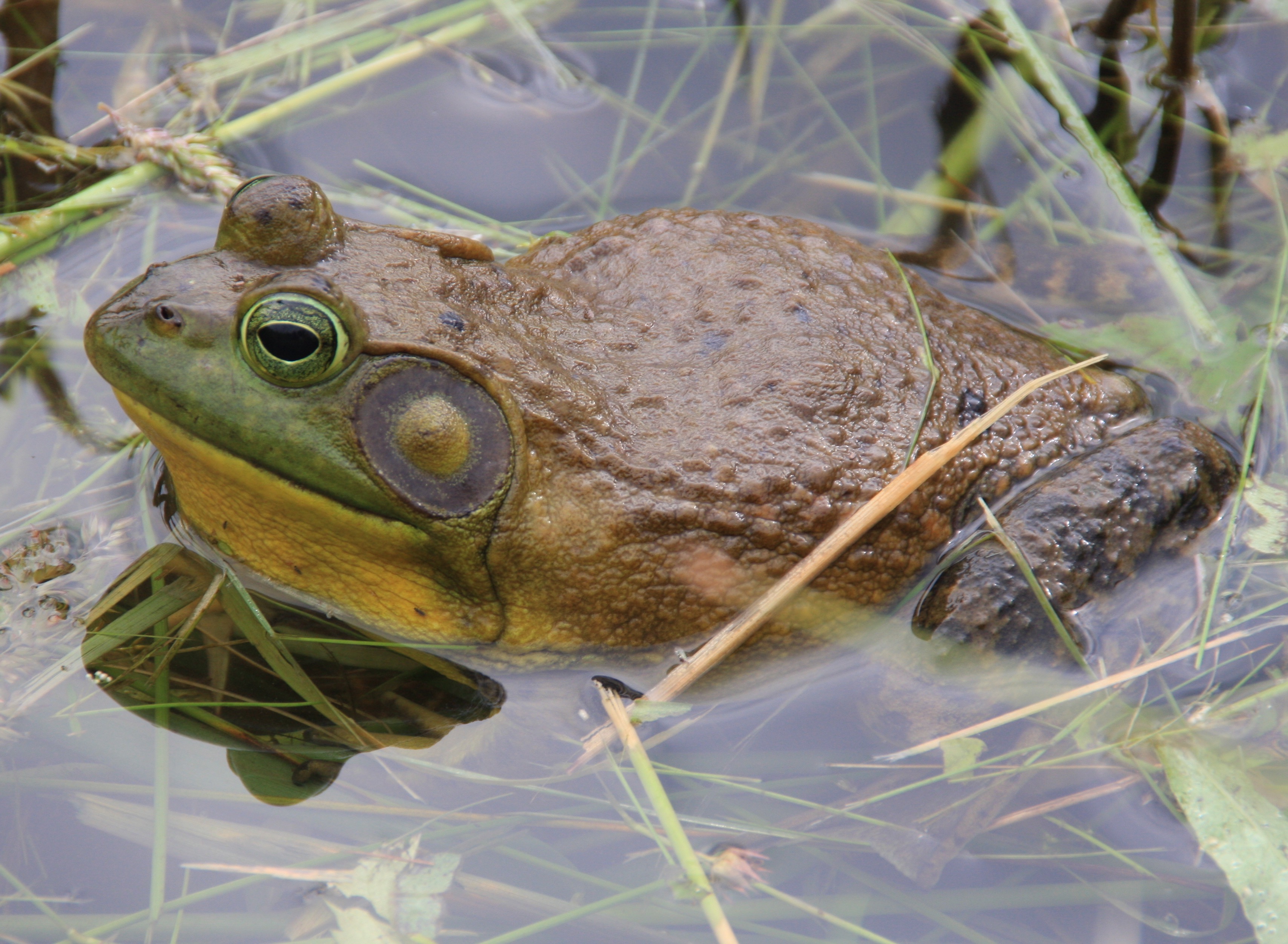
American Bullfrog

Scientific name: Lithobates catesbeianus

Type: Amphibian Main biome: Rivers and Wetlands Difficulty: Media

Large aquatic frog with a powerful voice, native to North America but introduced in many countries.

Quick facts

  • Approximate size15–20 cm
  • Average weight300–800 g
  • Life expectancy8–10 years
  • ActivityNocturnal / crepuscular
American Bullfrog
American Bullfrog

Basic information

  • 🏡Home: lakes, ponds, marshes and slow-flowing rivers with abundant aquatic vegetation.
  • 🍏Food: invertebrates, small fish, other amphibians and even small vertebrates if it can swallow them.
  • 👫Sexual dimorphism: males usually have eardrums larger than the eye and a powerful call during breeding season.
  • 🐾Predators: large aquatic birds, snakes, carnivorous mammals; tadpoles are prey to fish and other amphibians.

Life in the wild

What this species is like in its natural environment, with the climate, shelters and resources it needs.

Species overview

The American bullfrog is a robust amphibian that has gone from being a native species to invasive in many ecosystems.

Natural habitat

Needs permanent water bodies with gently sloping banks, vegetation and nearby shelters.

Behavior

Males establish calling territories in spring and may show aggressive behaviors against other males.

Special traits

Its large size and voracity allow it to occupy a very broad niche as an opportunistic predator.

Conservation and threats

In its native range it faces similar threats to other amphibians, but where invasive it poses a conservation problem for other species.

Curiosities

Striking details about this species that help better understand its biology and role in ecosystems.

  • 🌧️Its name comes from the deep sound of its vocalizations, similar to a distant mooing.
  • Has been introduced in many countries, where it can become invasive and displace local species.
  • 🔎Its tadpoles can take several years to complete metamorphosis in cold climates.
  • 🧪Bred for human consumption in some regions.

Welfare profile

Summary of the most critical points if this species is kept in captivity at specialized centers.

Facilities and spaceHigh

In captivity requires large water volumes and spacious terrestrial areas, according to its size.

Water, light and microclimateHigh

Water quality is crucial: accumulates waste quickly due to its metabolism and size.

Handling and stressMedium

Irresponsible breeding and release in places where it is not native should be avoided.

American Bullfrog in captivity

General information intended for professional facilities and educational projects. Not intended to encourage capture or improvised keeping of wild amphibians.

⚠️ Amphibians are particularly vulnerable to pollution, emerging diseases and improper handling. Before keeping species like this, it is essential to review local regulations and seek qualified advice.

Suitable facilities

Maintenance in centers should be accompanied by clear messages about invasive species and responsibility.

Feeding in responsible centers

  • Diet includes large invertebrates and occasionally small vertebrates or quality dead prey.
  • Crickets, roaches, small fish.
  • Portion control to avoid obesity.

Handling and welfare

Enclosures must completely prevent any escape to the natural environment.

Ethical message

It is preferable to prioritize native amphibians in educational projects, unless the problem of biological invasions is emphasized.

Imagen ampliada