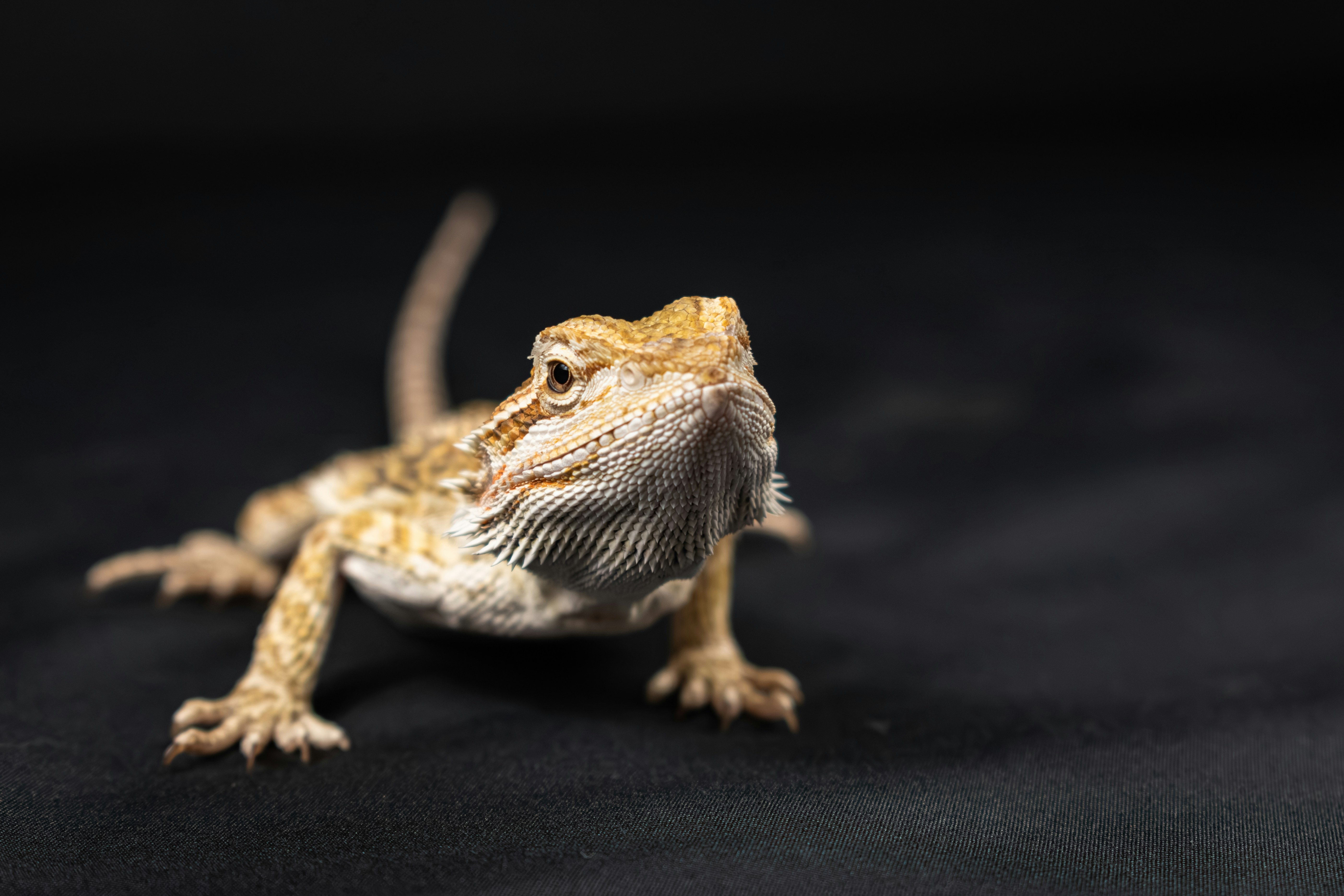
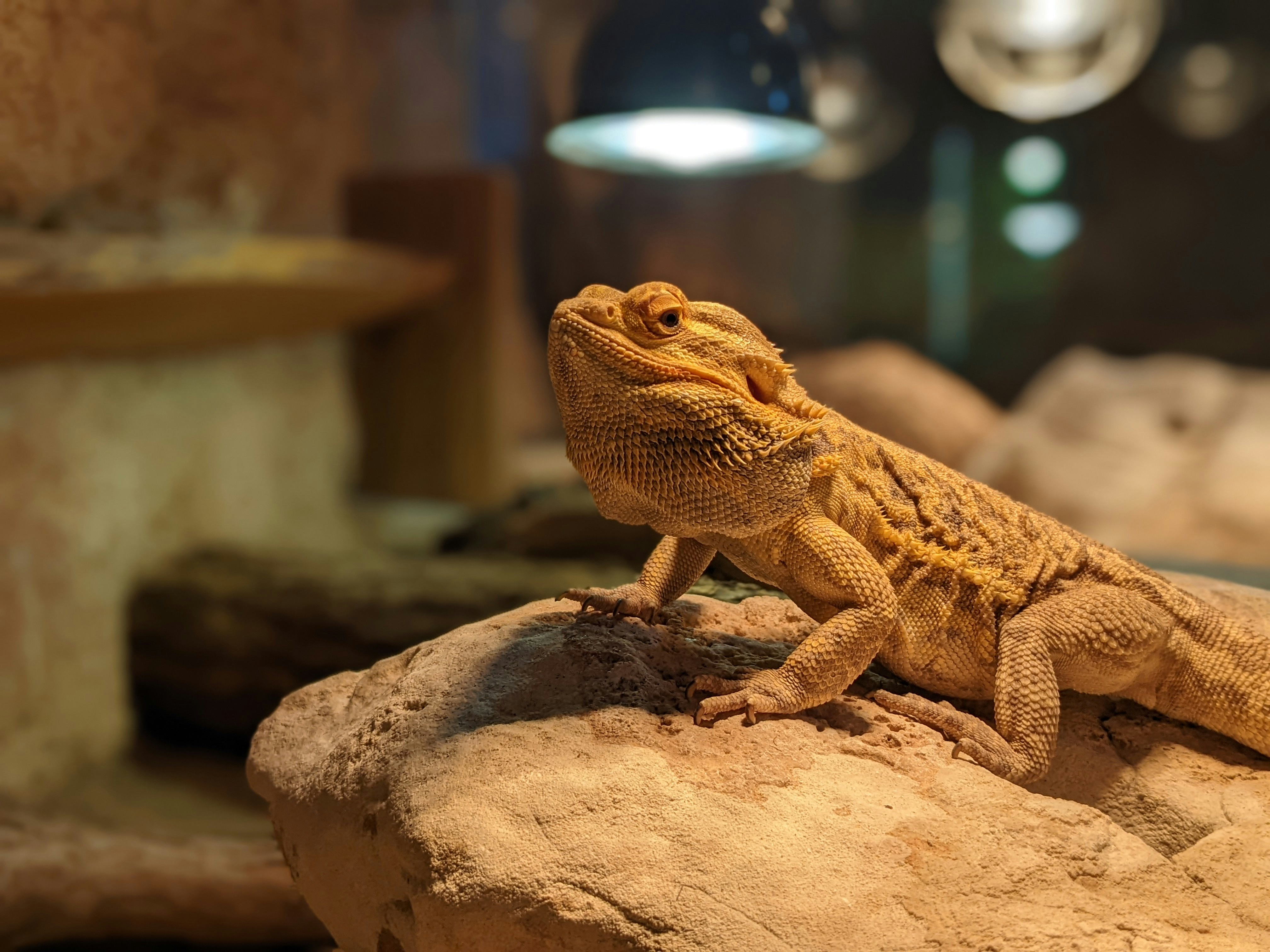
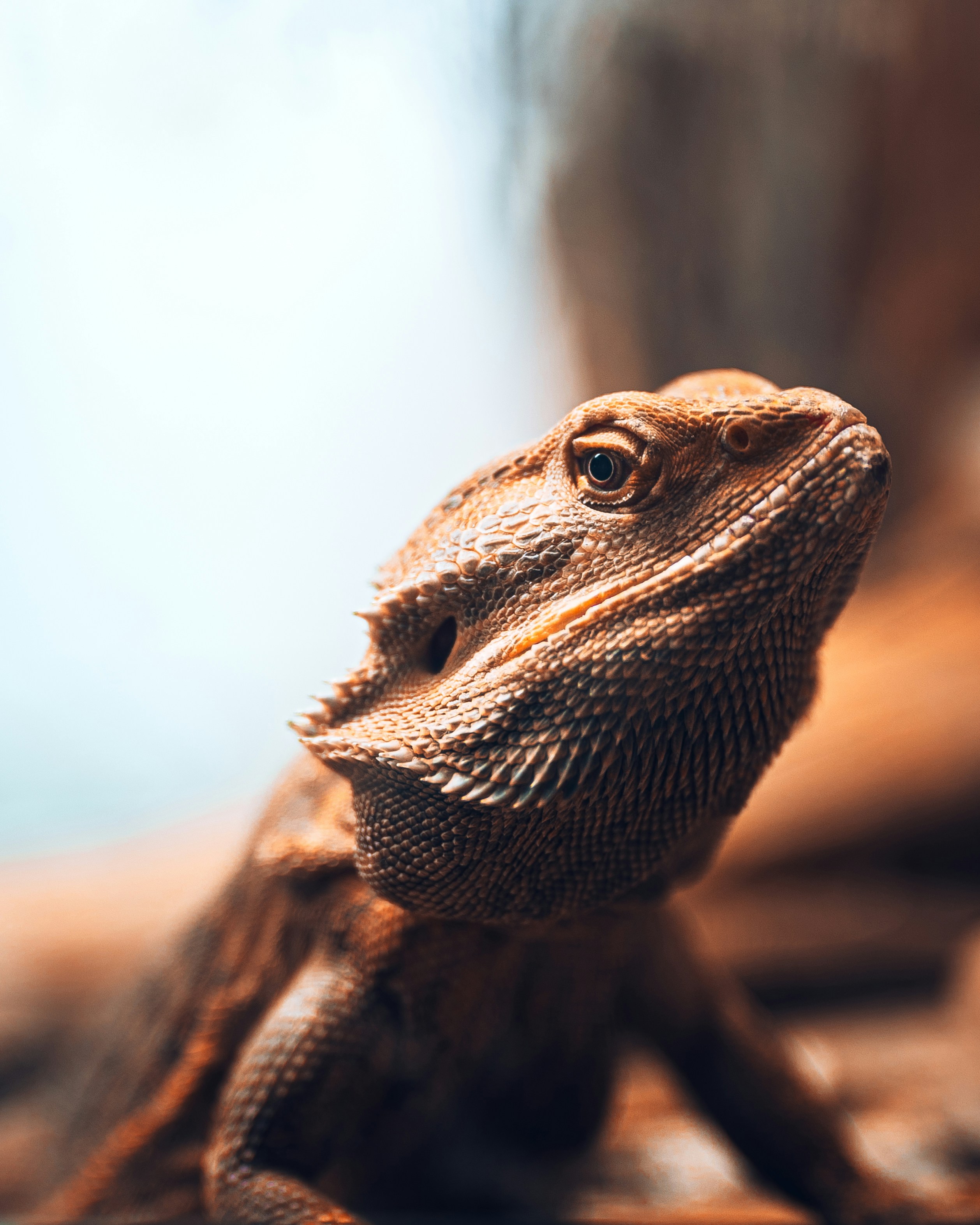
⚠️ Although it is one of the most common reptiles in captivity, it remains a wild animal. It is essential to research well before acquiring one and avoid impulse purchases.
Suitable terrarium
Spacious horizontal terrariums with intense UVB lighting, localized heat spots, appropriate substrate, and shelters. The recommended minimum space is important.
Feeding
Varied omnivorous diet: insects, vegetables, flowers, and occasional fruits. Supplementation with calcium and vitamins is essential, especially for juveniles.
Health and checkups
It is important to monitor weight, shed quality, and behavior. Metabolic problems are common if adequate conditions are not maintained.
Responsibility
Responsible breeding and sales with proper information are essential. Always prioritize ethical breeders and responsible adoptions.
This information has an educational purpose and does not replace the advice of specialized professionals or consultation of current wildlife and animal welfare legislation.
← Back to animal guide