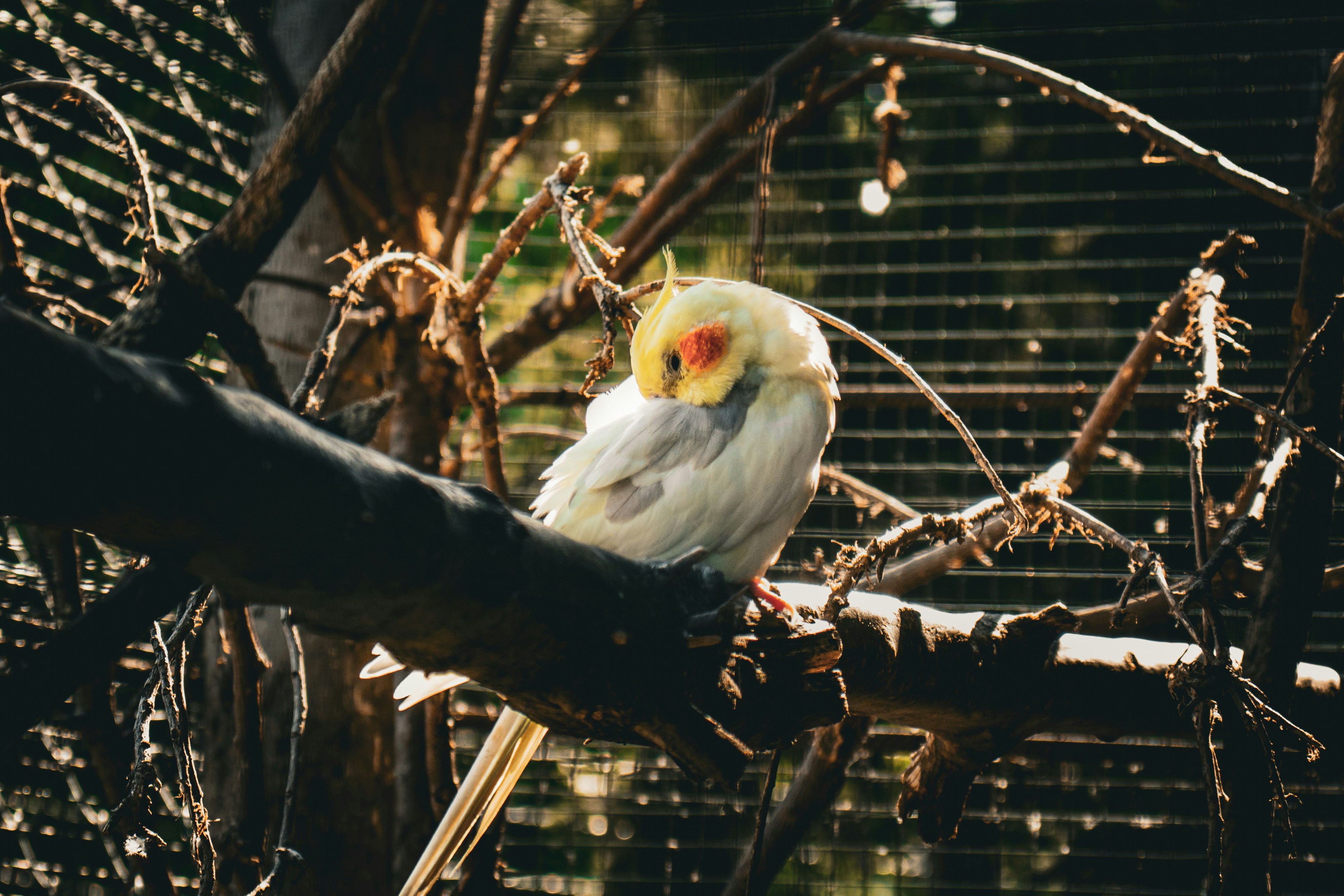
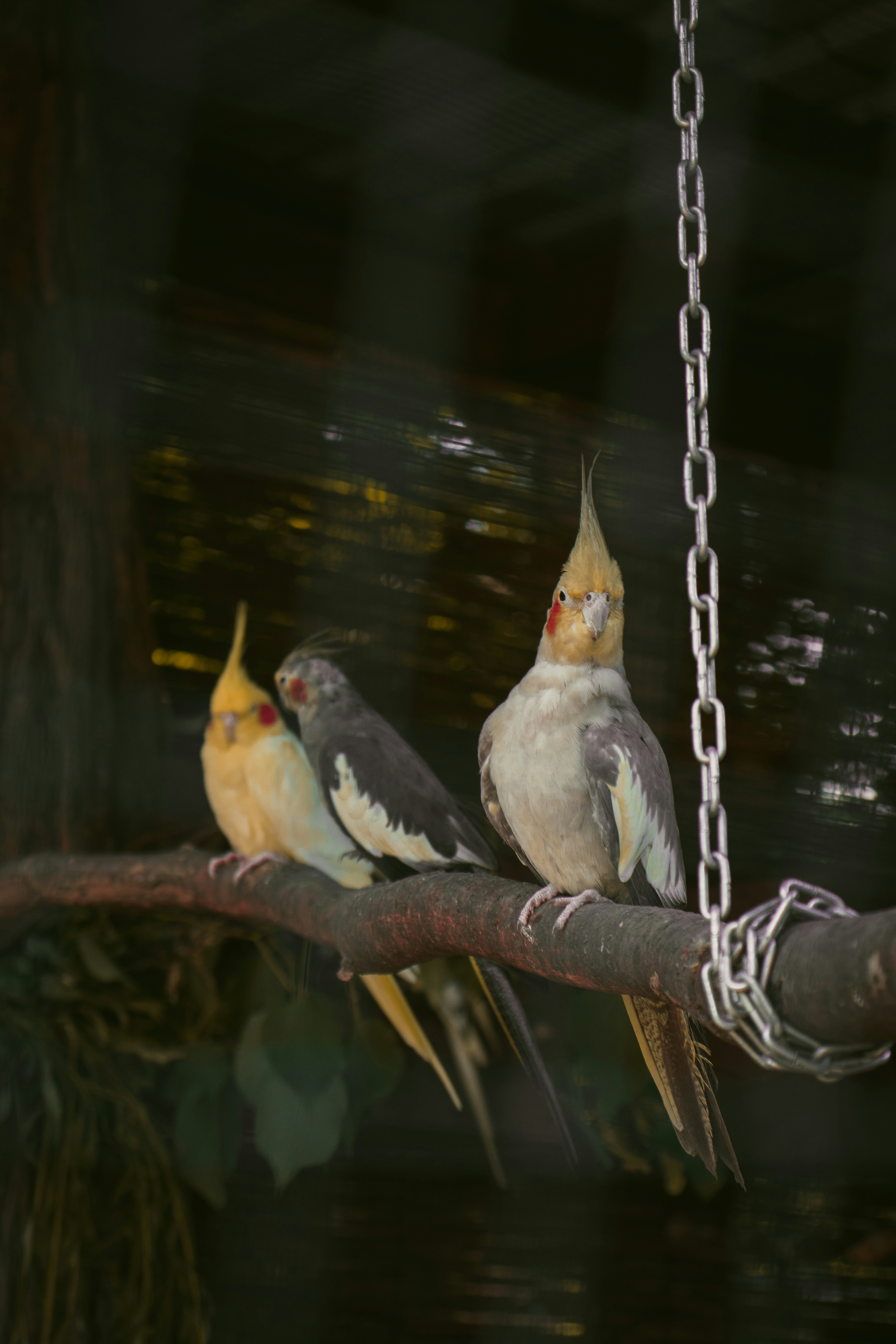
Cockatiel

Scientific name: Nymphicus hollandicus

Type: Bird Main biome: Desert Difficulty: Media

Gregarious and curious bird that travels in flocks searching for seeds and water in open landscapes.

Quick facts

  • Approximate wingspan 30–35 cm
  • Average weight 80–120 g
  • Life expectancy 10–15 years (responsible captivity)
  • Activity Diurnal, very active and vocal
Cockatiel
Cockatiel

Basic information

  • 🏡 Home: inhabits semi-arid zones, open fields and savannas with scattered trees, often near water sources.
  • 🍏 Food: feeds mainly on seeds and shoots, supplemented with some green vegetation and small invertebrates.
  • 👫 Sexual dimorphism: in many mutations males show more yellow and intensely colored faces, while females maintain barred patterns on the tail.
  • 🐾 Predators: raptors, foxes and cats; in agricultural areas also suffers vehicle strikes.

Life in the wild

What Cockatiel is like in its natural environment, with the climate, shelters and resources it needs.

Species overview

The cockatiel is a small parrot adapted to open Australian landscapes, where it moves in flocks searching for food and water.

Natural habitat

Frequents semi-arid zones, farmland and savannas with scattered trees, using high branches to rest and survey the surroundings.

Behavior

Very social and uses a wide range of vocalizations. In the wild travels great daily distances to find food and water points.

Special traits

Its expressive crest and ability to learn sounds have made it very popular, but it requires mental stimulation and companionship.

Conservation and threats

Currently considered common, although habitat degradation and climate change may alter water and food availability.

Curiosities

Striking details about Cockatiel that show its biology and ecology in a different way.

  • 🌍 One of the most common companion birds, but still an animal with complex needs.
  • Its mobile crest reflects its mood: relaxed, alert or scared.
  • 🔎 Uses vocalizations and whistles to communicate with both conspecifics and people.
  • 🧠 Needs lots of flight time or spacious enclosures to express normal behavior.

Perfil de bienestar

Aspects to consider if Cockatiel is kept in captivity at specialized centers.

Instalaciones y espacio Medium

In captivity needs enclosures much larger than typically offered as standard cages, or daily access to supervised flight.

Luz, temperatura y ambiente Medium

Requires social companionship, enrichment and a controlled seed diet supplemented with vegetables and other healthy foods.

Manejo y estrés Medium

Tolerates gentle handling well, but excessive manipulation or lack of rest can cause stress and behavioral problems.

Cockatiel in captivity

General information aimed at professional facilities and authorized centers. Not intended to promote private keeping of wildlife without proper training and permits.

⚠️ The capture and trade of birds like this species are regulated in many countries. It is essential to verify the legal origin of animals and prioritize responsible breeding programs and habitat conservation.

Instalaciones adecuadas

In responsible centers kept in large aviaries or adapted rooms, avoiding prolonged isolation in small cages.

Alimentación en centros responsables

Diet based on quality seed mixes, specific pellets and fresh vegetables, reducing fats and treats.

Manejo y bienestar

Handling should respect their sleep rhythms and offer predictable routines, with opportunities for interaction but also tranquility.

Mensaje ético

Important to convey that, although common, it is not an "easy" pet and requires long-term commitment.

Imagen ampliada