Discus Fish

Scientific name: Symphysodon spp.

Type: Fish Main biome: Rivers and Wetlands Difficulty: Alta

Fish from warm, soft and very clean waters, considered demanding in terms of water quality and care.

Quick facts

  • Approximate size15–20 cm
  • Average weight150–250 g
  • Life expectancy10–15 years (captivity)
  • ActivityDiurnal
Discus Fish
Discus Fish
Discus Fish

Basic information

  • 🏡Habitat: slow, warm, and very clean waters of the Amazon basin, often near roots and submerged logs.
  • 🍏Diet: small invertebrates, larvae, algae, and high-quality prepared foods.
  • 👫Sexual dimorphism: very subtle to the naked eye; better detected by reproductive behavior.
  • 🐾Predators: larger fish, birds, and aquatic reptiles; fry depend heavily on parental care.

Life in the wild

How this species lives in its natural environment, with the waters, shelters and resources it needs.

Species overview

The discus fish is one of the most emblematic cichlids of the Amazon and high-level aquaristics.

Natural habitat

In nature it prefers deep waters with gentle movement, low light, and constantly high temperatures.

Behavior

It forms loose groups and can show hierarchies; during breeding pairs defend territories.

Special features

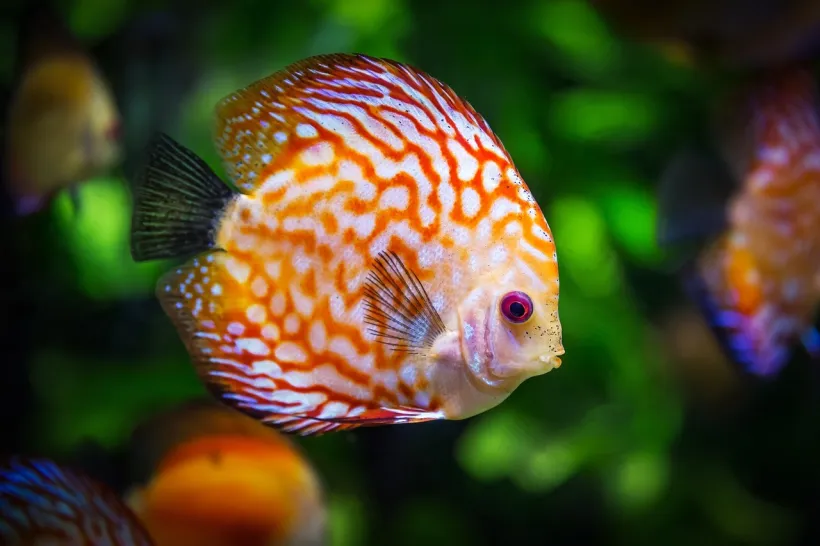
Its round shape and parental care behavior make it unique among many ornamental fish.

Conservation and threats

Habitat loss and excessive capture can affect local populations; part of the trade already comes from captive breeding.

Curiosities

Striking details about this species that help better understand its biology and role in aquatic ecosystems.

  • 🌊Parents secrete a nutritious mucus on their skin from which fry feed.
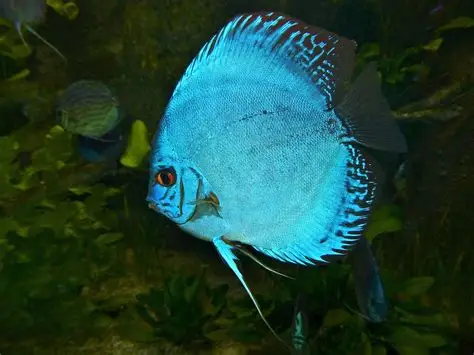
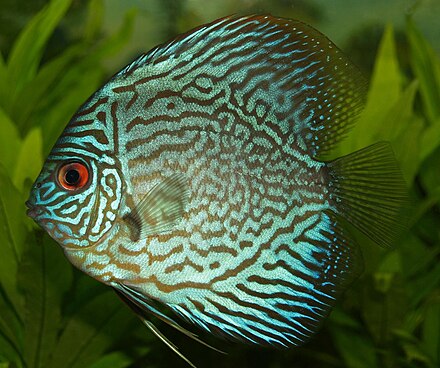
  • There are many color and pattern varieties selected by breeders.
  • 🔎It is very sensitive to poor water quality and unstable parameters.
  • 🧭In aquariums it is usually kept in small groups of the same species.

Welfare profile

Summary of the most critical points if this species is kept in aquariums, ponds or specialized facilities.

Space and facilitiesHigh

In captivity it needs large, very stable aquariums with excellent biological filtration.

Water quality and parametersHigh

It is sensitive to stress, high nitrate loads, and temperature variations.

Handling and stressHigh

Direct handling should be minimized and always done calmly and carefully.

Discus Fish in captivity

General information aimed at professional facilities, public aquariums and educational projects. It does not intend to promote capture or impulsive keeping of aquatic fauna.

⚠️ Before keeping fish like this species, it is essential to review local regulations, ensure adequate facilities and minimize impact on wild populations.

Suitable facilities

It is recommended only for advanced aquarists or facilities with experience in Amazonian cichlids.

Feeding in responsible centers

Feeding is based on a mixture of frozen, live, and high-quality prepared food.

Handling and welfare

Frequent and moderate water changes are essential for its welfare.

Ethical message

In education, the discus helps explain how demanding some tropical fish can be in terms of water conditions.

Imagen ampliada