Dwarf Gourami
Scientific name: Trichogaster lalius
Fish from calm waters with dense vegetation, sensitive to water quality and stress.
Quick facts
- Approximate size5–7 cm
- Average weight3–5 g
- Life expectancy3–5 years (captivity)
- ActivityMostly diurnal
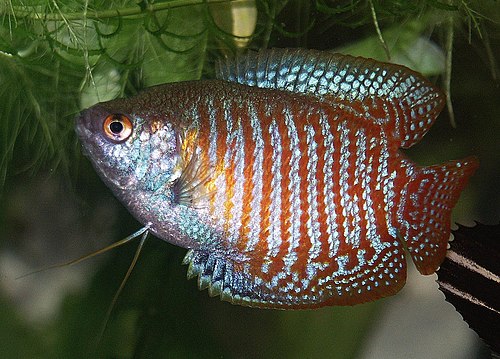
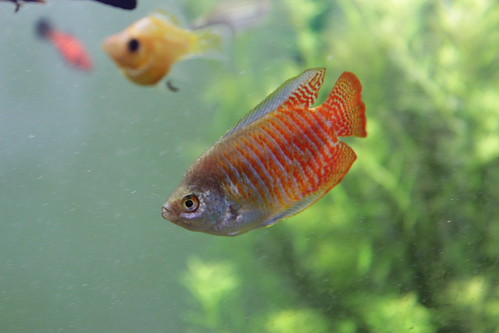
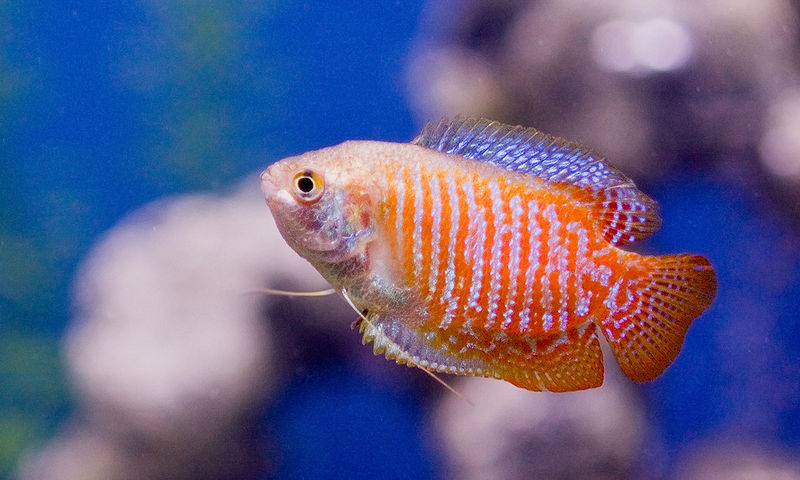
Scientific name: Trichogaster lalius
Fish from calm waters with dense vegetation, sensitive to water quality and stress.
How this species lives in its natural environment, with the waters, shelters and resources it needs.
The dwarf gourami adds color and interesting behavior to calm and well-planted aquariums.
It prefers warm, shallow waters with many floating and stem plants.
Males patrol small areas near the surface, especially during breeding season.
Its aerial respiration allows it to survive in oxygen-poor waters, but not in dirty waters.
In nature it suffers from habitat degradation and pollution, although it is common in aquaristics.
Striking details about this species that help better understand its biology and role in aquatic ecosystems.
Summary of the most critical points if this species is kept in aquariums, ponds or specialized facilities.
It needs aquariums with dense vegetation and calm surface areas to build nests.
It requires clean and stable water; it is sensitive to pollutants and sudden changes.
It can easily become stressed with aggressive companions or in small aquariums.
General information aimed at professional facilities, public aquariums and educational projects. It does not intend to promote capture or impulsive keeping of aquatic fauna.
Ideal for peaceful community aquariums with calm companions and dense vegetation.
The diet includes quality dry food, small live prey, and frozen food.
It is important to avoid very active or aggressive companions that may stress it.
In education it can be used to talk about labyrinth fish, aerial respiration, and nest building.
Many aquatic species suffer from massive captures, uncontrolled trade and irresponsible releases. The priority should always be to protect rivers, lakes and seas, reduce pollution and consume seafood responsibly.