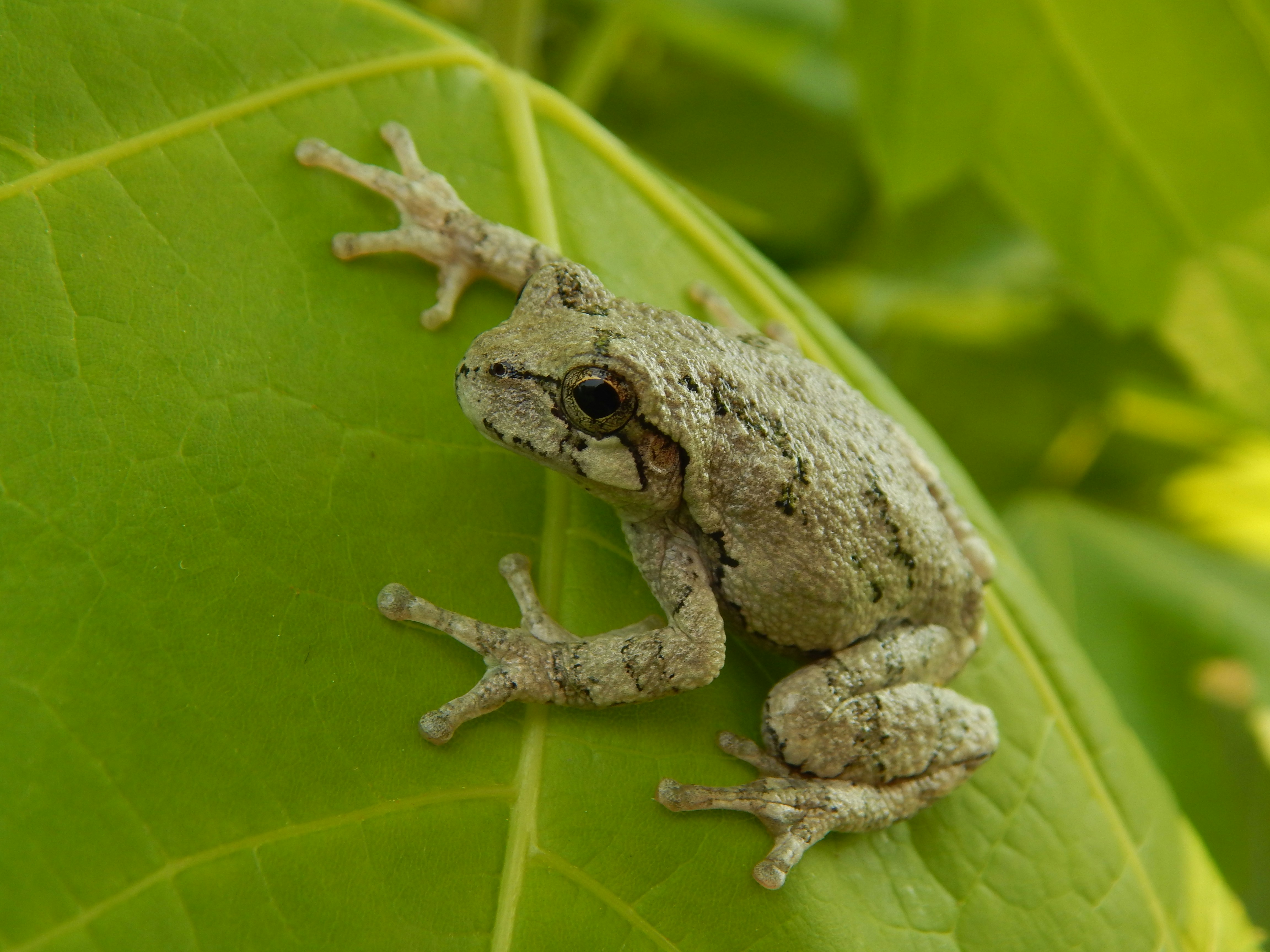
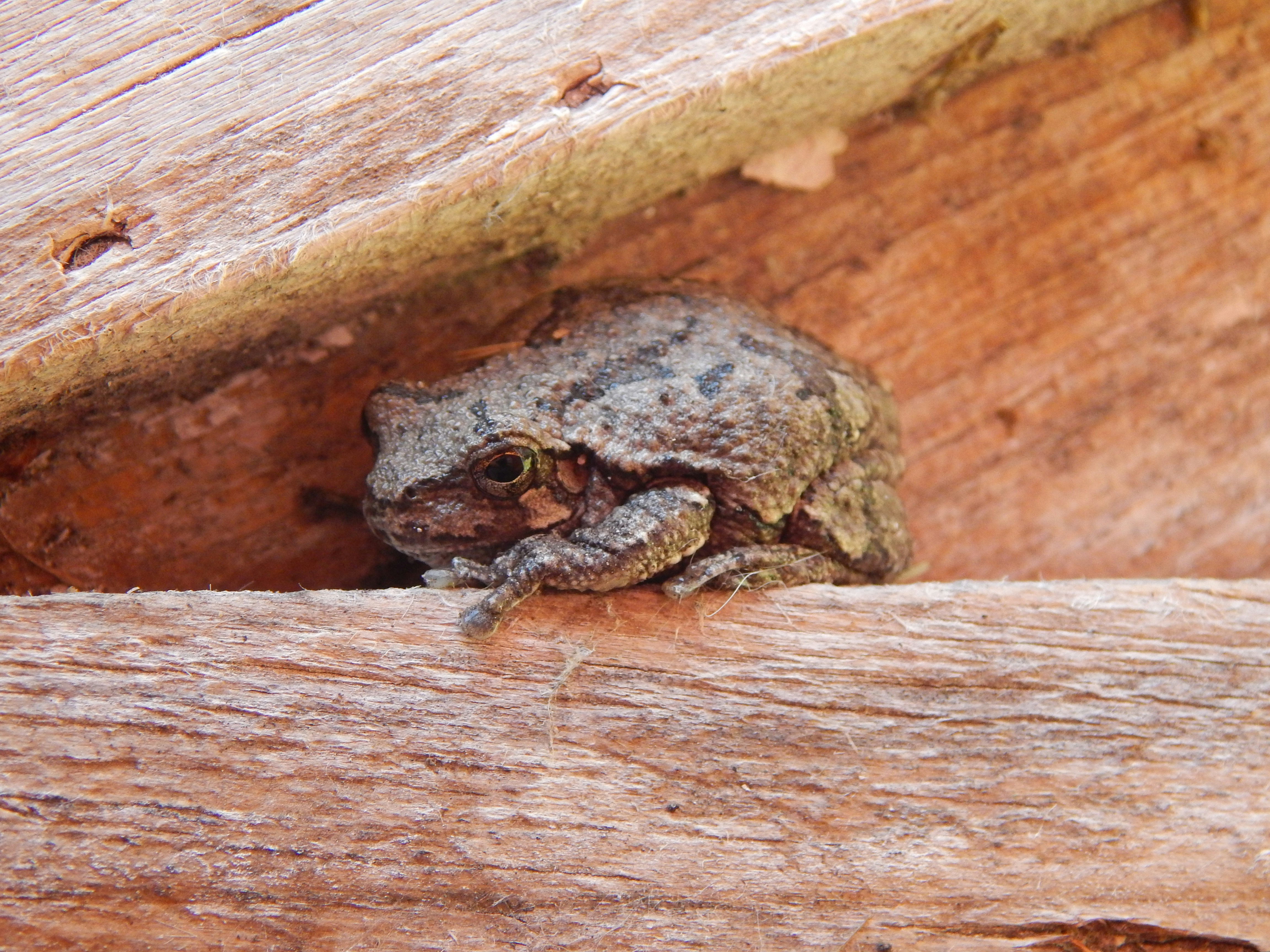
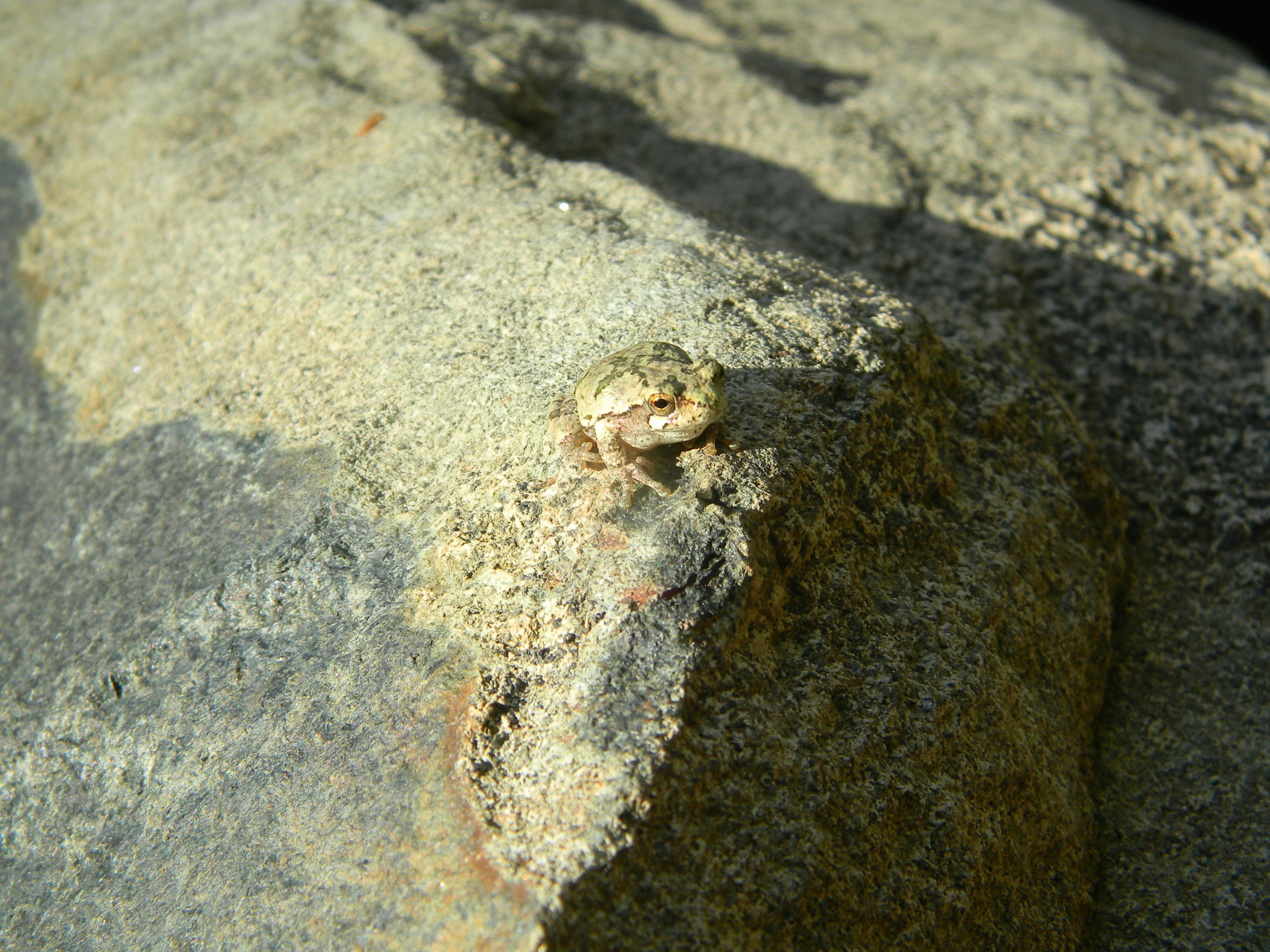
Gray Tree Frog

Scientific name: Hyla versicolor

Type: Amphibian Main biome: Temperate Forest Difficulty: Media

Tree-climbing anuran from forests and suburban areas, known for its loud call on humid nights.

Quick facts

  • Approximate size 3–5 cm
  • Average weight 5–10 g
  • Life expectancy 7–9 years (captivity)
  • Activity Nocturnal
Gray Tree Frog
Gray Tree Frog
Gray Tree Frog

Basic information

  • 🏡 Home: forests, gardens and wooded areas near ponds and pools in North America.
  • 🍏 Food: insects and other small invertebrates found in vegetation.
  • 👫 Sexual dimorphism: males have prominent vocal sacs and are usually slightly smaller.
  • 🐾 Predators: birds, snakes and small mammals; larvae are prey to fish and aquatic invertebrates.

Life in the wild

What this species is like in its natural environment, with the climate, shelters and resources it needs.

Species overview

The gray tree frog is a common amphibian in many forested and suburban areas of North America.

Natural habitat

Uses both trees and shrubs as well as elevated human structures near breeding water.

Behavior

Spends the day hidden and climbs through vegetation at night to hunt and call.

Special traits

Its variable camouflage makes it difficult to detect, despite its intense call.

Conservation and threats

Generally considered stable, although wetland loss and pollution also affect it.

Curiosities

Striking details about this species that help better understand its biology and role in ecosystems.

  • 🌧️ Can change color between green and gray for better camouflage.
  • Its call is often heard during rainy spring and summer nights.
  • 🔎 Adheres to smooth surfaces thanks to adhesive pads on its toes.
  • 🧪 Commonly found in nest boxes, railings and other human structures.

Welfare profile

Summary of the most critical points if this species is kept in captivity at specialized centers.

Facilities and space Medium

In captivity requires vertical terrariums with branches, leaves and access to clean water.

Water, light and microclimate Medium

Ventilation is important to avoid skin and respiratory problems.

Handling and stress Medium

Should not be handled frequently, as its skin easily absorbs substances from hands.

Gray Tree Frog in captivity

General information intended for professional facilities and educational projects. Not intended to encourage capture or improvised keeping of wild amphibians.

⚠️ Amphibians are particularly vulnerable to pollution, emerging diseases and improper handling. Before keeping species like this, it is essential to review local regulations and seek qualified advice.

Suitable facilities

Can be kept by experts, prioritizing captive-bred specimens.

Feeding in responsible centers

  • Diet is based on small insects that move around the terrarium.
  • Crickets, flies and moths of appropriate size.
  • Calcium and vitamin supplementation.

Handling and welfare

It is advisable to provide visual shelters so it can hide during the day.

Ethical message

A good species to teach the importance of amphibians in urban and suburban environments.

Imagen ampliada