Green Anole

Scientific name: Anolis carolinensis

Type: Reptile Main biome: Temperate Forest Difficulty: Media

Agile reptile that lives among branches and shrubs, with a striking dewlap used in displays.

Quick facts

  • Approximate size 12–20 cm (including tail)
  • Average weight 3–7 g
  • Life expectancy 4–8 years (captivity)
  • Activity Diurnal
Green Anole
Green Anole
Green Anole

Basic information

  • 🏡 Habitat: inhabits forests, gardens, and wooded areas of the southeastern United States, using branches and shrubs to move around.
  • 🍏 Diet: mainly insectivorous; consumes a wide variety of insects and other small invertebrates.
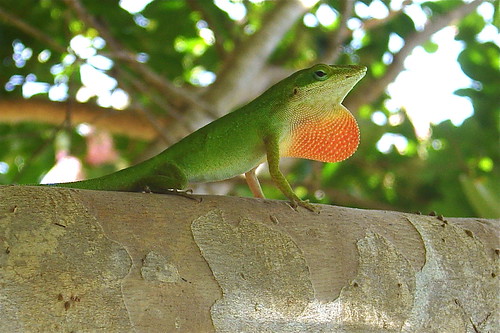
  • 👫 Sexual dimorphism: males have larger and more colorful dewlap, and are usually somewhat larger than females.
  • 🐾 Predators: birds, snakes, carnivorous mammals, and other reptiles; its color-changing ability helps with camouflage.

Life in the wild

What Green Anole is like in its natural environment, with the climate, shelters and resources it needs.

Species overview

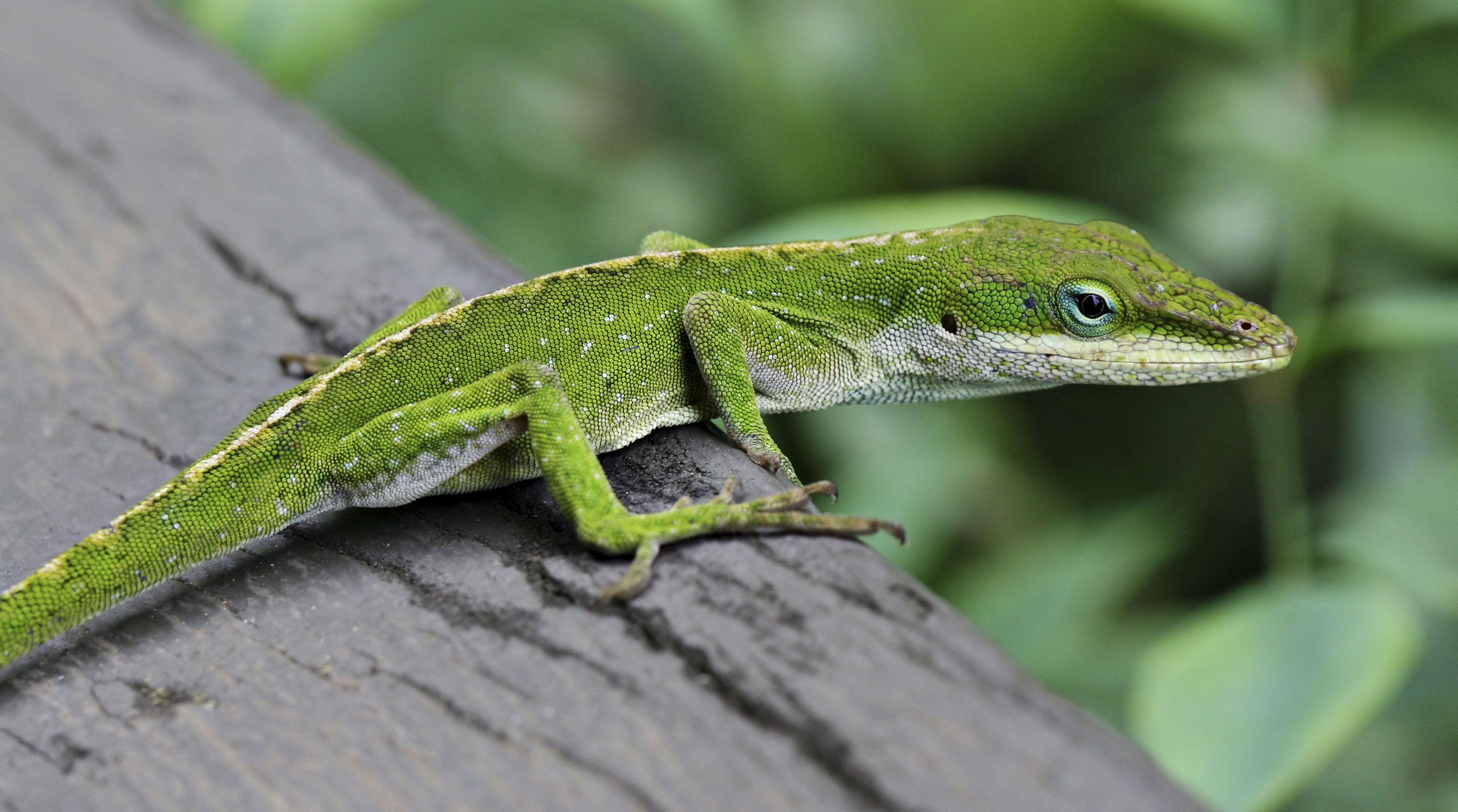
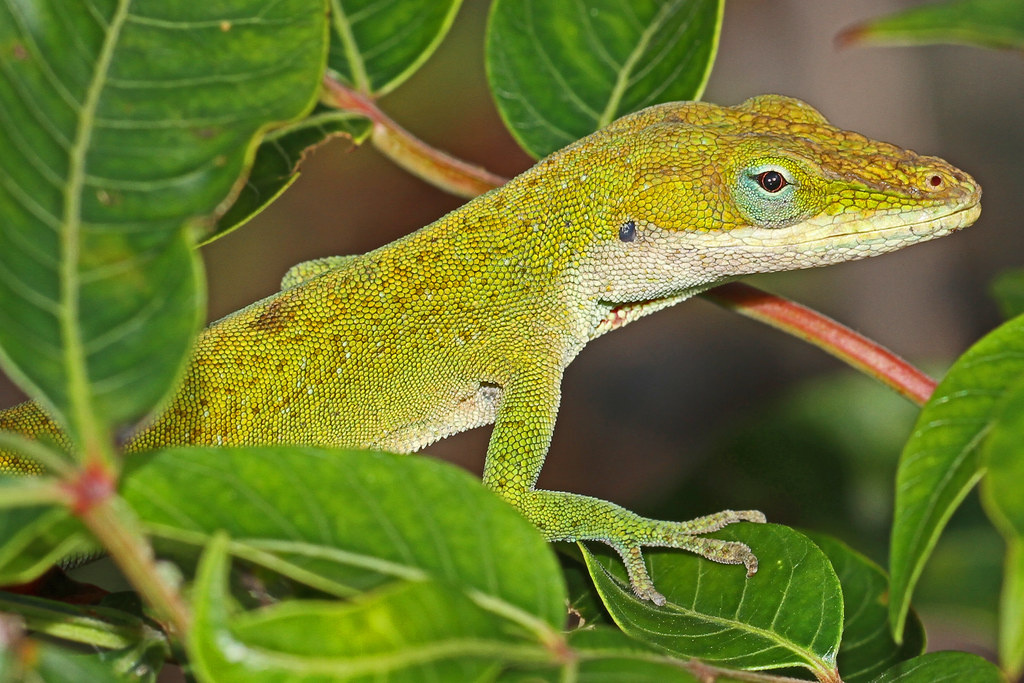
The green anole is a small arboreal lizard very common in the southeastern United States, known for its ability to change color.

Natural habitat

It lives in forests, gardens, and areas with shrubby vegetation, using branches and shrubs as hunting territory and shelter.

Behavior

It is diurnal and very active, spending much of the day hunting insects and displaying its dewlap to communicate or defend territory.

Special traits

It can change from bright green to brown depending on its emotional state, temperature, or need for camouflage. Its dewlap is a distinctive feature.

Conservation and threats

It is not considered threatened, although competition with invasive species such as the brown anole can affect some populations.

Curiosities

Striking details about Green Anole that show its biology and ecology in a different way.

  • 🌍 It can change color from bright green to brown in a matter of minutes depending on its emotional or environmental state.
  • Males extend their pink or red dewlap during territorial or courtship displays.
  • 🔎 It is an excellent climber thanks to its adhesive pads on its toes.
  • 🧠 Although commonly called "American chameleon", it is not related to true chameleons.

Perfil de bienestar

Aspects to consider if Green Anole is kept in captivity at specialized centers.

Terrarium size Medium

Requires tall terrariums with multiple branches and plants where it can climb and hide.

Thermal requirements Important

Needs UVB lighting, heat spots, and good ventilation. Humidity should be maintained at adequate levels.

Tolerance to handling Limited

It is a small and fragile animal. Handling should be minimal and very careful to avoid stress or injuries.

Green Anole in captivity

General information aimed at professional facilities and authorized centers. Not intended to promote private keeping of wildlife without proper training and permits.

⚠️ Although it is a small and relatively easy-to-keep lizard, it requires specific light, temperature, and humidity conditions. It is essential to research well before acquiring one.

Suitable terrarium

Tall terrariums with multiple branches, plants, and shelters. UVB lighting and heat spots are essential. Ventilation should be good.

Feeding

Diet based on small insects (crickets, flies, small worms) properly gut-loaded and supplemented with calcium and vitamins.

Health and checkups

It is important to monitor weight, shed quality, and behavior. Health problems can appear quickly if adequate conditions are not maintained.

Responsibility

Responsible breeding and sales with proper information are essential. Always prioritize ethical breeders and responsible adoptions.

Imagen ampliada