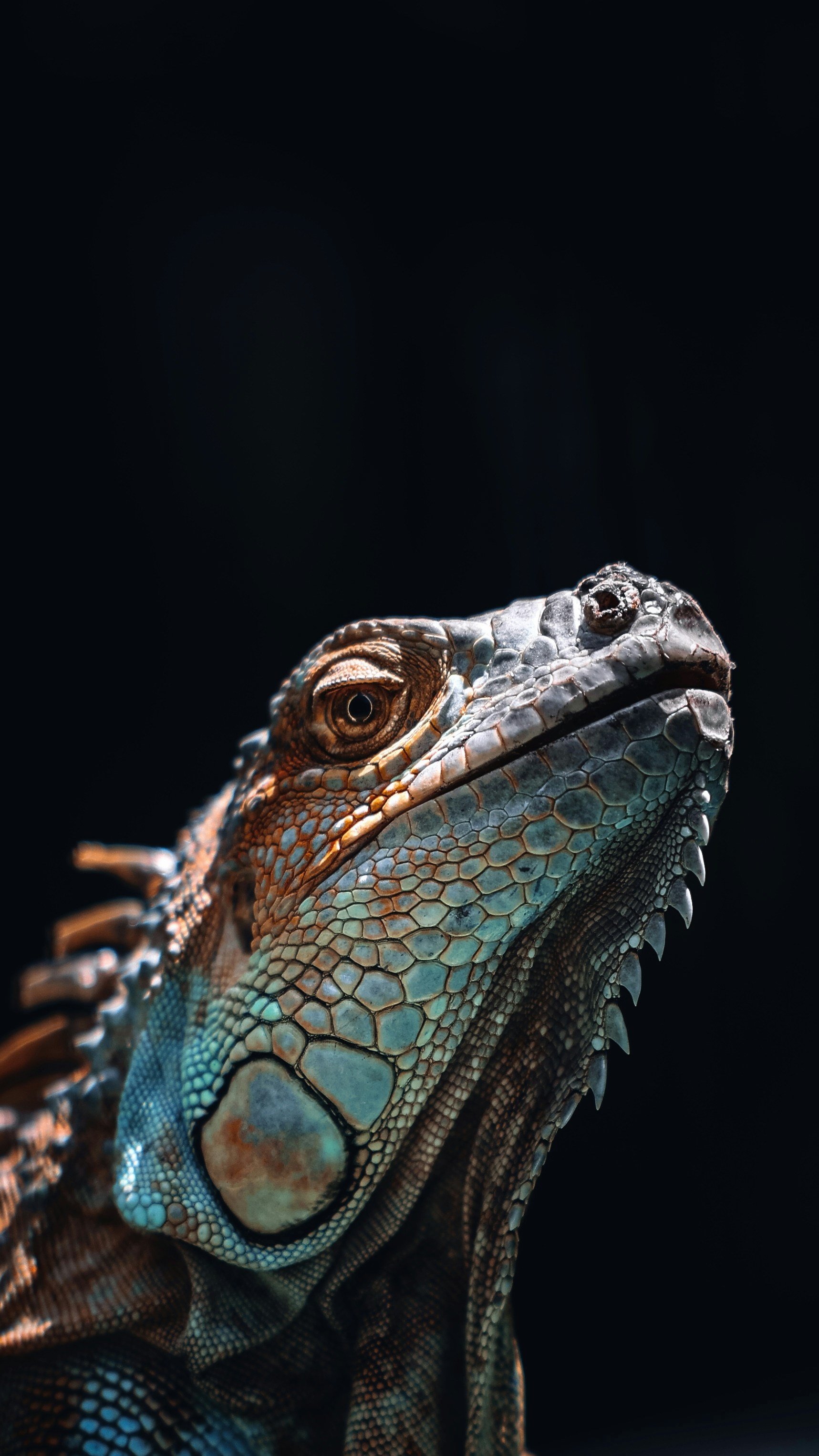
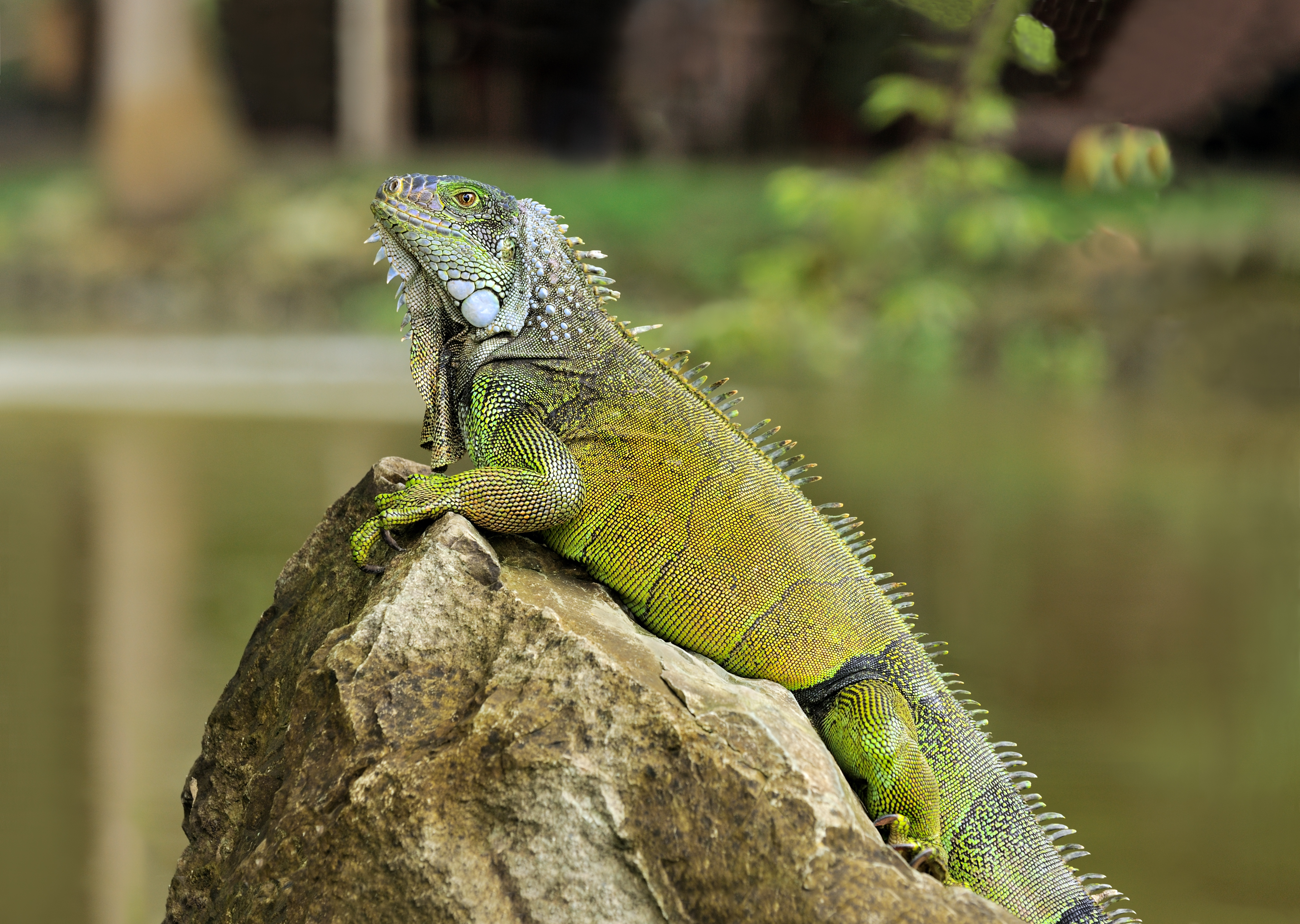
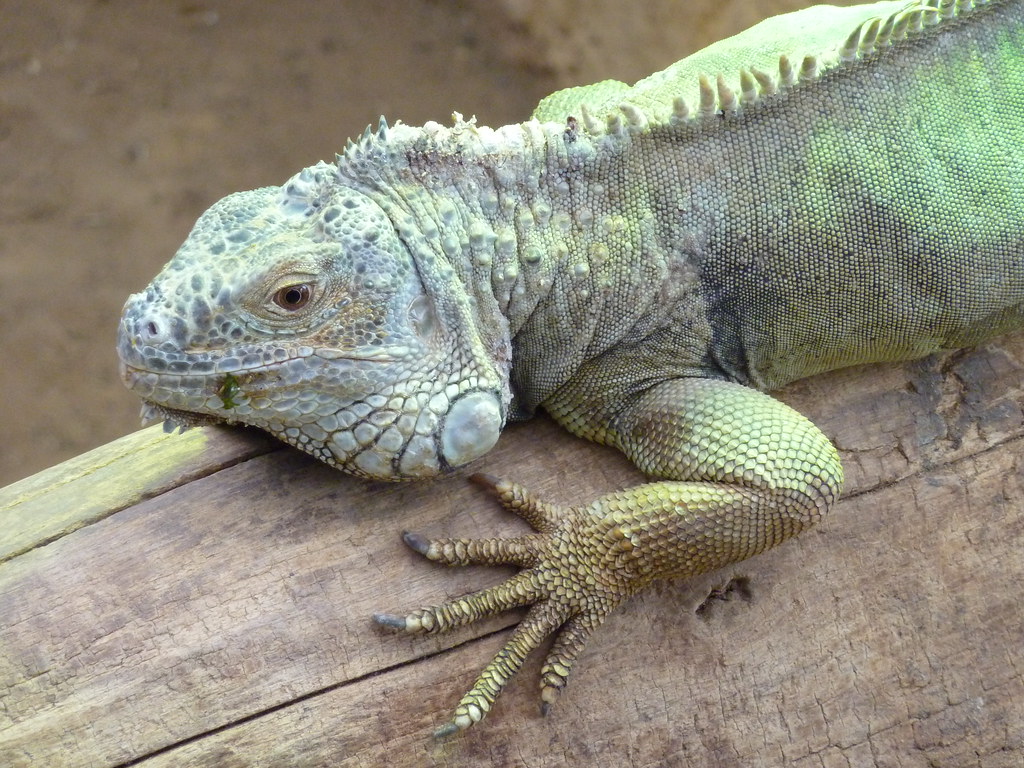
Green Iguana

Scientific name: Iguana iguana

Type: Reptile Main biome: Tropical Jungle Difficulty: Alta

Arboreal and herbivorous reptile that needs plenty of space, light and a carefully managed plant diet in captivity.

Quick facts

  • Approximate size 1.2–2 m (including tail)
  • Average weight 3–8 kg
  • Life expectancy 10–15 years (captivity, well maintained)
  • Activity Diurnal, with long periods in the sun on high branches
Green Iguana
Green Iguana
Green Iguana

Basic information

  • 🏡 Habitat: inhabits tropical rainforests, riparian forests, and wooded areas near watercourses in Central and South America.
  • 🍏 Diet: mainly herbivorous; consumes leaves, flowers, fruits, and tender shoots, although it may occasionally ingest small invertebrates.
  • 👫 Sexual dimorphism: males are usually larger, with more developed dorsal crest and more prominent dewlap.
  • 🐾 Predators: birds of prey, large snakes, carnivorous mammals, and humans; juveniles are more vulnerable.

Life in the wild

What Green Iguana is like in its natural environment, with the climate, shelters and resources it needs.

Species overview

The green iguana is a large arboreal and herbivorous lizard, one of the most recognizable reptiles of American tropical rainforests.

Natural habitat

It lives in tropical rainforests, riparian forests, and areas with tall trees near rivers and lakes, where it can climb and bask.

Behavior

It is diurnal and spends much of the day basking on high branches. It can jump into water to escape predators. Males are territorial.

Special traits

Its long and powerful tail can be used as a defensive whip. Its dorsal crest and dewlap are more developed in adult males.

Conservation and threats

Although still relatively common in many areas, habitat loss and hunting for human consumption affect some populations.

Curiosities

Striking details about Green Iguana that show its biology and ecology in a different way.

  • 🌍 It can jump from high branches into water to escape predators, being an excellent swimmer.
  • Its tail can regenerate if broken, although it will not grow back exactly the same.
  • 🔎 Males can change color during mating season, showing more intense tones.
  • 🧠 It requires much UVB light and a calcium-rich diet to avoid metabolic problems in captivity.

Perfil de bienestar

Aspects to consider if Green Iguana is kept in captivity at specialized centers.

Terrarium size High

Needs very large enclosures with sufficient height to climb and sturdy branches where it can bask.

Thermal requirements Critical

Intense UVB lighting and well-defined heat spots are essential for bone health and digestion.

Tolerance to handling Medium

Can tolerate some handling, but sudden movements or excessive handling can stress it. Should never be held by the tail.

Green Iguana in captivity

General information aimed at professional facilities and authorized centers. Not intended to promote private keeping of wildlife without proper training and permits.

⚠️ Green iguanas require very large facilities and specialized care. Many are abandoned when they grow. It is essential to research well before acquiring one.

Suitable terrarium

Tall and spacious enclosures with sturdy branches, intense UVB lighting, heat spots, and resting areas. The recommended minimum space is very large.

Feeding

Strictly herbivorous diet based on dark green leaves, varied vegetables, and occasional fruits. Calcium supplementation is essential.

Health and checkups

It is important to monitor weight, shed quality, and behavior. Metabolic problems are common if adequate conditions are not maintained.

Responsibility

Due to its size and complex needs, it is not a recommended species for beginners. Responsible adoption and ethical breeders are essential.

Imagen ampliada