Green Vine Snake

Scientific name: Oxybelis fulgidus

Type: Reptile Main biome: Tropical Jungle Difficulty: Alta

Reptile with extremely thin body and elongated head, specialized in moving between branches and shrubs.

Quick facts

  • Approximate size1.5–2 m
  • Average weightVery light for its length
  • Life expectancy10–12 years (estimated in captivity)
  • ActivityDiurnal
Green Vine Snake
Green Vine Snake
Green Vine Snake

Basic information

  • 🏡Habitat: inhabits rainforests and tropical forests, using thin branches and vines to move above ground.
  • 🍏Diet: mainly consumes lizards, frogs, and small vertebrates that it locates thanks to its keen vision.
  • 👫Sexual dimorphism: females may exceed males in length and robustness; the dimorphism is not very evident to the naked eye.
  • 🐾Predators: birds of prey, climbing mammals, and larger snakes; its mimicry helps it go unnoticed.

Life in the wild

How this species lives in its natural environment, with the climate, shelters and resources it needs.

Species overview

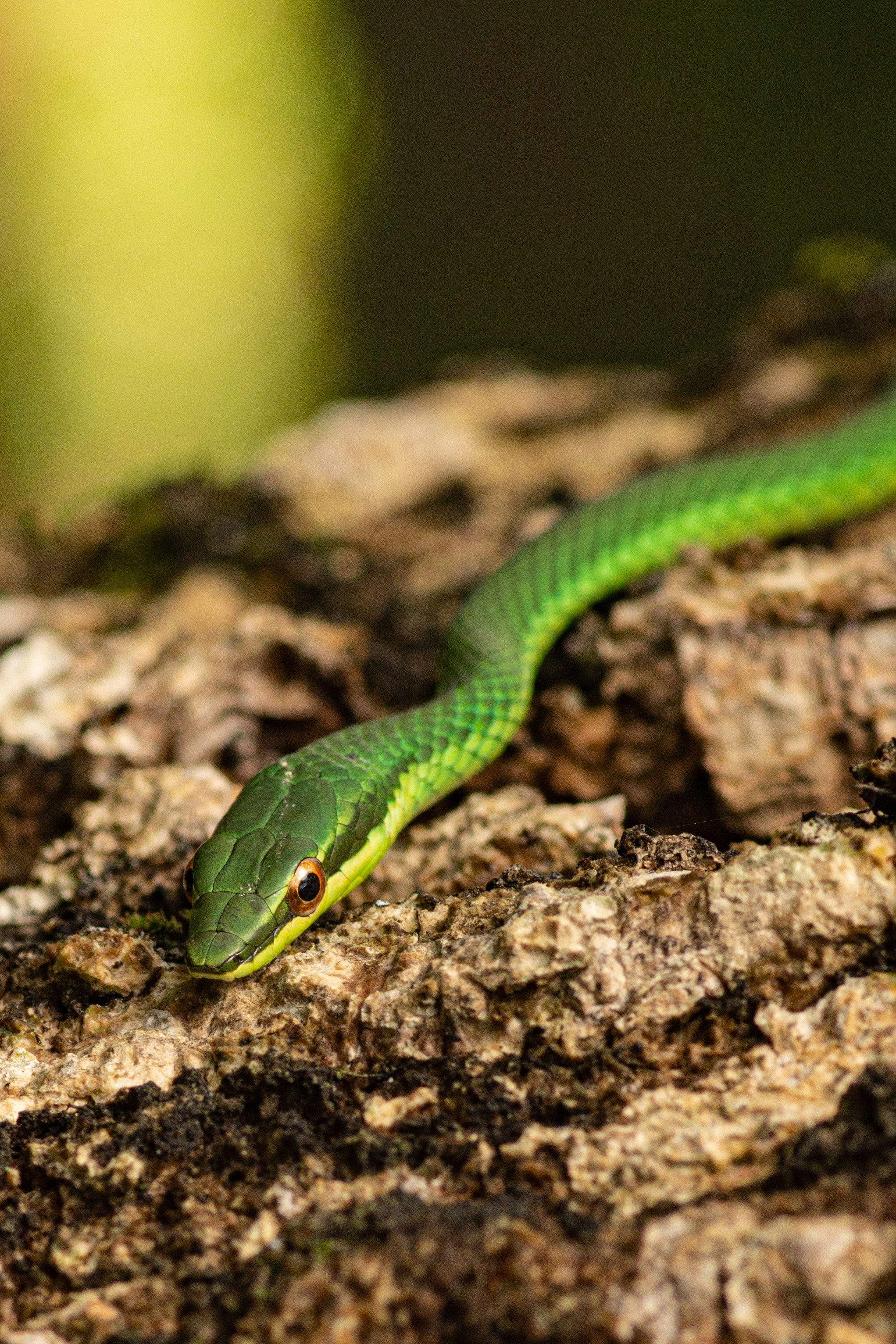
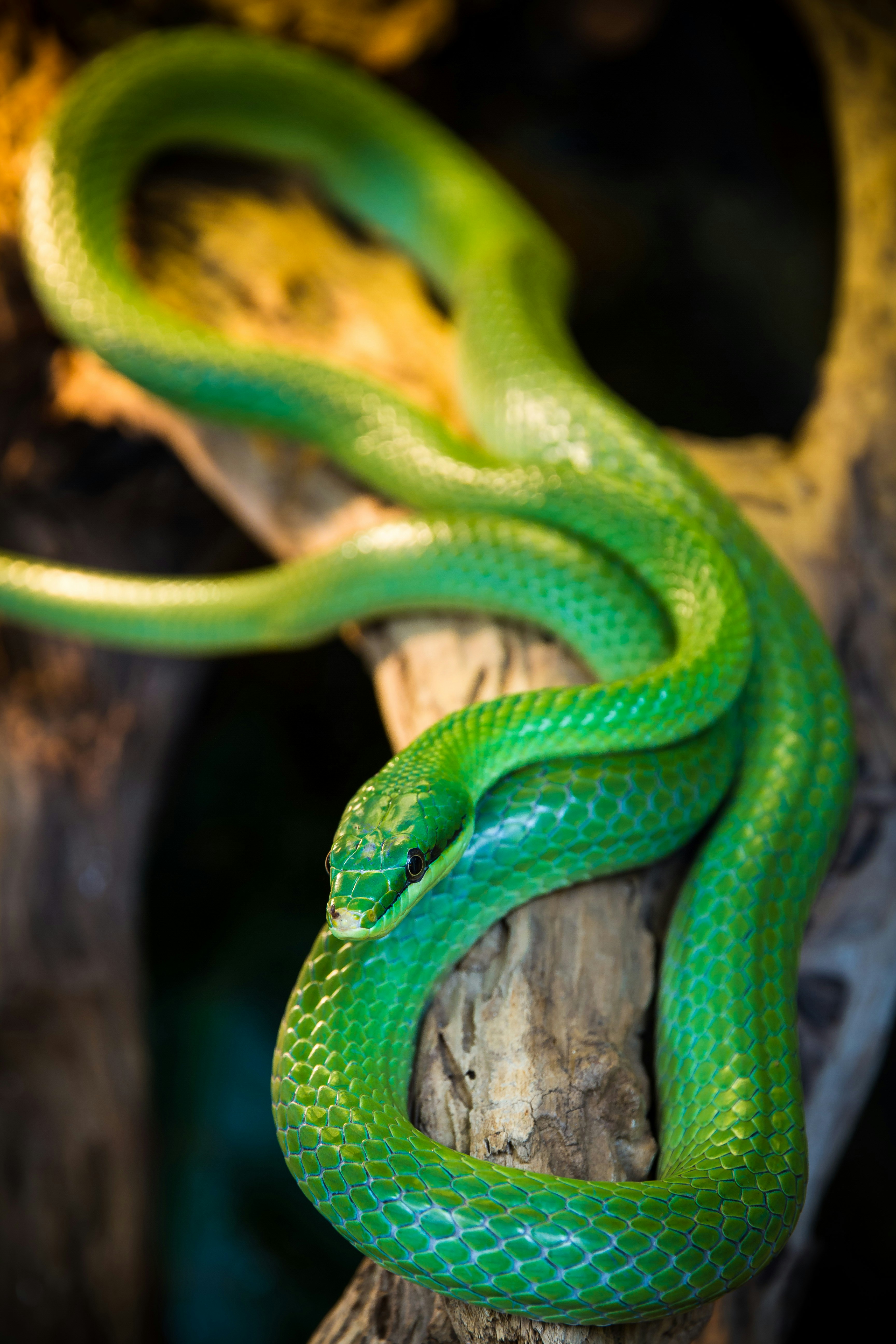
The green vine snake is an arboreal specialist whose thin, elongated body resembles a live branch among vegetation.

Natural habitat

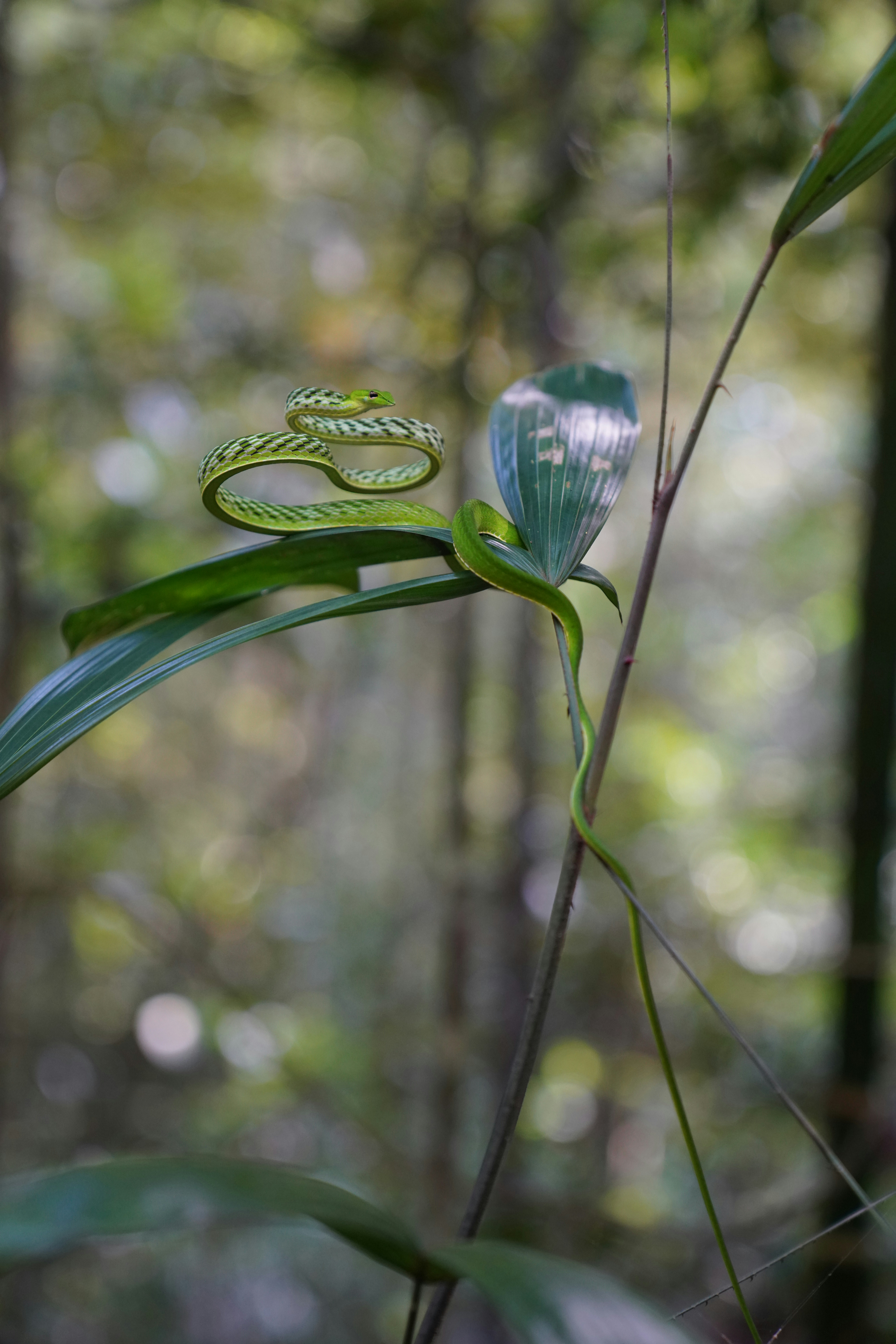
Typical occupation of rainforests and tropical forests, where it uses thin branches and vines to move above ground and position itself at the level of its prey.

Behavior

It is diurnal with slow but precise movements. It often remains motionless, slightly swaying its head as if it were a leaf or vine moved by the wind.

Special features

Its extremely slender morphology and intense green color provide excellent mimicry. Its mild venom is aimed at small prey and not at defense against large predators.

Conservation and threats

The species is not among the most studied snakes, but deforestation and collection for trade can affect certain local populations.

Curiosities

Striking details about this species that show its biology and ecology in a different way.

  • 🌍Its extremely thin body allows it to move on very thin branches without breaking them.
  • It often keeps its head raised and forward while exploring its surroundings.
  • 🔎It has mild venom used mainly to subdue small prey.
  • 🧠Its captive maintenance is complex due to its vertical space needs and low stress tolerance.

Welfare profile

Aspects to consider if this species is kept in captivity in specialized centers.

Enclosures and spaceHigh

In captivity, it requires very tall terrariums with numerous thin branches and open spaces where it can move without feeling trapped.

Light, temperature, and environmentHigh

Lighting and temperature should mimic light jungle conditions, avoiding both cold and excessive heat.

Handling and stressHigh

It is very sensitive to stress and frequent handling; any intervention should be planned to be quick and gentle.

Green Vine Snake in captivity

General information aimed at professional facilities and authorized centers.

⚠️ The capture and trade of reptiles like this species are regulated in many countries. It is essential to verify the legal origin of animals and prioritize responsible breeding programs and habitat conservation.

Suitable enclosures

Its maintenance is reserved for facilities with experience in nervous and sensitive arboreal snakes.

Feeding in responsible centers

The diet is based on appropriately sized small vertebrates, preferably offered with tongs to avoid confusion.

Handling and welfare

It is advisable to minimize interventions inside the enclosure, using dividers or secondary enclosures for cleaning.

Ethical message

From an ethical standpoint, it is not a recommended species for general collections or without a clear conservation or education plan.

Imagen ampliada