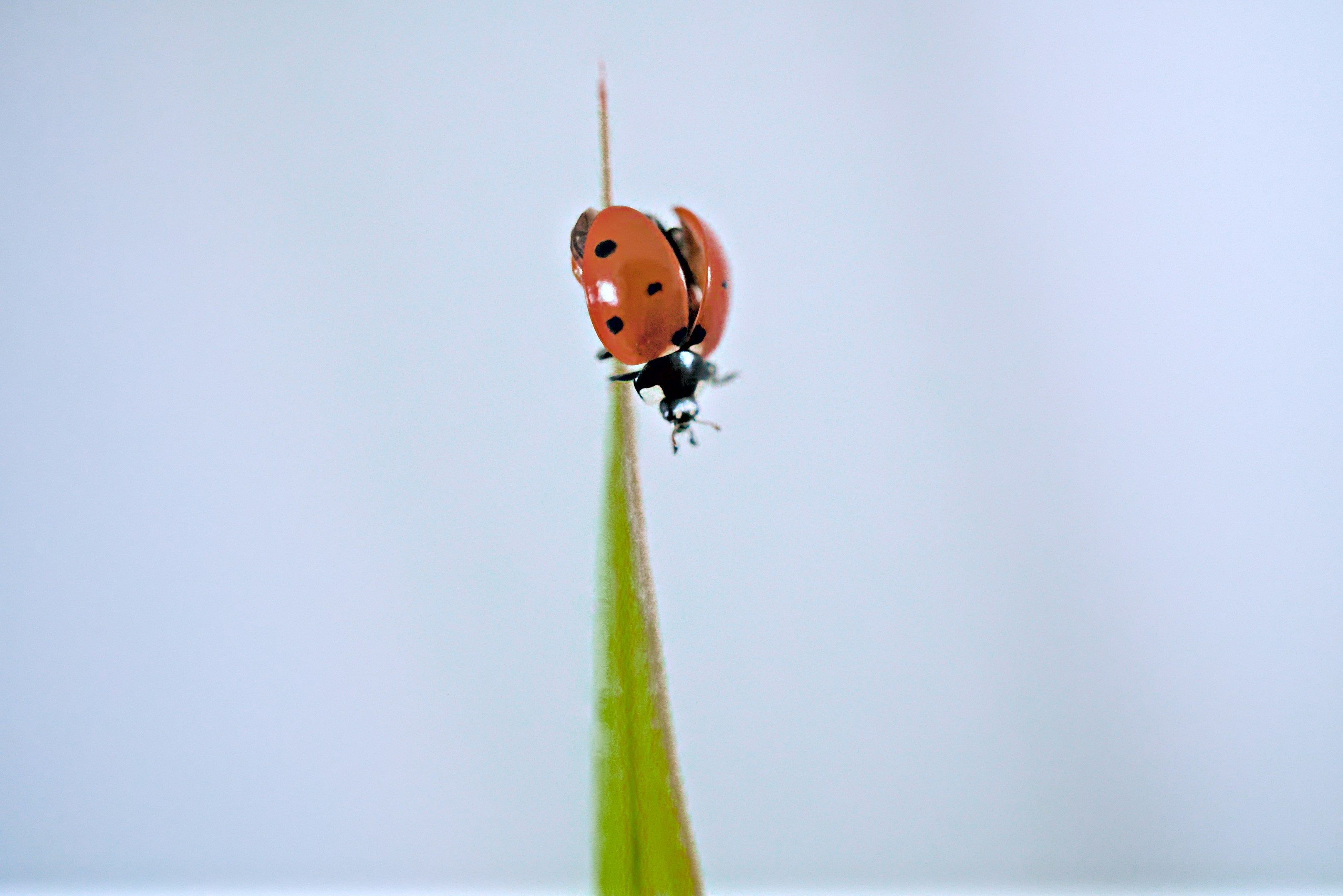
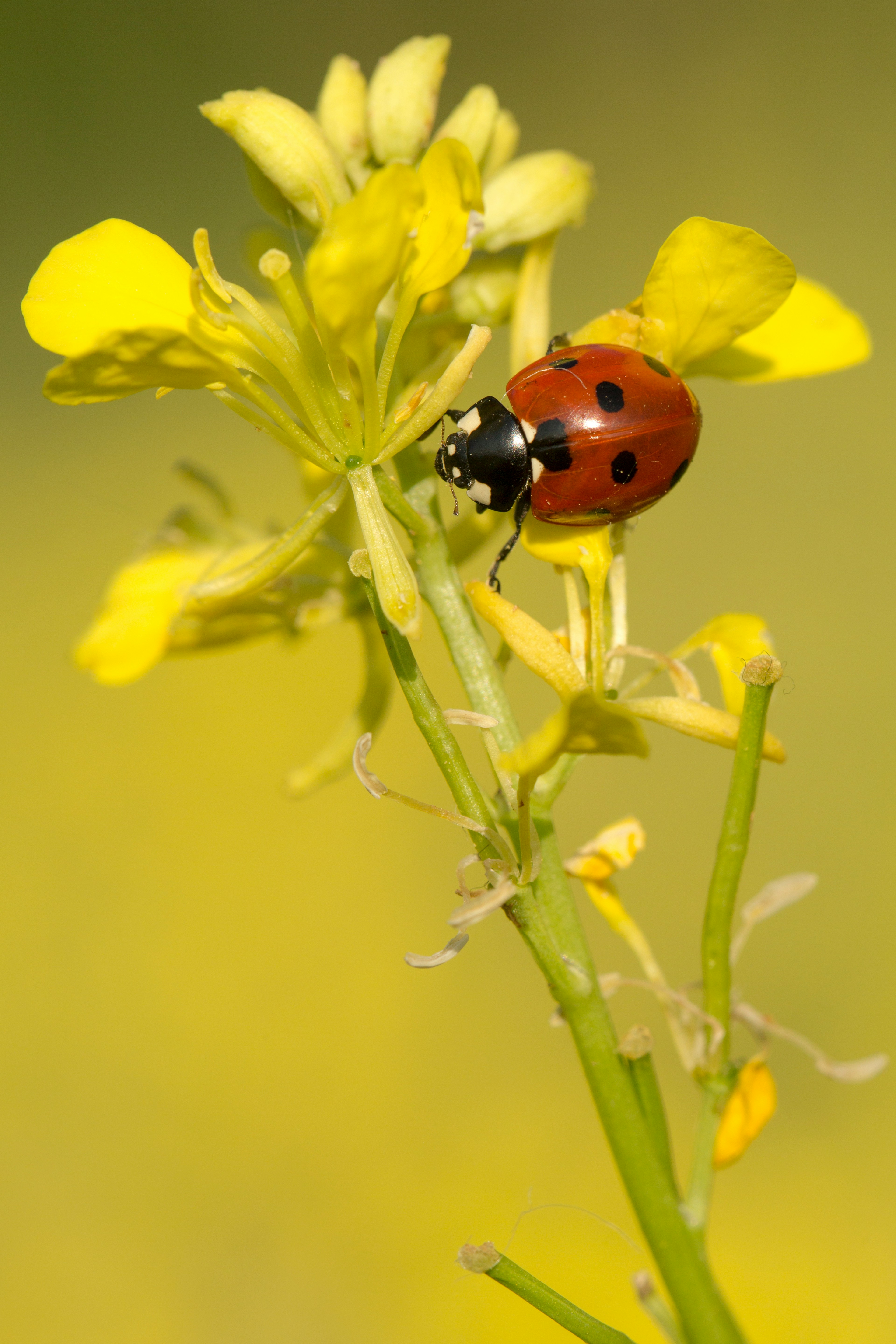
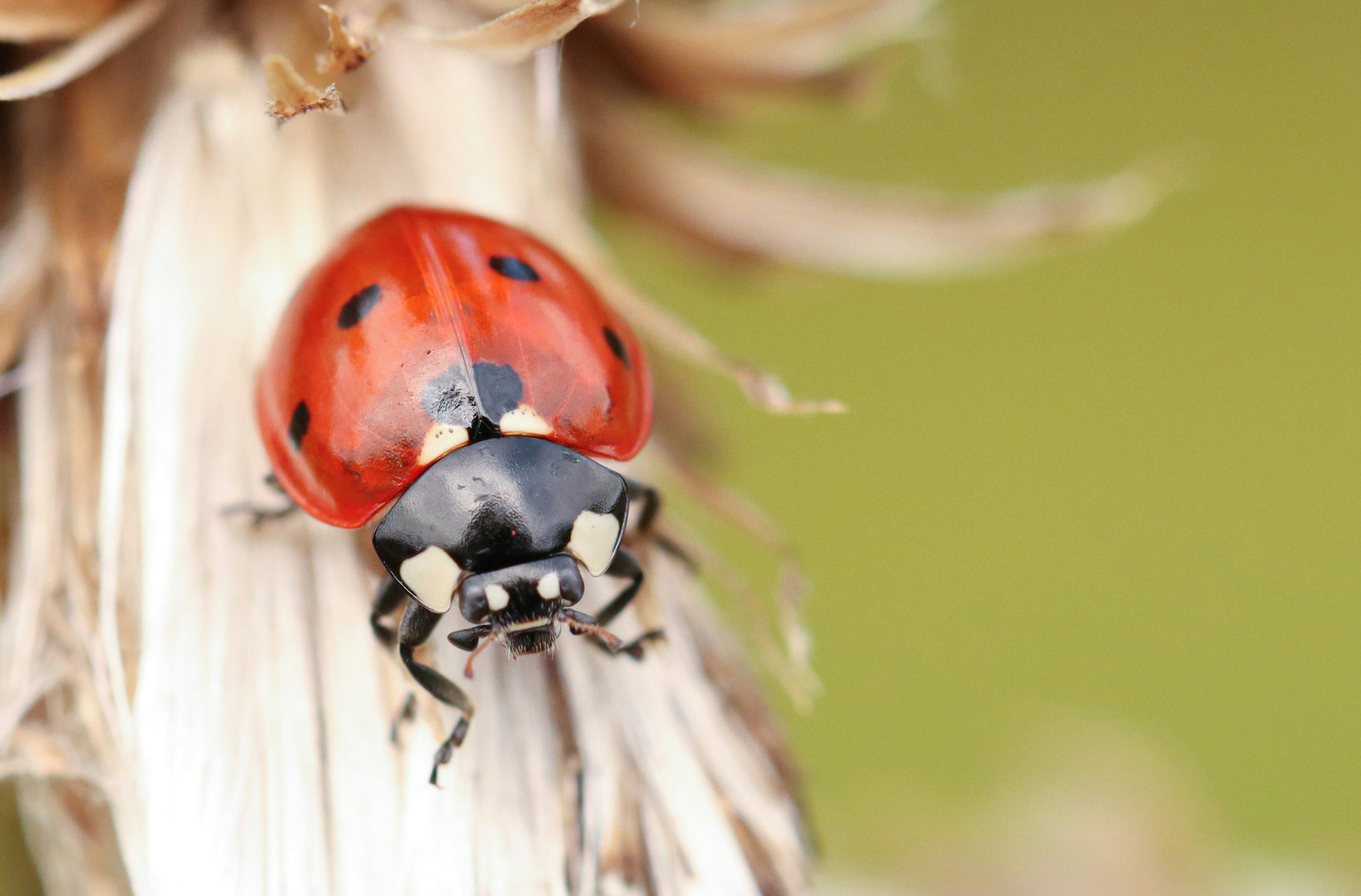
Seven-spot Ladybug

Scientific name: Coccinella septempunctata

Type: Insect Main biome: Temperate Forest Difficulty: Fácil

Natural predator of many agricultural pests, often welcomed in orchards and gardens.

Quick facts

  • Approximate size5–8 mm
  • Average weightLess than 0.1 g
  • Life expectancy1–2 years
  • ActivityDiurnal
Seven-spot Ladybug
Seven-spot Ladybug
Seven-spot Ladybug

Basic information

  • 🏡Habitat: grasslands, crops, gardens, and forest edges with abundance of aphids.
  • 🍏Diet: larvae and adults feed mainly on aphids and other small insects.
  • 👫Sexual dimorphism: slight differences in abdomen shape and size; difficult to distinguish with the naked eye.
  • 🐾Predators: birds, spiders, and other insects; its striking color warns of its unpleasant taste.

Life in the wild

How this species lives in its natural environment, with the climate, shelters and resources it needs.

Species overview

The seven-spot ladybug is one of the most friendly and recognizable insects for the general public.

Natural habitat

It prefers areas with herbaceous and shrubby vegetation where there are aphid colonies to prey on.

Behavior

Larvae roam plants in search of prey; adults fly between vegetation patches according to food availability.

Special features

Its aposematic coloration helps reduce predator attacks after unpleasant experiences.

Conservation and threats

It is generally considered common, although intensive use of insecticides can locally affect its populations.

Curiosities

Striking details about this species that show its biology and ecology in a different way.

  • 🌿It is considered an ally in organic agriculture.
  • When threatened, it exudes a yellow liquid with a bad taste from its joints.
  • 🔎It can gather in large numbers to hibernate in crevices and shelters.
  • 🧬It has been a symbol of good luck in various cultures.

Welfare profile

Aspects to consider if this species is kept in captivity in specialized centers.

Space and facilitiesLow

In simple captivity (e.g., in classrooms) they need plants with aphids or equivalent live food.

Environmental conditionsMedium

It is not recommended to handle them constantly or keep them for long periods without the possibility of flight and dispersal.

Handling and stressLow

Educational experiments should be small-scale and respectful, returning them to suitable habitats when possible.

Seven-spot Ladybug in captivity

General information aimed at professional facilities and authorized centers.

⚠️ Before keeping insects like this species, it is important to consult local regulations and always consider whether it is really necessary to remove them from their natural environment.

Suitable facilities

They are often used in biological control demonstrations and environmental education.

Feeding in responsible centers

It is important not to release exotic species of ladybugs that could displace native ones.

Handling and welfare

Observation with magnifying glasses and small temporary terrariums may be sufficient for educational activities.

Ethical message

In orchards, favoring flowering plants and reducing pesticides enhances their natural presence.

Imagen ampliada