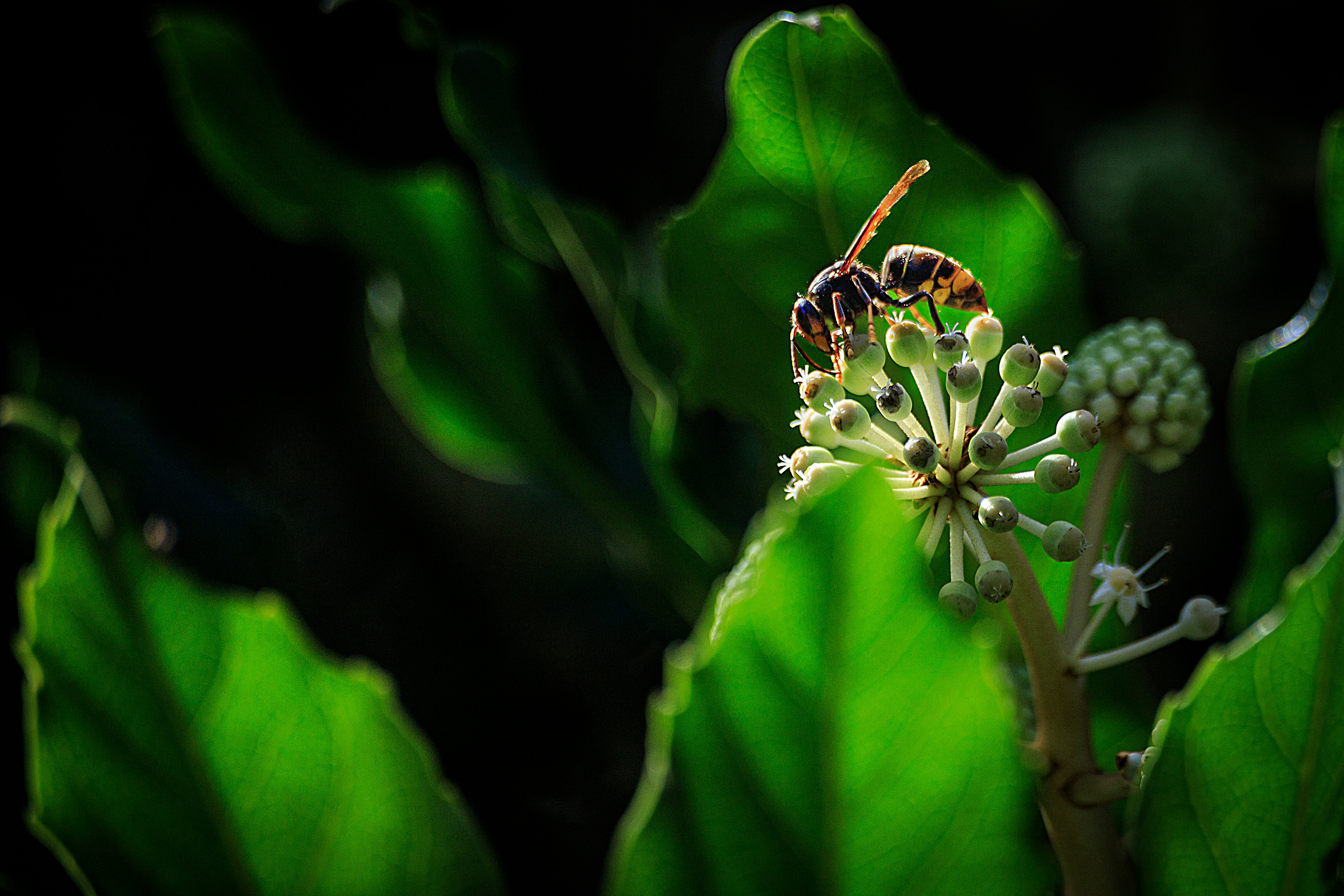
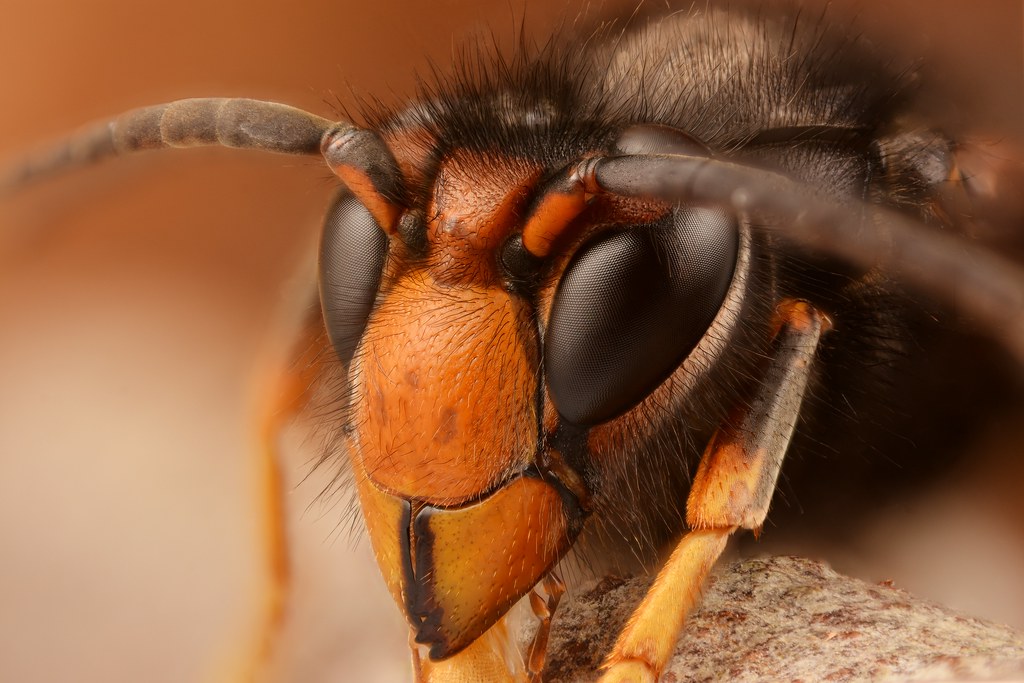
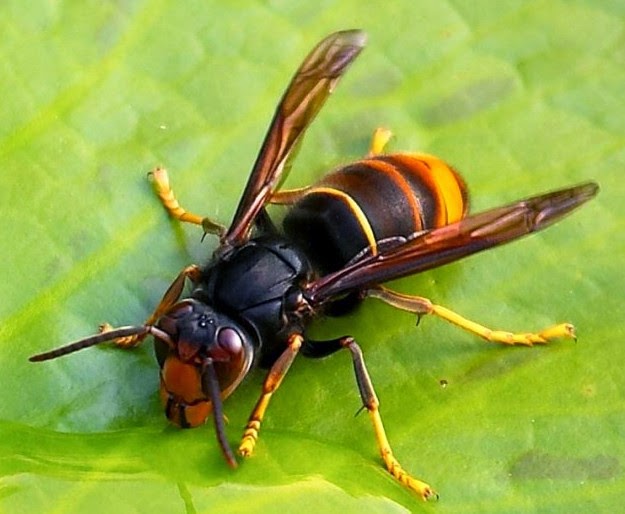
Asian Hornet

Scientific name: Vespa velutina

Type: Insect Main biome: Temperate Forest Difficulty: Alta

Opportunistic predator that builds large nests and can affect native pollinators.

Quick facts

  • Approximate size2–3 cm (queens larger)
  • Average weight1–2 g
  • Life expectancyAnnual queen; workers, weeks
  • ActivityDiurnal
Asian Hornet
Asian Hornet
Asian Hornet

Basic information

  • 🏡Habitat: forested, rural, and peri-urban areas where it builds nests in trees, roofs, and high structures.
  • 🍏Diet: insects (especially bees), nectar, and sugary substances.
  • 👫Sexual dimorphism: queens and workers similar but of different sizes; males appear at the end of summer.
  • 🐾Predators: few natural enemies in invaded areas; some birds and mammals may consume them occasionally.

Life in the wild

How this species lives in its natural environment, with the climate, shelters and resources it needs.

Species overview

The Asian hornet is a recent and visible example of the impact of new invasive species in Europe.

Natural habitat

It takes advantage of both forests and humanized environments to install its nests and find food.

Behavior

Workers patrol the environment in search of prey and sugar sources; queens found nests in spring.

Special features

Its ability to prey on bees at hives makes it especially problematic for beekeeping.

Conservation and threats

It does not need protection in invaded areas; rather, efforts are made to contain its expansion and reduce its impact.

Curiosities

Striking details about this species that show its biology and ecology in a different way.

  • 🌿It can intensely prey on honey bee hives, weakening them.
  • It has expanded rapidly in some European regions.
  • 🔎Its nests can reach large dimensions with thousands of individuals.
  • 🧬Management and control require coordination between authorities and beekeepers.

Welfare profile

Aspects to consider if this species is kept in captivity in specialized centers.

Space and facilitiesHigh

It is not recommended to keep it in captivity outside of very specific research and control contexts.

Environmental conditionsHigh

There is a risk to the safety of people and native pollinators if nests are handled without training.

Handling and stressHigh

Transport of nests or specimens should be avoided to prevent new invasions.

Asian Hornet in captivity

General information aimed at professional facilities and authorized centers.

⚠️ Before keeping insects like this species, it is important to consult local regulations and always consider whether it is really necessary to remove them from their natural environment.

Suitable facilities

Studies focus on detection, capture, and control methods compatible with the conservation of native pollinators.

Feeding in responsible centers

In education, it is treated as an example of early warning and management of biological invasions.

Handling and welfare

Informative campaigns help citizens identify it and report new nests.

Ethical message

It is a reminder of the importance of reviewing international trade and the movement of goods.

Imagen ampliada