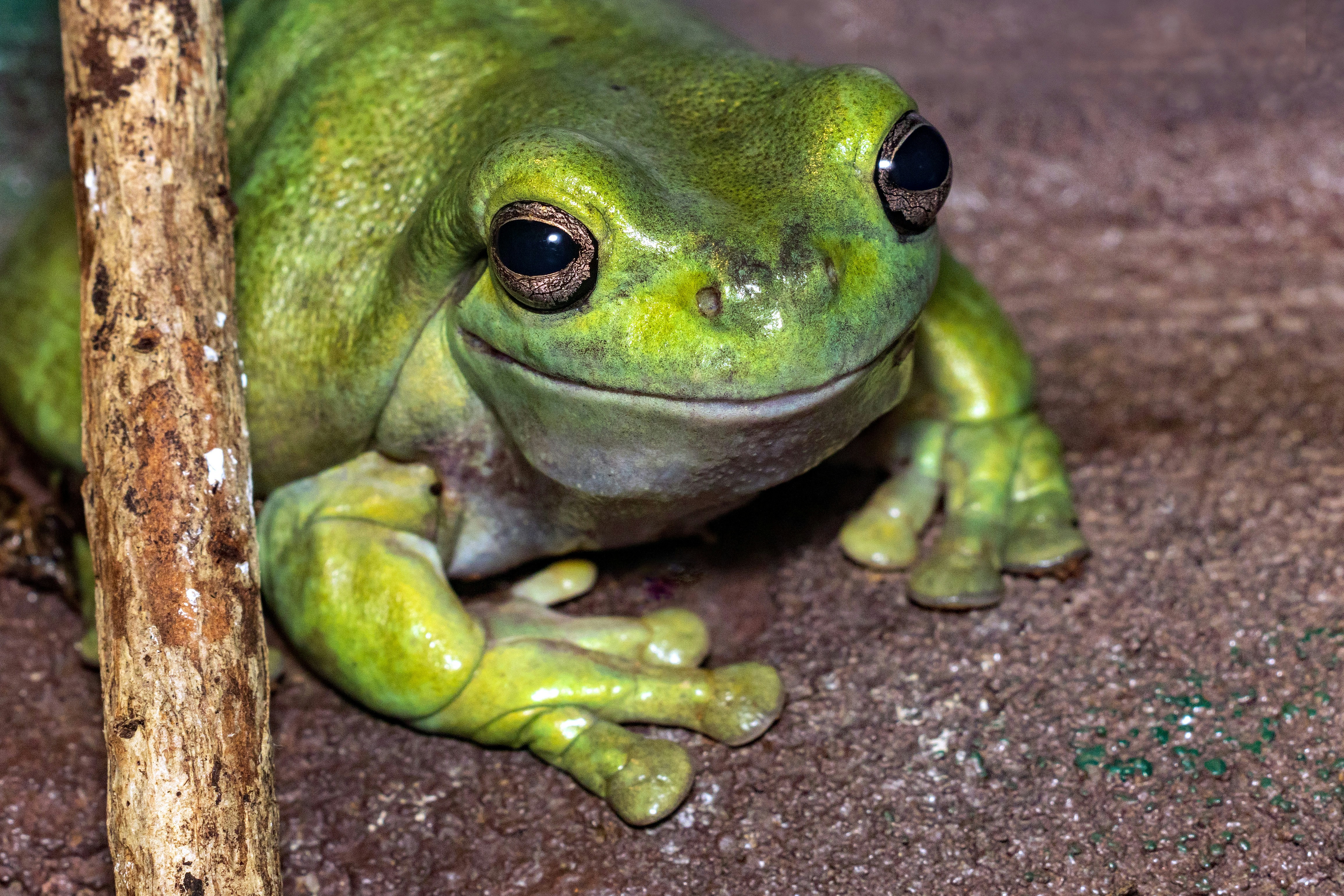
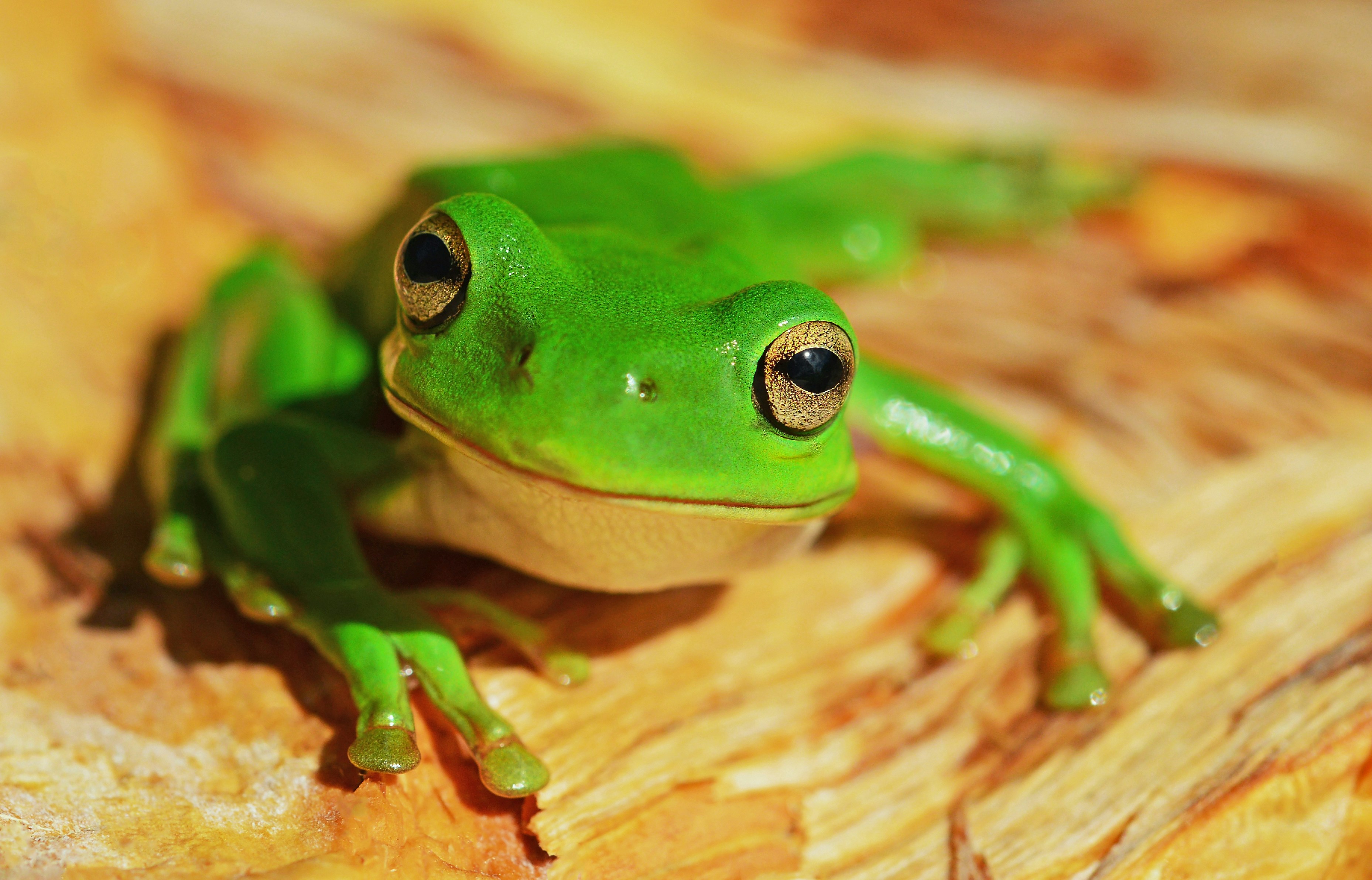
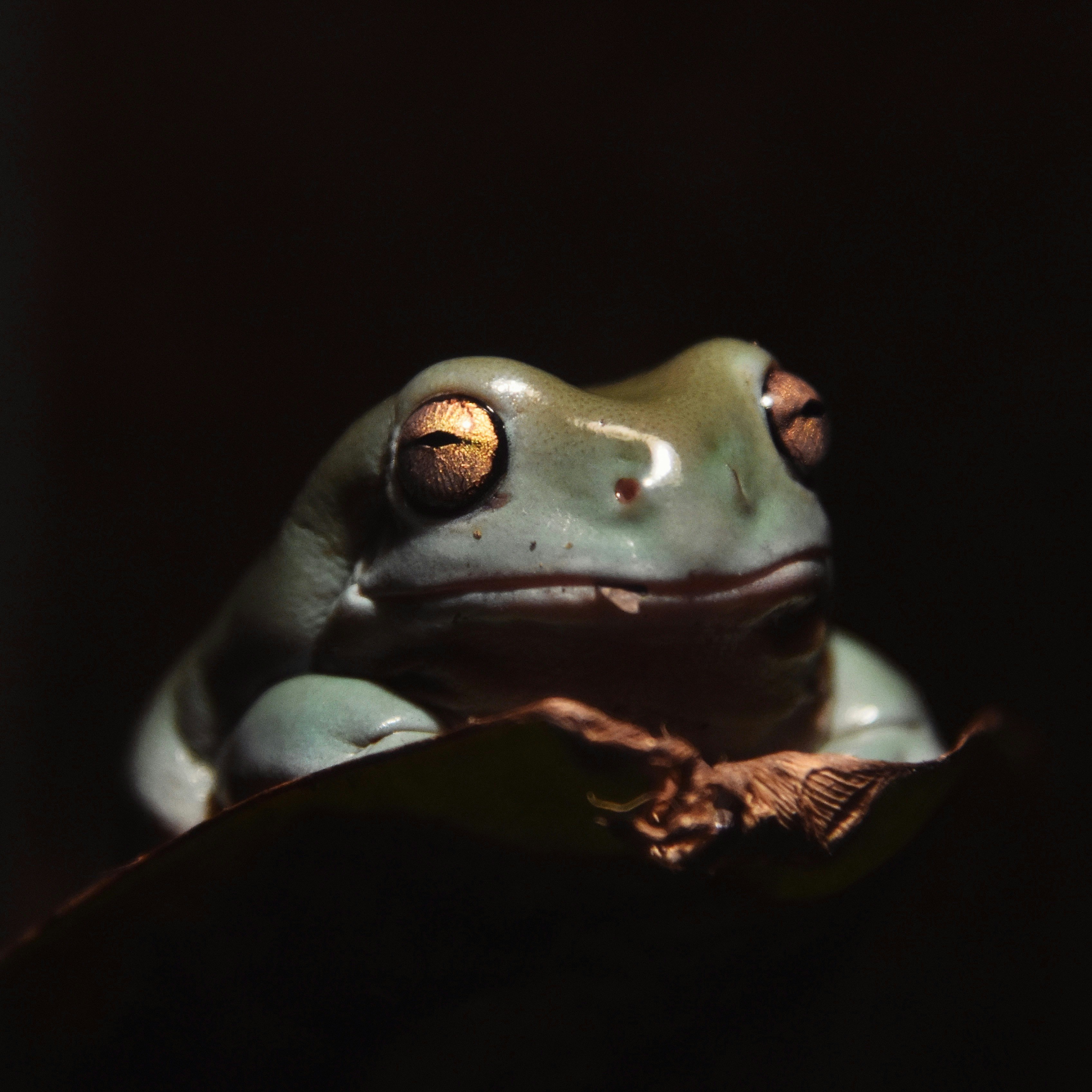
Australian Green Tree Frog
Scientific name: Litoria caerulea
Large and relatively calm tree frog with bright green coloration.
Quick facts
- Approximate size 7–12 cm
- Average weight 30–50 g
- Life expectancy 10–15 years (captivity)
- Activity Nocturnal
Scientific name: Litoria caerulea
Large and relatively calm tree frog with bright green coloration.
What this species is like in its natural environment, with the climate, shelters and resources it needs.
The Australian green tree frog is a charismatic and hardy amphibian in humid environments.
Uses branches, hollow logs and human structures near water sources, always in humid climates or with regular rainfall.
Spends the day hidden and becomes active at night, when it climbs and hunts insects in vegetation or on walls.
Its relative tolerance to handling has made it popular, but it remains an amphibian sensitive to poor environmental conditions.
Although relatively stable, it depends on the quality of aquatic and terrestrial habitats where it lives.
Striking details about this species that help better understand its biology and role in ecosystems.
Summary of the most critical points if this species is kept in captivity at specialized centers.
In captivity requires vertical terrariums with branches, shelters and access to water.
Ventilation and humidity control are crucial to maintain healthy skin.
Should not be handled routinely, although it tolerates contact somewhat better than other frogs.
General information intended for professional facilities and educational projects. Not intended to encourage capture or improvised keeping of wild amphibians.
Can be suitable for hobbyists with some experience in amphibians, always with advice.
The terrarium should be cleaned regularly, avoiding harsh chemicals.
A good ambassador for explaining the importance of amphibians in urban and suburban areas.
This section has an educational purpose. Amphibian conservation involves, above all, protecting ponds, rivers, forests and wetlands, and avoiding irresponsible release of exotic species.