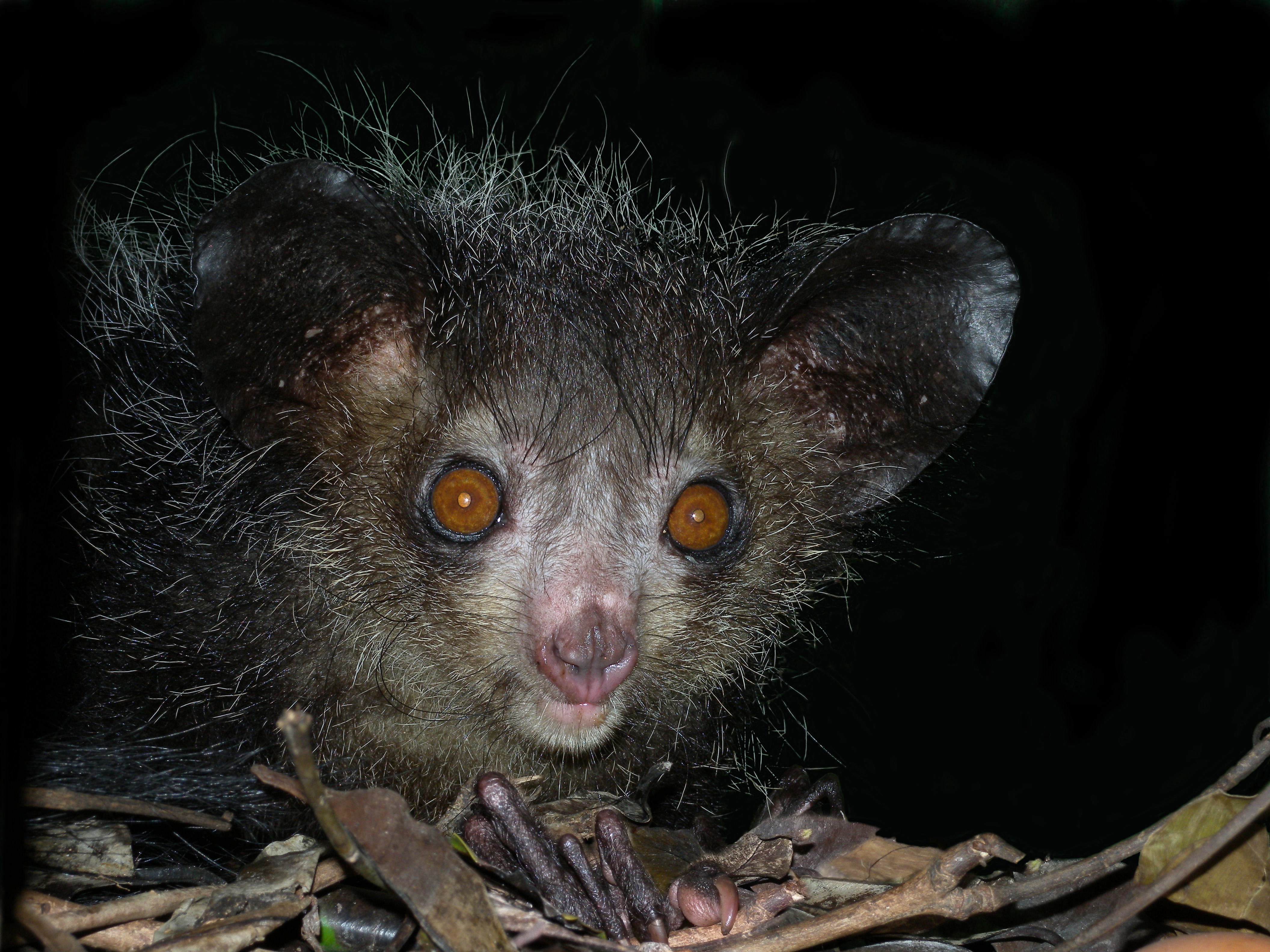
Aye-Aye

Scientific name: Daubentonia madagascariensis

Type: Mammal Main biome: Tropical Jungle Difficulty: Alta

Nocturnal lemur with large ears and an extremely elongated finger to extract larvae from wood.

Quick facts

  • Approximate size36–44 cm (body)
  • Average weight2–3 kg
  • Life expectancy20–23 years
  • ActivityNocturnal
Aye-Aye

Basic information

  • 🏡Home: humid, secondary forests and plantations in Madagascar, using both canopy and middle strata.
  • 🍏Food: insect larvae in wood, fruit, seeds and sap.
  • 👫Sexual dimorphism: not very evident; males and females are similar in size and coloration.
  • 🐾Predators: nocturnal raptors and carnivores; human superstition has also led to direct persecution.

Life in the wild

What this species is like in its natural environment, with the climate, shelters and resources it needs.

Species overview

The aye-aye is a highly specialized lemur with nocturnal habits and unmistakable appearance, key to Madagascar's diversity.

Natural habitat

Found in various forest types and sometimes plantations, as long as there are trees for foraging and shelter.

Behavior

Moves at night among branches and trunks, covering large areas searching for trees with larvae and fruits.

Special traits

Its long flexible middle finger, continuously growing teeth and keen hearing allow it to exploit a food niche rarely used by other primates.

Conservation and threats

Forest loss and persecution due to superstition threaten survival; various projects work on study and protection.

Curiosities

Striking details about this species that show its biology and ecology in a different way.

  • 🌍Uses its elongated middle finger to explore cracks and cavities in wood.
  • Locates larvae by tapping wood and listening to internal sounds, similar to a "tactile echolocator".
  • 🔎Subject of superstitions associating it with bad luck in some local cultures.
  • 🧠One of the most unique and recognizable lemurs in the world.

Welfare profile

Aspects to consider if this species is kept in captivity at specialized centers.

Facilities and spaceCritical

In captivity requires spacious, tall and complex enclosures with hollow logs and branches to explore.

Light, temperature and environmentMedium

Needs varied diet with fruits, nuts, sap and access to wood for larvae or substitutes.

Handling and stressVery delicate

Lighting must be controlled to respect its nocturnal activity; constant public exposure can be stressful.

Aye-Aye in captivity

General information aimed at professional facilities and authorized centers.

⚠️ Capture and trade of mammals like this species are regulated in many countries. Essential to verify legal origin of animals and prioritize responsible breeding programs and habitat conservation.

Suitable facilities

Some research centers and specialized zoos keep aye-ayes as part of conservation programs.

Feeding in responsible centers

  • Enclosures are usually indoors with reversed light cycles.
  • Compatible with public schedules.
  • Diet of fruits, larvae and specific substitutes.

Handling and welfare

Enrichment includes perforated logs, objects requiring fine manipulation and variation in food presentation.

Ethical message

Environmental education insists on debunking myths and superstitions that have encouraged its persecution.

Imagen ampliada