Blue Poison Dart Frog
Scientific name: Dendrobates tinctorius 'azureus'
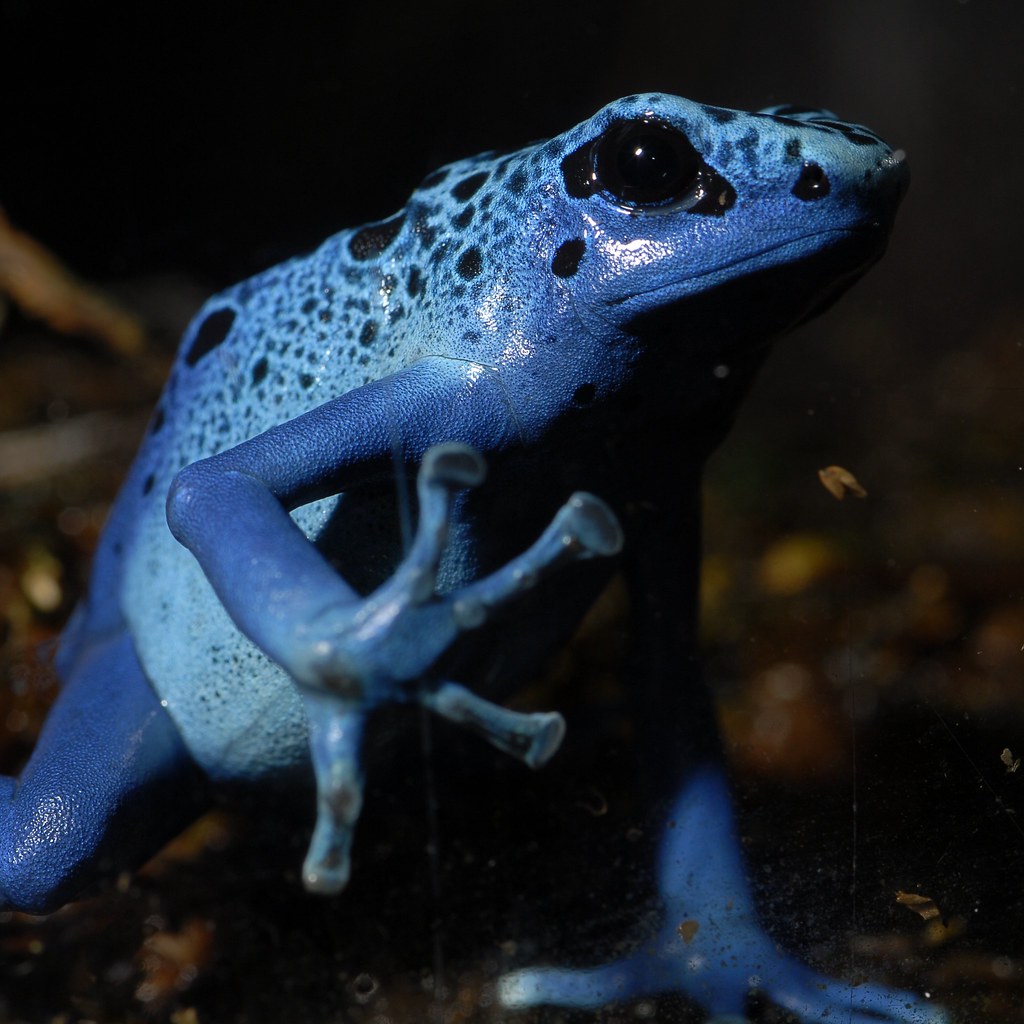
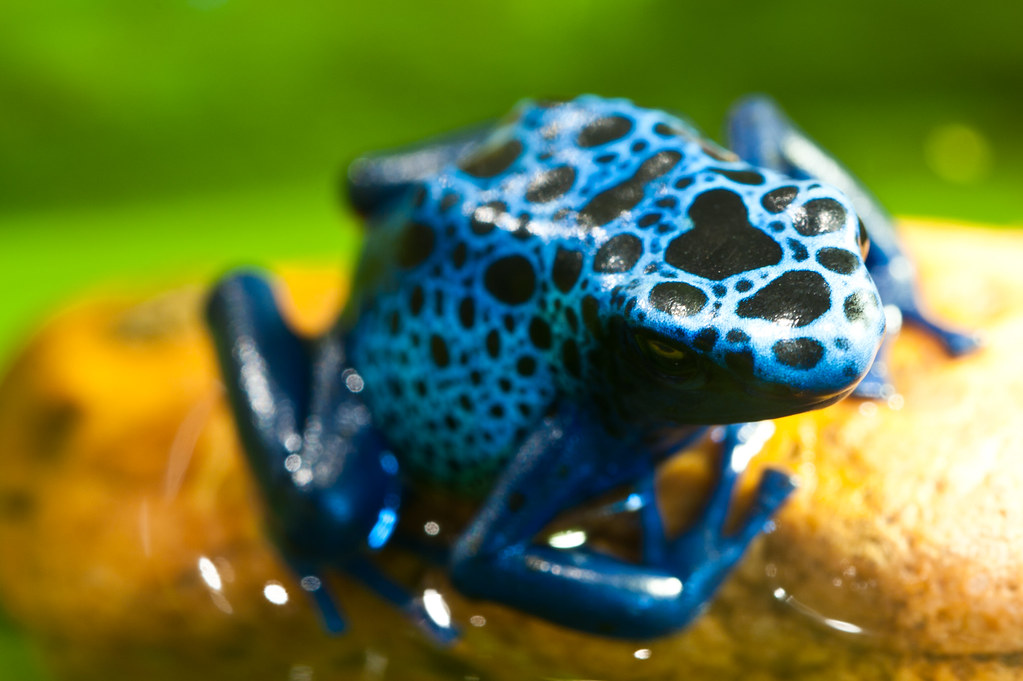
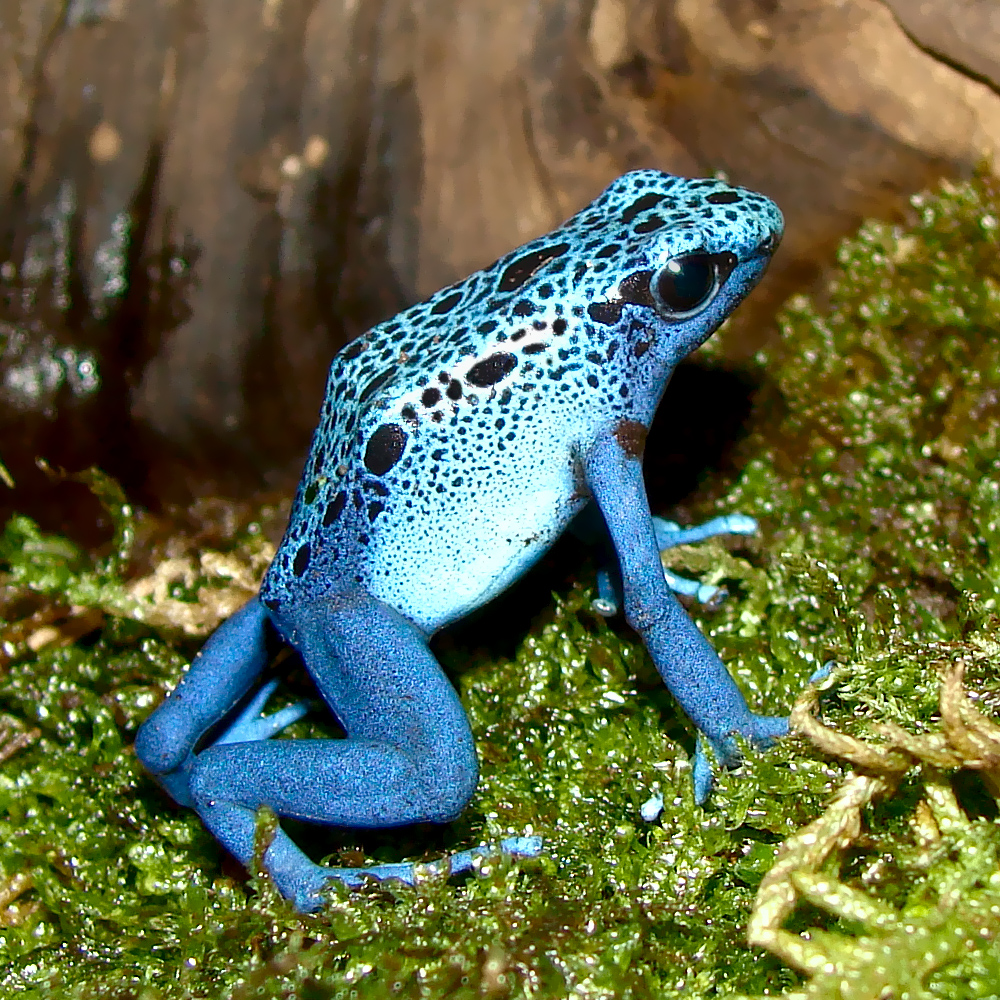
Small venomous frog with intense blue color and dark spots.
Quick facts
- Approximate size 3–4 cm
- Average weight 3–8 g
- Life expectancy 8–12 years (captivity)
- Activity Diurnal
Scientific name: Dendrobates tinctorius 'azureus'
Small venomous frog with intense blue color and dark spots.
What this species is like in its natural environment, with the climate, shelters and resources it needs.
The blue poison dart frog is a classic example of a venomous amphibian from tropical forests, with enormous educational importance.
Occupies rainforest areas with humid soils, refuges among roots and fallen logs, and small water bodies for larval development.
It is diurnal and territorial; males usually defend small areas where they call and care for clutches.
Its skin contains alkaloids that affect the nervous system of many animals; intense colors reduce the probability of attack.
Habitat loss and illegal capture can affect certain populations, although responsible breeding programs exist.
Striking details about this species that help better understand its biology and role in ecosystems.
Summary of the most critical points if this species is kept in captivity at specialized centers.
In captivity requires very humid but well-ventilated terrariums, with abundant vegetation and shelters.
Temperature must be kept stable within a relatively narrow range, without heat spikes.
Tolerates handling stress poorly; observation is preferable to direct contact.
General information intended for professional facilities and educational projects. Not intended to encourage capture or improvised keeping of wild amphibians.
Maintenance is recommended only for keepers with experience in small tropical frogs.
Bioactive setups, with plants and substrate microfauna, can improve their welfare.
Information to the public should emphasize that, despite their beauty, they are not handling animals or "living toys".
This section has an educational purpose. Amphibian conservation involves, above all, protecting ponds, rivers, forests and wetlands, and avoiding irresponsible release of exotic species.