California Kingsnake

Scientific name: Lampropeltis californiae

Type: Reptile Main biome: Temperate Forest Difficulty: Media

Active and hardy colubrid that occupies a wide variety of habitats on the west coast of North America.

Quick facts

  • Approximate size90–120 cm
  • Average weight200–400 g
  • Life expectancy15–20 years (captivity)
  • ActivityMainly crepuscular and nocturnal
California Kingsnake

Basic information

  • 🏡Habitat: inhabits scrublands, open forests, rocky areas, and agricultural zones, using burrows and shelters under rocks or logs.
  • 🍏Diet: feeds on other reptiles, small mammals, amphibians, and occasionally birds and eggs.
  • 👫Sexual dimorphism: females tend to be slightly larger and more robust than males; the dimorphism is subtle.
  • 🐾Predators: birds of prey, carnivorous mammals, and larger snakes; also suffers road accidents.

Life in the wild

How this species lives in its natural environment, with the climate, shelters and resources it needs.

Species overview

The California kingsnake is a highly adaptable colubrid that inhabits a wide variety of environments in western North America.

Natural habitat

It uses scrublands, open forests, rocky areas, and agricultural zones, taking advantage of other animals' burrows and shelters under logs and rocks.

Behavior

It is mainly crepuscular and nocturnal. When threatened, it may vibrate its tail and adopt defensive postures, but usually prefers to flee if given the opportunity.

Special features

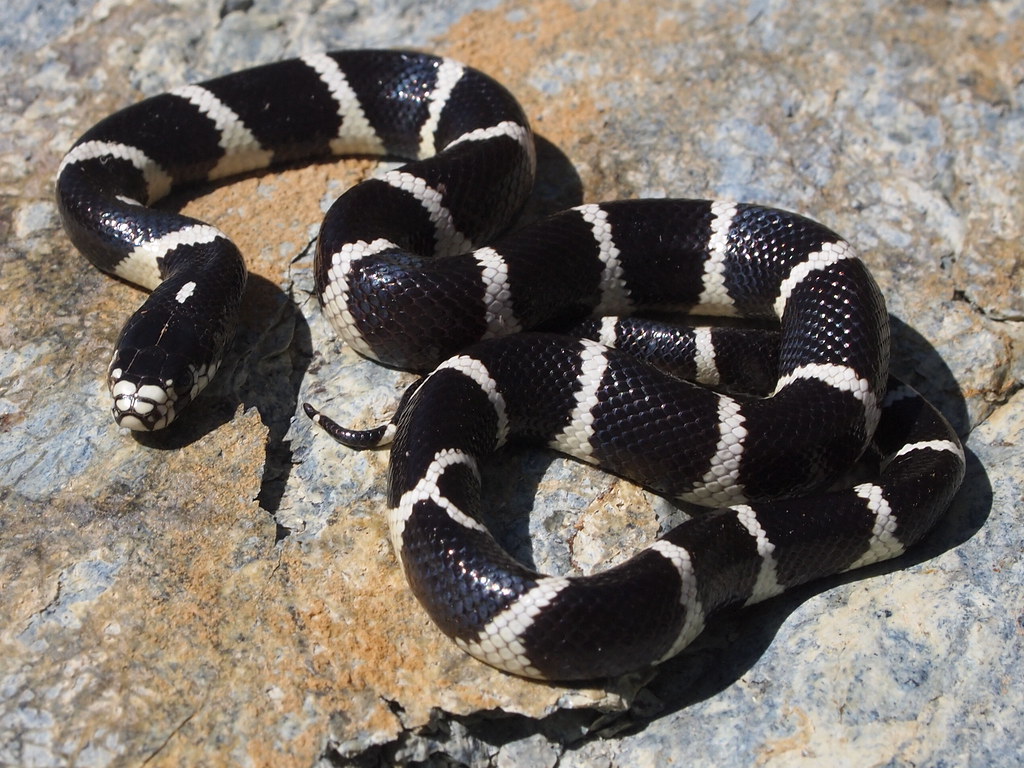
It is famous for preying on other snakes, including venomous species, which has given it the name "king." Its contrasting bands can confuse predators.

Conservation and threats

It is not considered globally threatened, although it suffers road accidents and habitat loss in some areas. Uncontrolled local capture can affect specific populations.

Curiosities

Striking details about this species that show its biology and ecology in a different way.

  • 🌍It is known for its ability to prey on other snakes, even venomous ones.
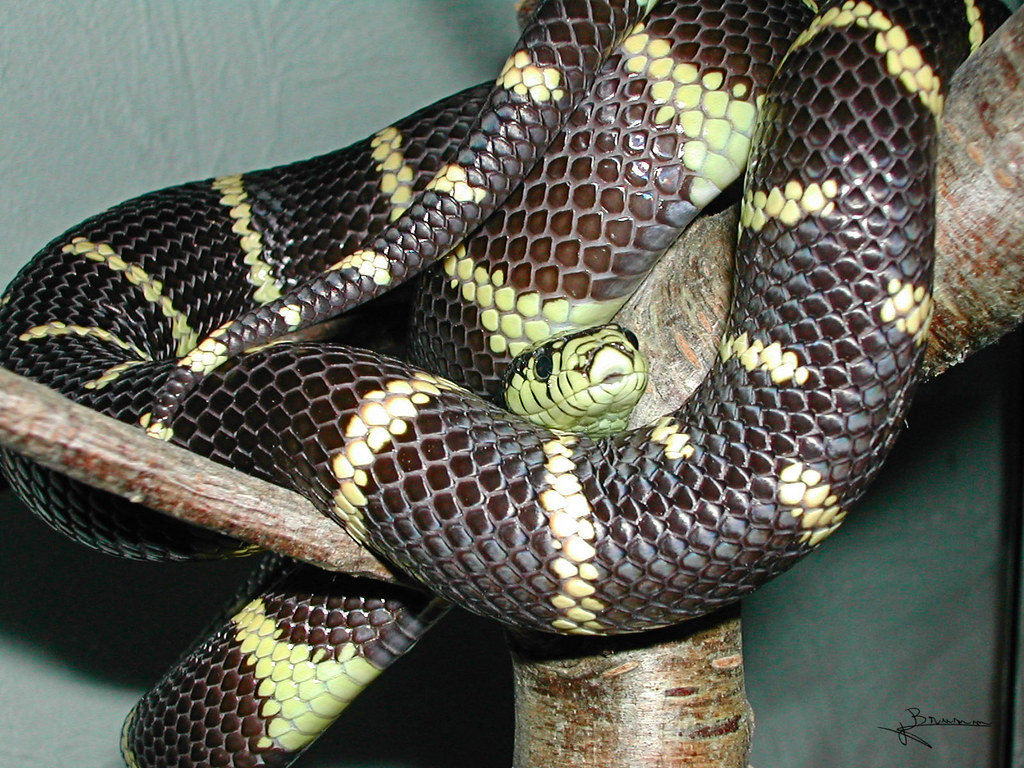
  • There are numerous different patterns and colors, both natural and selectively bred in captivity.
  • 🔎It can vibrate its tail and defend itself by mimicking rattlesnakes.
  • 🧠Its hardiness has made it popular in terrarium keeping, although it remains wildlife.

Welfare profile

Aspects to consider if this species is kept in captivity in specialized centers.

Enclosures and spaceMedium

Requires wide-base terrariums with multiple hides and substrate where it can burrow or feel covered.

Light, temperature, and environmentHigh

An adequate thermal gradient and marked day-night cycles help regulate its activity patterns and digestion.

Handling and stressMedium

Tolerates calm handling relatively well, but manipulations should be spaced and respectful.

California Kingsnake in captivity

General information aimed at professional facilities and authorized centers.

⚠️ The capture and trade of reptiles like this species are regulated in many countries. It is essential to verify the legal origin of animals and prioritize responsible breeding programs and habitat conservation.

Suitable enclosures

In responsible centers, enclosures that allow both exploration and hiding are recommended, with shelters in both warm and cool zones.

Feeding in responsible centers

The diet is usually based on appropriately sized thawed rodents, avoiding overfeeding.

Handling and welfare

During handling, sudden movements should be avoided; it is preferable to allow the snake to slide between hands.

Ethical message

It is important that specimens come from captive breeding and not from direct wild captures.

Imagen ampliada