Capybara
Scientific name: Hydrochoerus hydrochaeris
Giant rodent, extremely social, always associated with aquatic areas.
Quick facts
- Approximate size100–130 cm
- Average weight35–65 kg
- Life expectancy6–10 years
- ActivityCrepuscular
Scientific name: Hydrochoerus hydrochaeris
Giant rodent, extremely social, always associated with aquatic areas.
What the capybara is like in its natural environment and what role it plays in freshwater ecosystems.
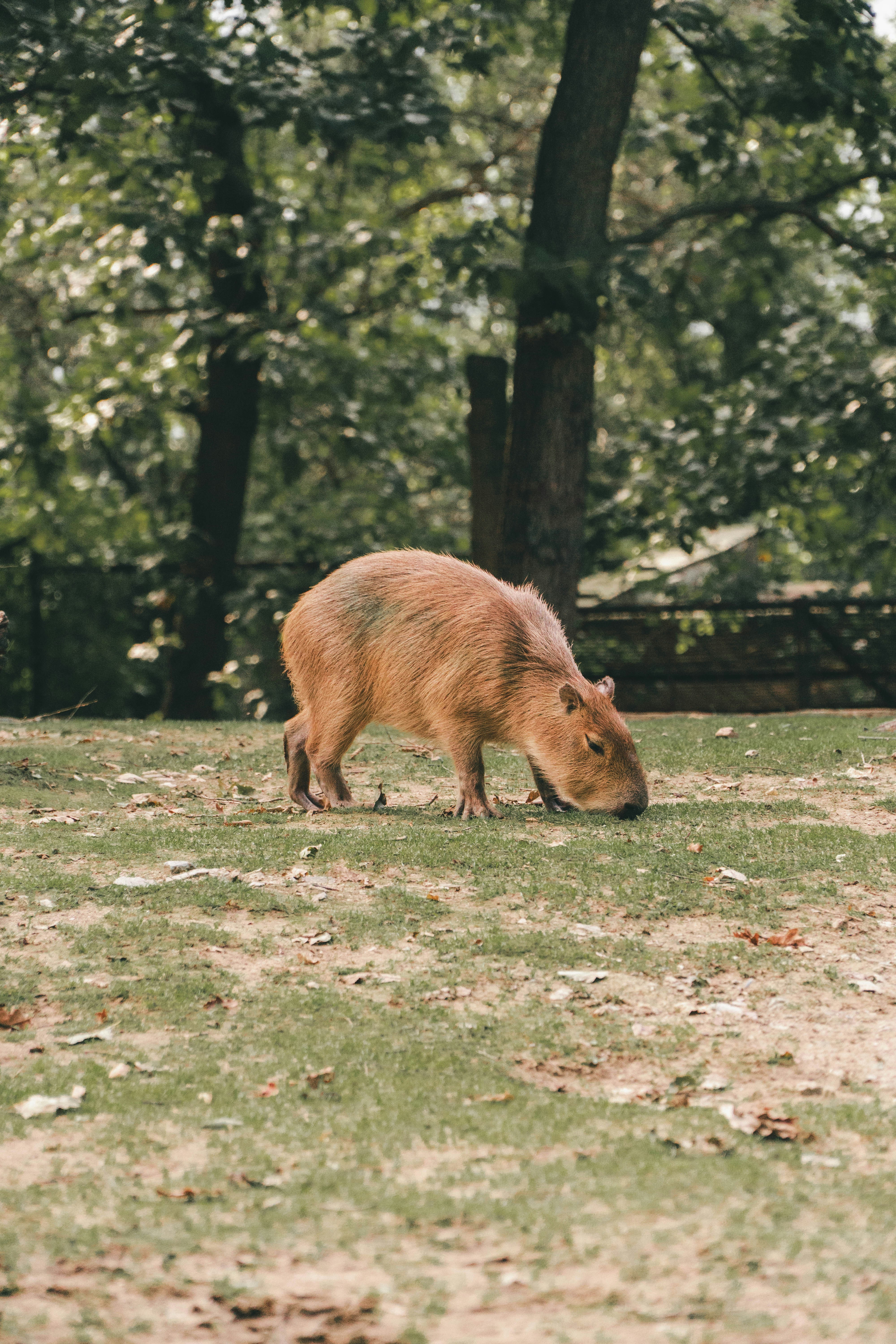
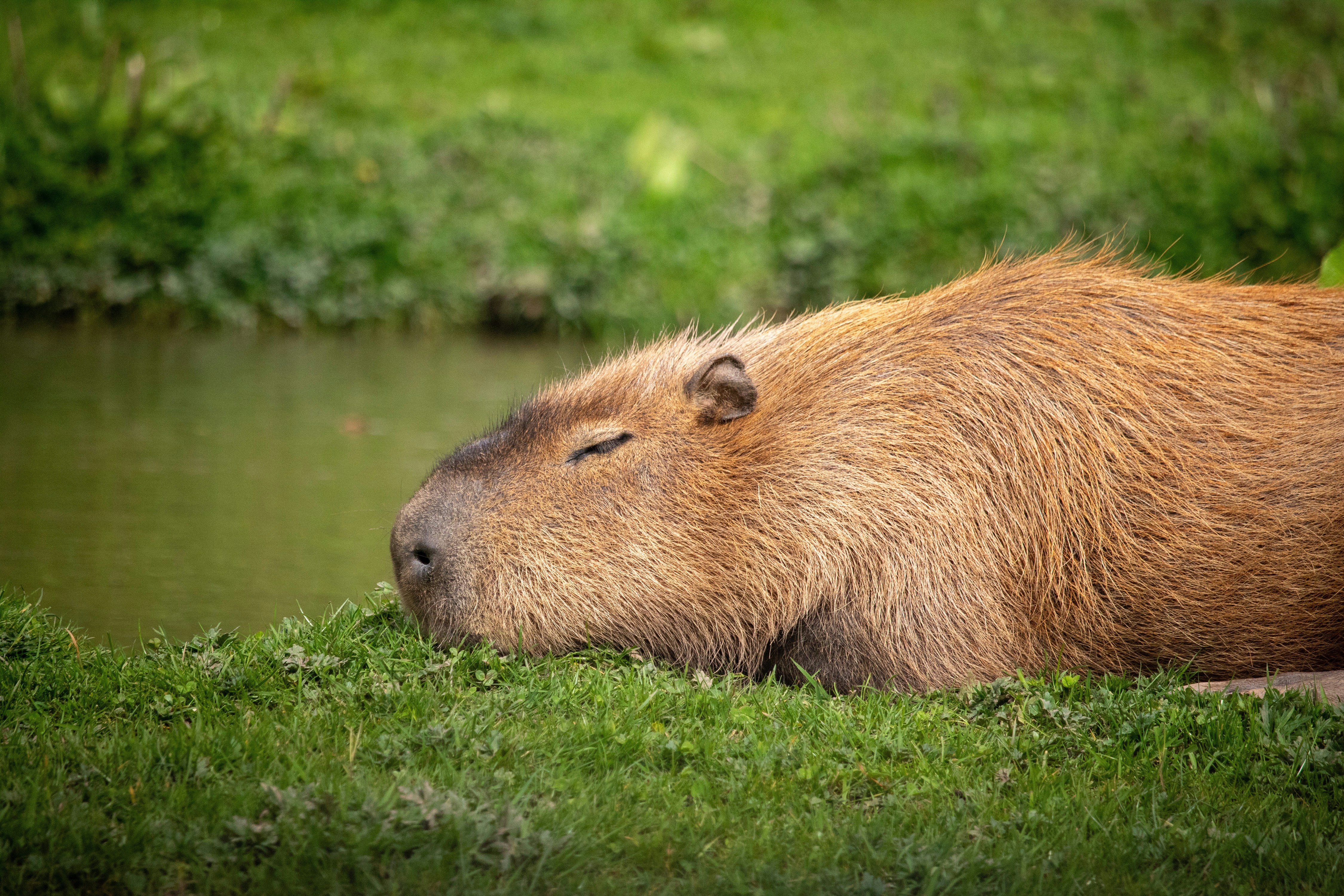
The capybara is a large South American rodent that lives in social groups near rivers, lagoons and swamps. It spends much of its time resting or feeding on the banks.
Inhabits flooded savannas, wetland areas and slow-flowing river margins. Needs constant access to water to regulate temperature and escape from predators.
Extremely social: usually lives in groups of 10 to 20 individuals, although larger aggregations can form. Communication includes vocalizations, scent and mutual grooming behavior.
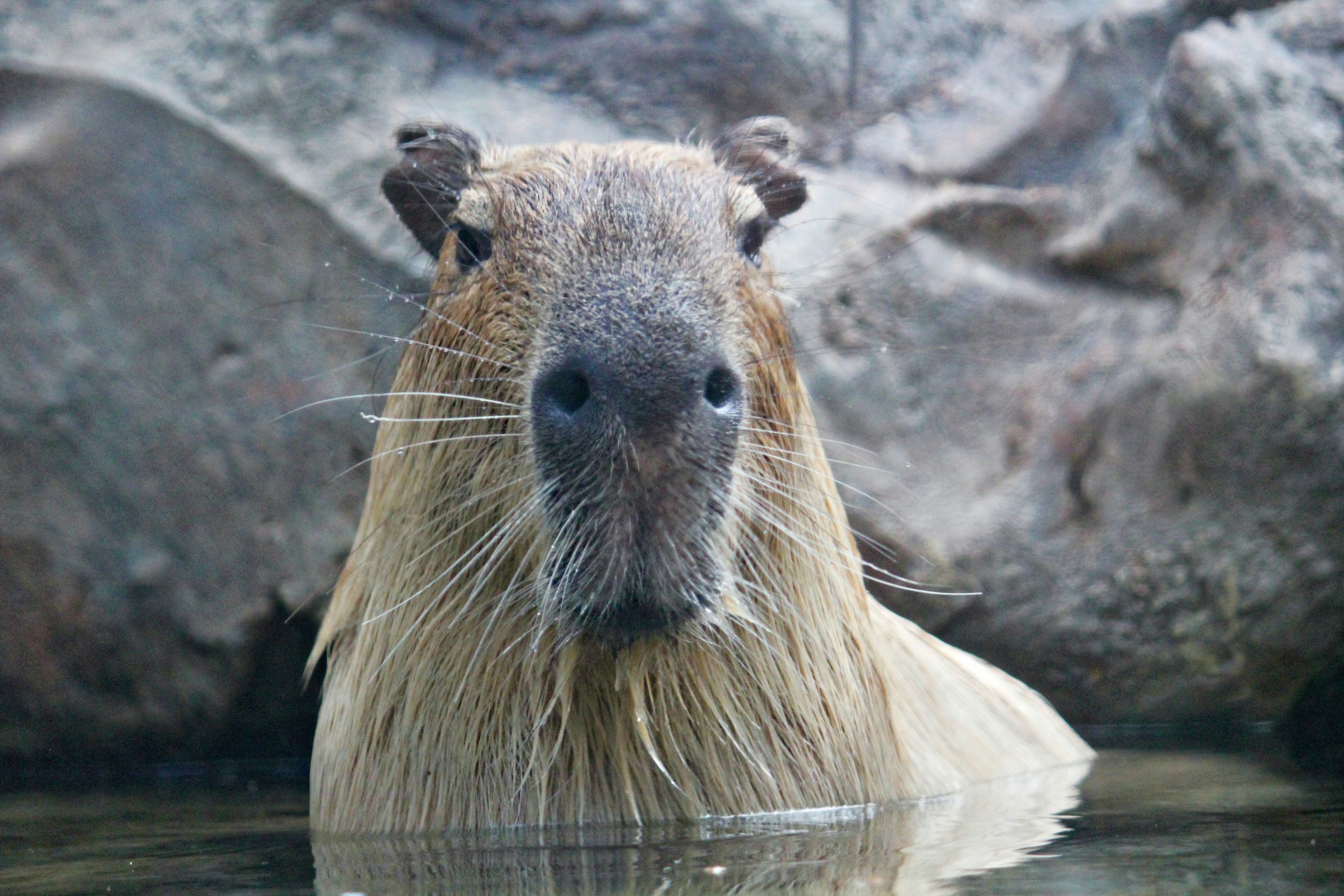
Has partially webbed feet and eyes, ears and nose in a high position, allowing it to swim with great skill and keep its head above water while the body remains submerged.
Wild populations are affected by habitat loss and hunting in some regions, although the species is generally considered of least concern. Maintaining healthy wetlands is key to its future.
Striking facts about the capybara that show how special it is within South American wetlands.
Visual summary of the most critical aspects for the welfare of this species in captivity.
Requires large enclosures with permanent access to a large water area. Reduced spaces cause stress, conflicts and health problems.
It is a strongly social species. Keeping isolated individuals is considered inadequate for their welfare and should only occur in clinical or exceptional situations.
Responsible maintenance is reserved for centers with specialized staff (zoos, reserves or sanctuaries). Requires knowledge in handling large herbivores and wildlife veterinary care.
Guidance information focused on authorized centers. Not recommended for keeping as a "domestic pet".
Enclosures should combine wide meadows with direct access to large lagoons or pools. The substrate should allow them to walk and lie down comfortably, avoiding hard or slippery floors.
Should be kept in stable groups, respecting the natural social structure. It is essential to avoid isolation and plan the group composition well to reduce conflicts.
They need environmental enrichment, regular veterinary check-ups and weight control. Chronic stress can manifest in stereotyped behaviors or dermatological problems.
This information is for educational purposes. The priority should always be the conservation of natural ecosystems and the welfare of the animals that live in them.