Caracal
Scientific name: Caracal caracal
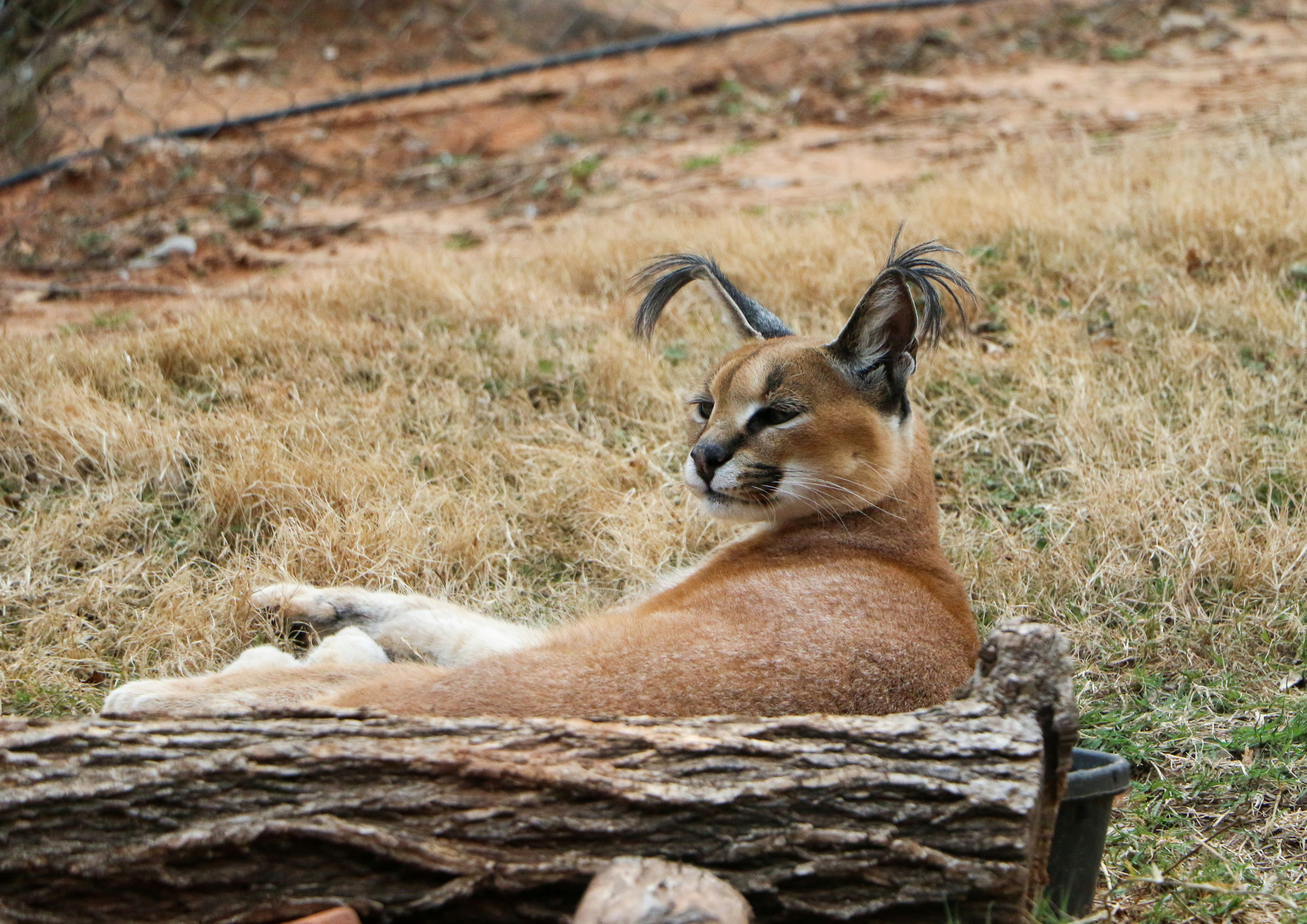
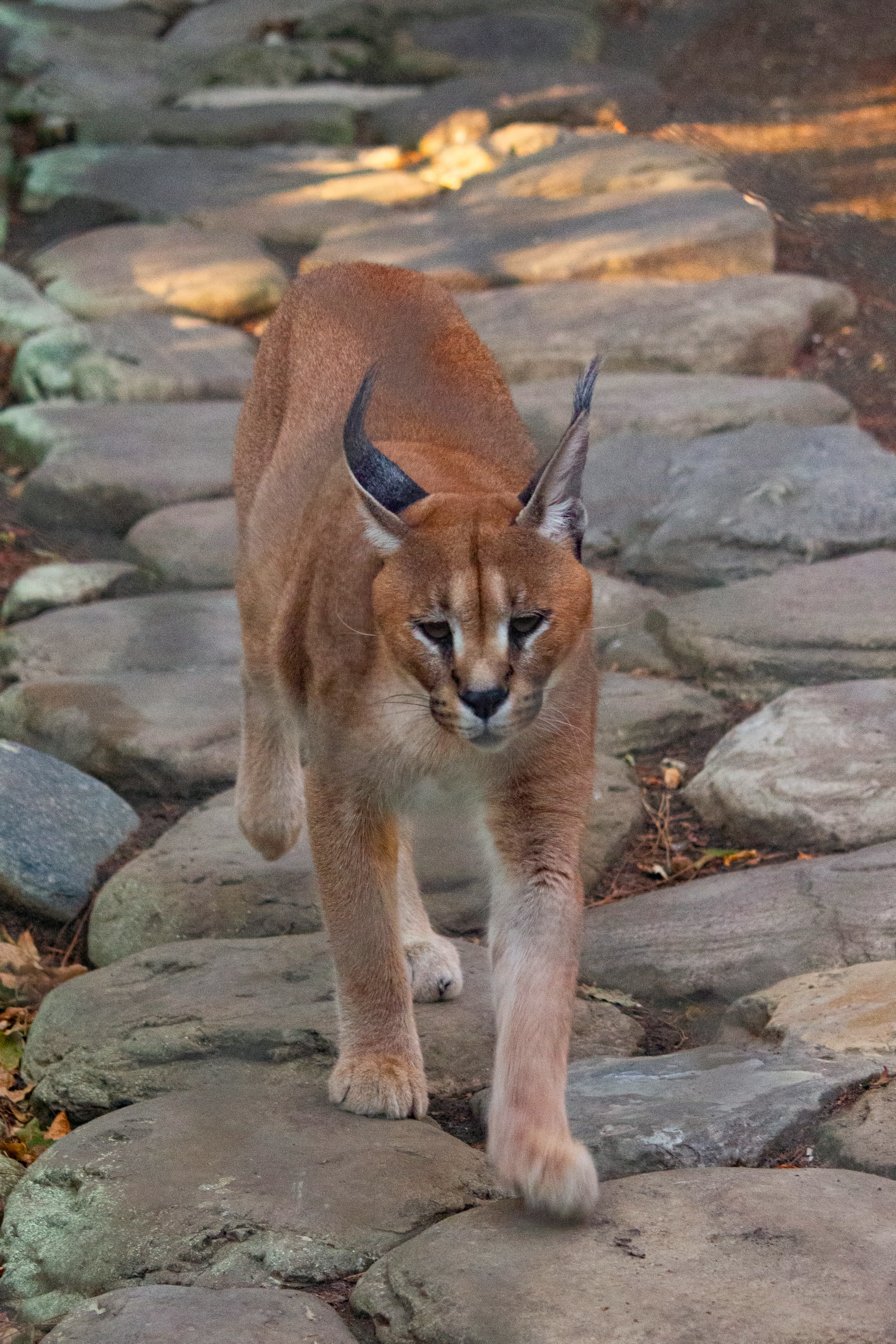
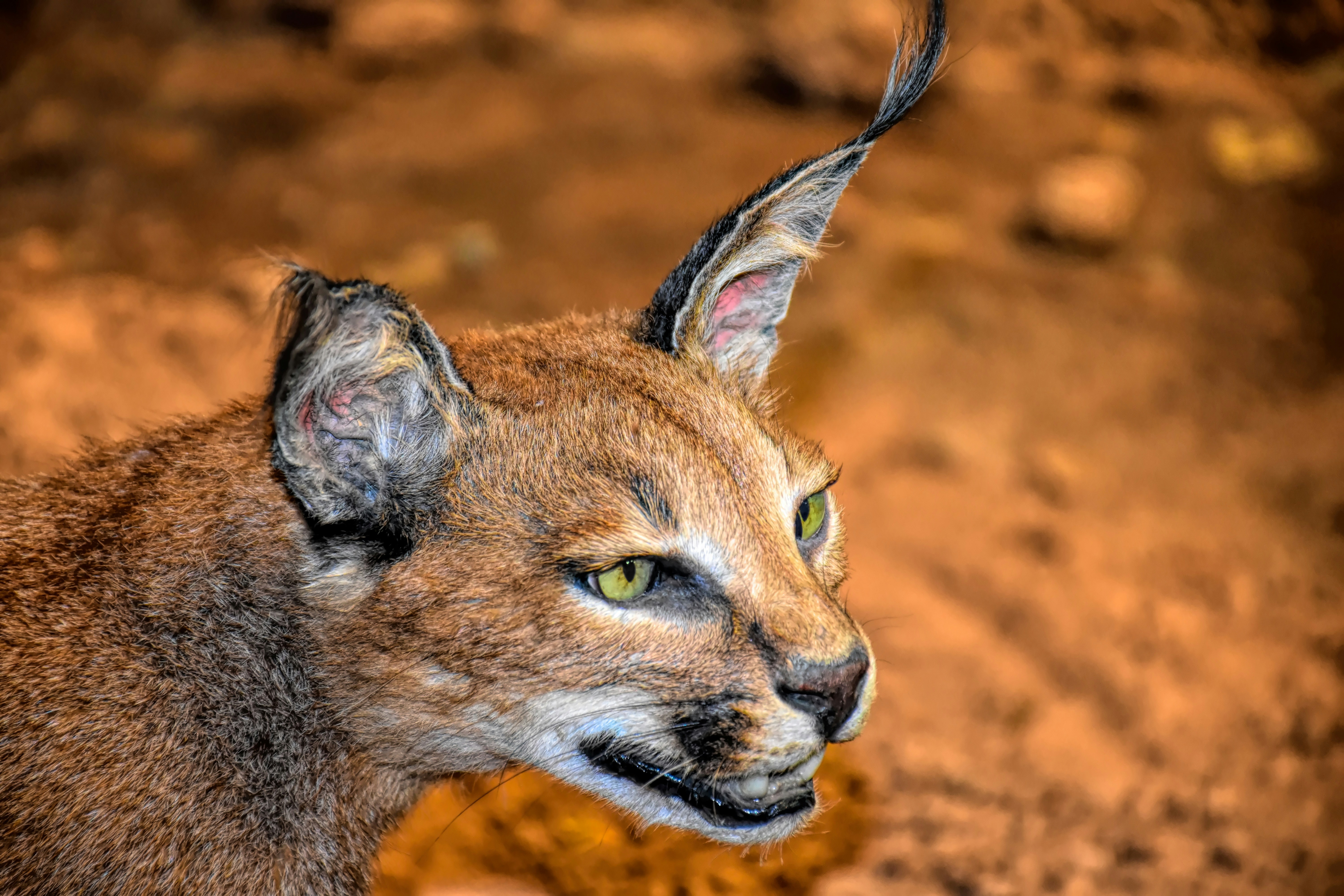
Medium-sized feline with tall ears tipped with characteristic black tufts.
Quick facts
- Approximate size60–90 cm
- Average weight8–18 kg
- Life expectancy12–17 years
- ActivityCrepuscular / nocturnal
Scientific name: Caracal caracal
Medium-sized feline with tall ears tipped with characteristic black tufts.
What this species is like in its natural environment, with the climate, shelters and resources it needs.
The caracal is a medium-sized feline very well adapted to dry and open environments.
Occupies savannas, scrubland and rocky areas with some cover to hide and stalk prey.
Solitary and territorial. Hunts by stalking, with bursts of speed and impressive leaps when opportunity arises.
Its black ear tufts are distinctive and may have communicative and camouflage functions.
Although globally not among the most threatened felines, persecution for livestock losses is a serious problem in some regions.
Striking details about this species that show its biology and ecology in a different way.
Aspects to consider if this species is kept in captivity at specialized centers.
In captivity needs spacious enclosures with room to run, jump and hide.
Requires diet based on meat and whole prey, with food enrichment that stimulates hunting.
Direct handling involves risk; must be done with barriers and professional protocols.
General information aimed at professional facilities and authorized centers.
A species that should only be kept in zoos and reserves with clear conservation and education objectives.
Cooperative training programs help reduce stress during medical checks.
Discouraging its keeping as an "exotic" pet in homes is an important part of the educational message.
This information is for educational purposes and does not replace advice from specialized professionals or consultation of current legislation.