Emerald Tree Monitor

Scientific name: Varanus prasinus

Type: Reptile Main biome: Tropical Jungle Difficulty: Alta

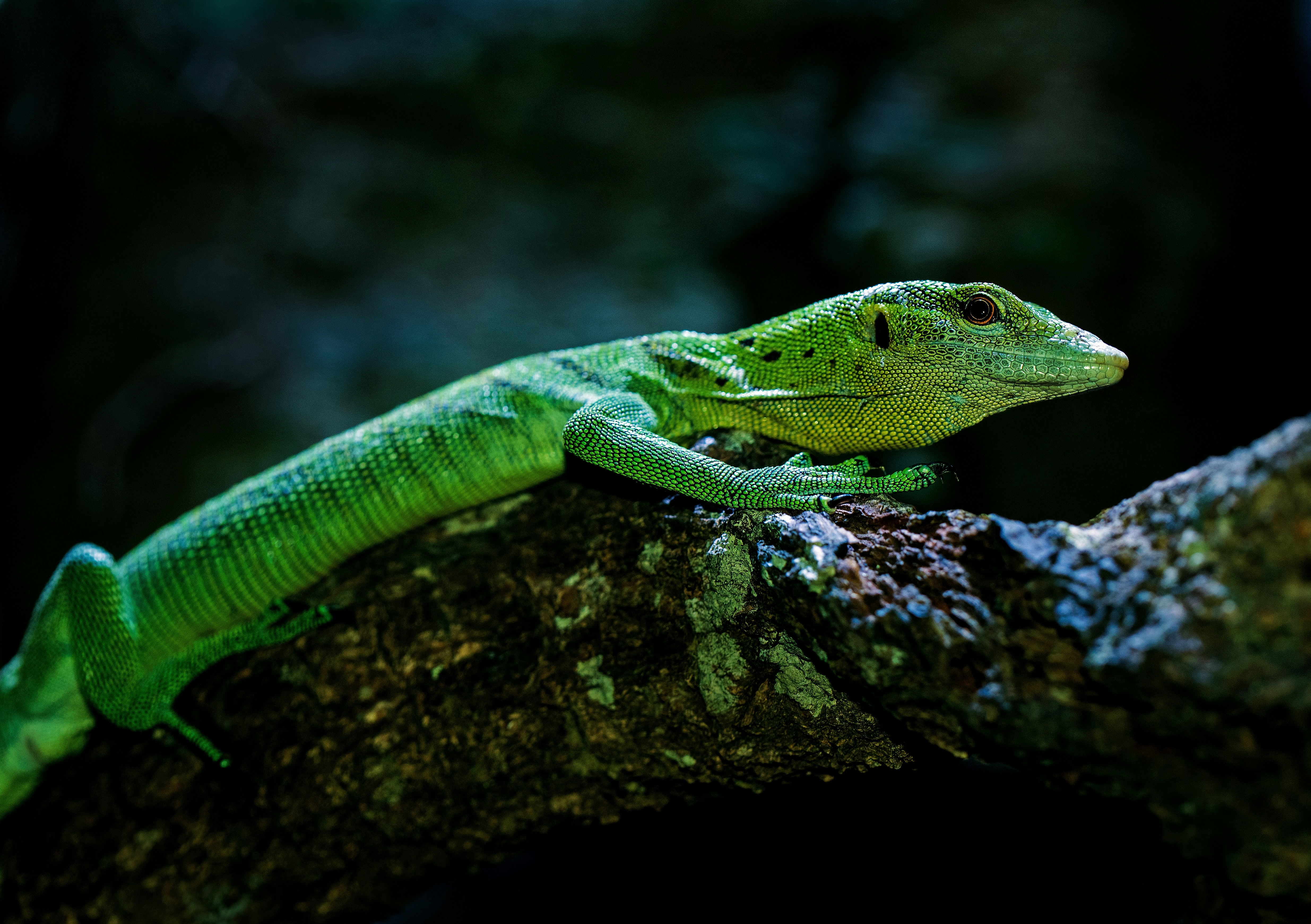
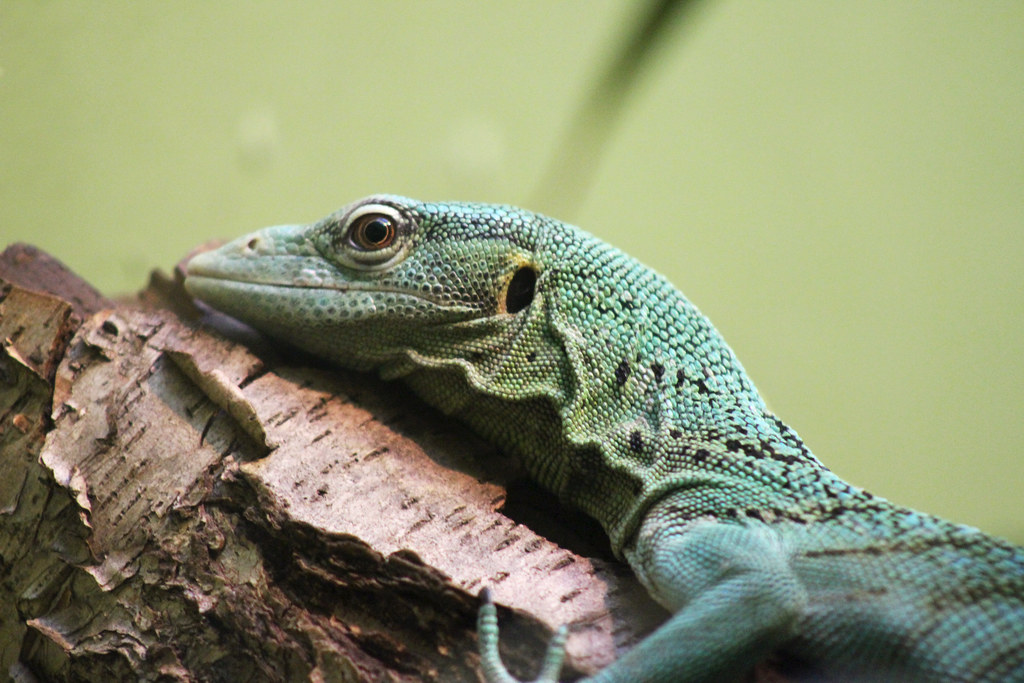
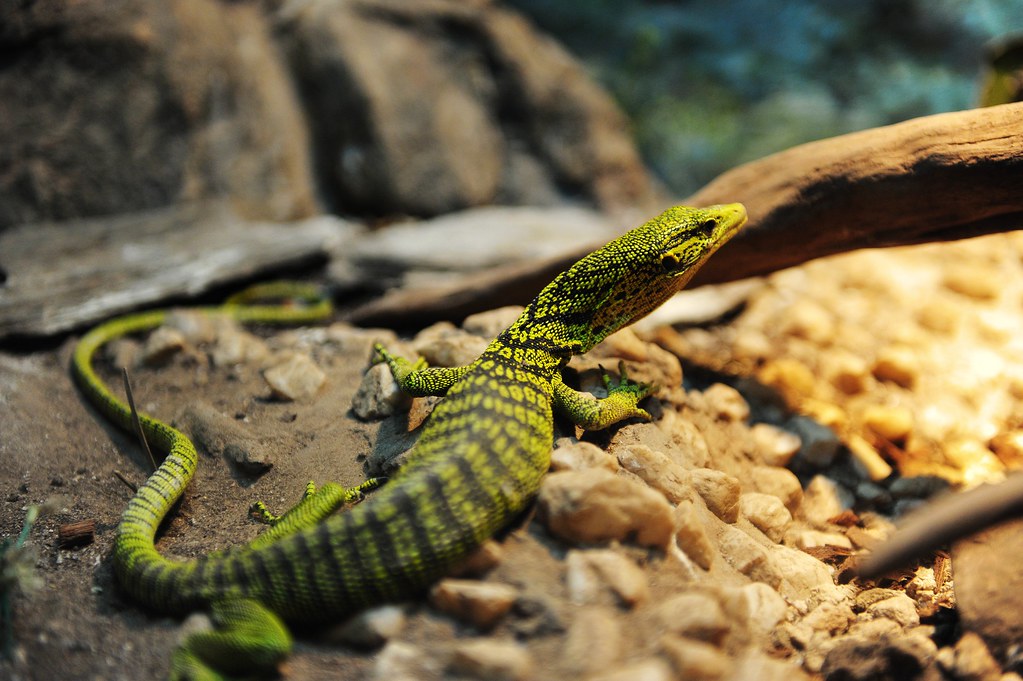
Slender climbing monitor lizard that spends much of its time among high branches of tropical forests.

Quick facts

  • Approximate size75–100 cm (including tail)
  • Average weight500–900 g
  • Life expectancy10–15 years (captivity)
  • ActivityDiurnal, very active among tree vegetation
Emerald Tree Monitor

Basic information

  • 🏡Habitat: lives in humid tropical rainforests, using dense tree vegetation to move and hide.
  • 🍏Diet: mainly large insects, other invertebrates, and small vertebrates that it captures among branches.
  • 👫Sexual dimorphism: not very evident externally; males tend to be somewhat larger with wider heads.
  • 🐾Predators: birds of prey, larger snakes, and some carnivorous mammals; habitat loss is also a significant threat.

Life in the wild

How this species lives in its natural environment, with the climate, shelters and resources it needs.

Species overview

The emerald tree monitor is a slender, arboreal monitor specialized in moving through the canopy of Southeast Asian tropical forests.

Natural habitat

It prefers humid forests with abundant vegetation and intertwined branches. It uses tree holes and root cavities as shelter.

Behavior

It is diurnal and very agile, capable of running and jumping from branch to branch. When threatened, it usually flees by climbing higher or hiding in dense foliage.

Special features

Its partially prehensile tail and narrow body are ideal for life at height. Its strong claws allow it to grip smooth trunks.

Conservation and threats

Deforestation and capture for the wildlife trade can affect local populations. Its captive maintenance requires complex facilities.

Curiosities

Striking details about this species that show its biology and ecology in a different way.

  • 🌍Its long, partially prehensile tail helps it maintain balance while climbing.
  • It has very sharp claws that it uses to climb almost vertical trunks.
  • 🔎It is a very shy species that is sensitive to stress in captivity.
  • 🧠Its emerald green coloration provides camouflage among the leaves.

Welfare profile

Aspects to consider if this species is kept in captivity in specialized centers.

Enclosures and spaceHigh

Requires tall, highly structured terrariums with numerous branches and vines that allow long routes at height.

Light, temperature, and environmentHigh

Needs areas with high humidity combined with good ventilation, avoiding waterlogged atmospheres that promote respiratory problems.

Handling and stressHigh

Direct handling should be very limited; they are nervous animals that can injure themselves trying to escape.

Emerald Tree Monitor in captivity

General information aimed at professional facilities and authorized centers.

⚠️ The capture and trade of reptiles like this species are regulated in many countries. It is essential to verify the legal origin of animals and prioritize responsible breeding programs and habitat conservation.

Suitable enclosures

In professional facilities, an attempt is made to recreate an indoor tree with multiple support points, combined with elevated shelters.

Feeding in responsible centers

The diet is based on large insects and, occasionally, small vertebrates, controlling the quantity to avoid obesity.

Handling and welfare

Maintenance tasks are planned to minimize the time the animal spends exposed without available shelter.

Ethical message

Ethically and practically, emerald monitors should only be kept in centers capable of offering tall enclosures and trained staff.

Imagen ampliada