Fire Salamander
Scientific name: Salamandra salamandra
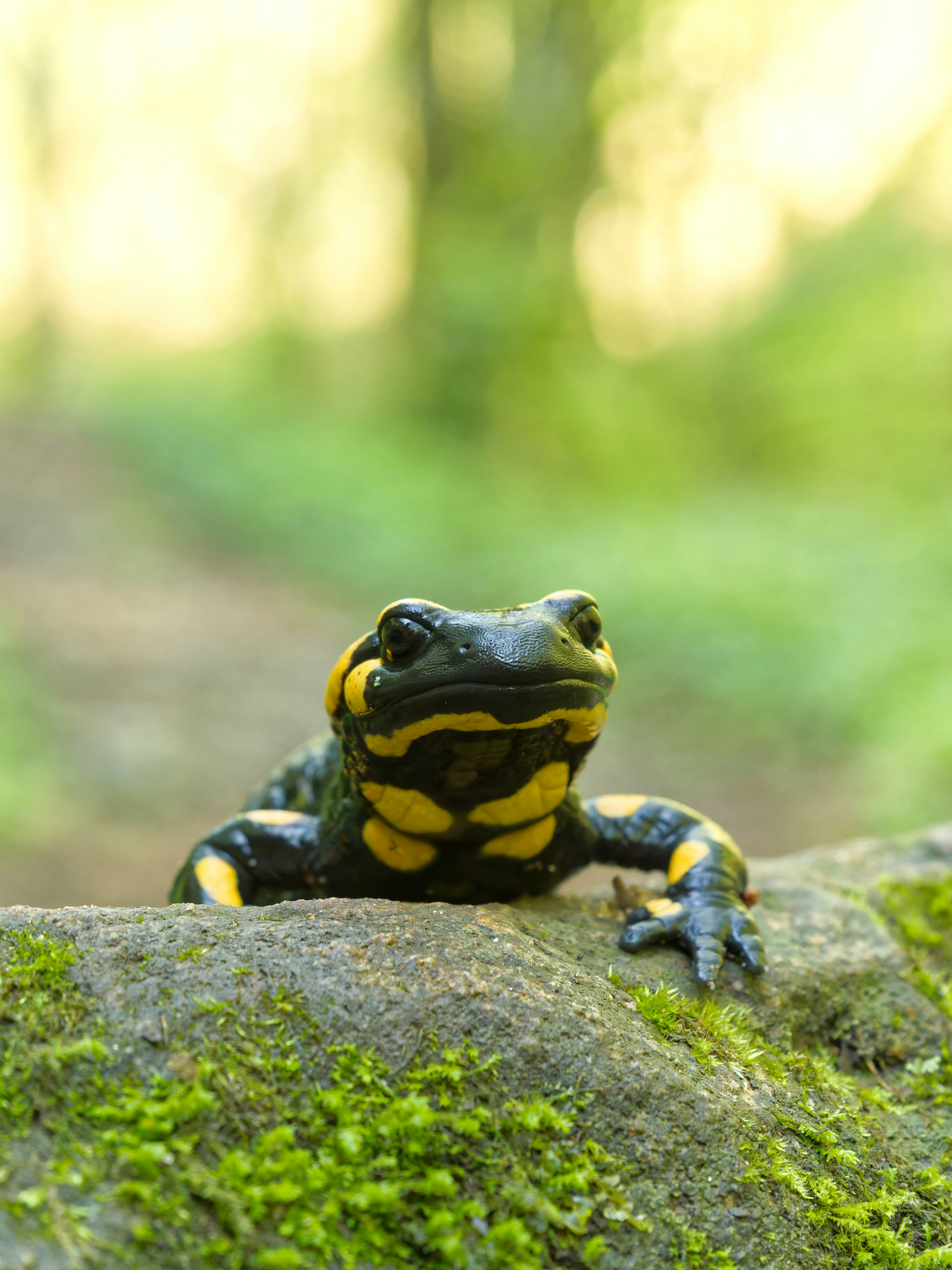
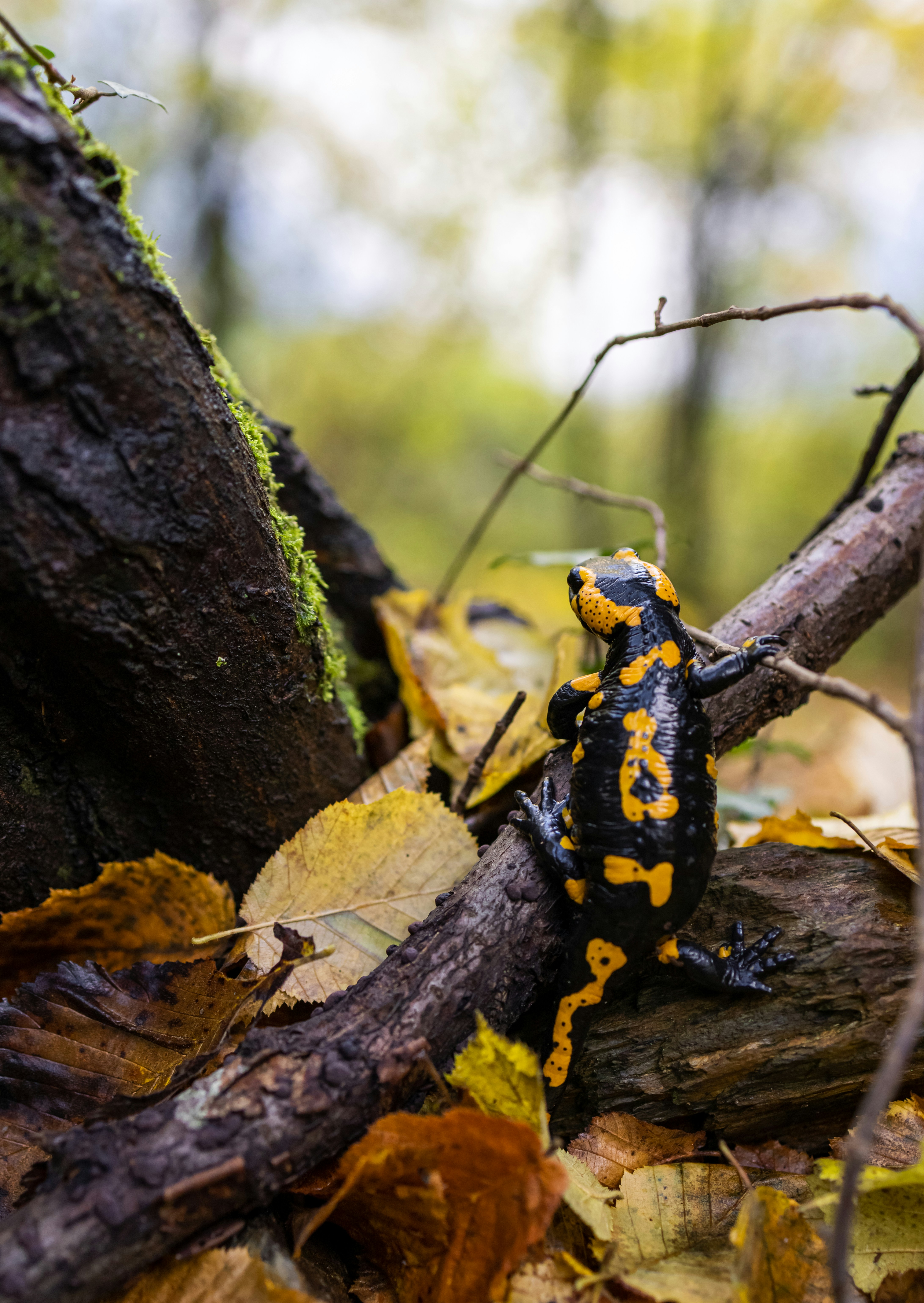
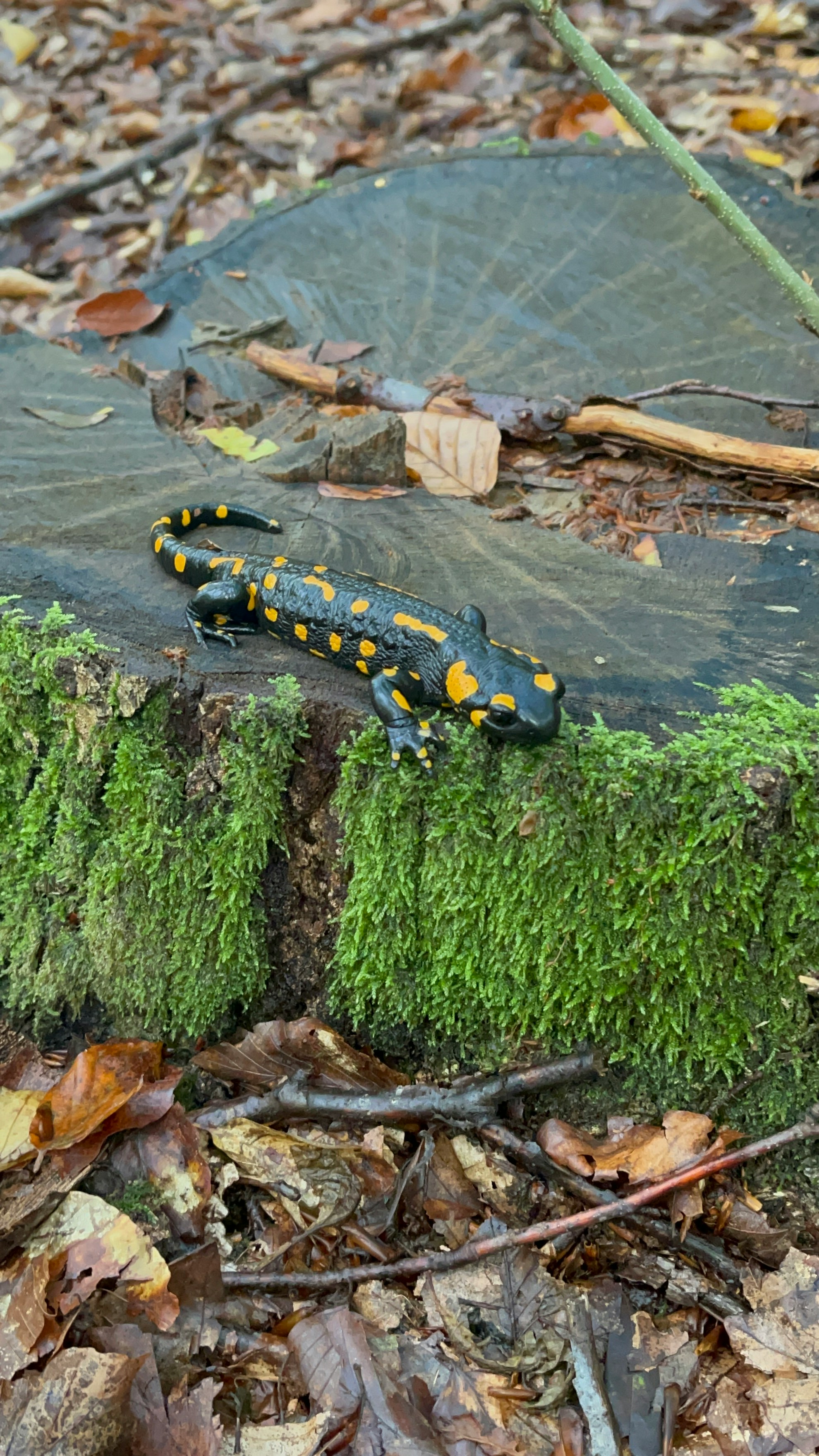
Black urodele with yellow spots, associated with humid European forests.
Quick facts
- Approximate size15–25 cm
- Average weight20–50 g
- Life expectancy20–30 years
- ActivityNocturnal
Scientific name: Salamandra salamandra
Black urodele with yellow spots, associated with humid European forests.
What this species is like in its natural environment, with the climate, shelters and resources it needs.
The fire salamander is one of the most well-known urodeles in Europe and a good indicator of healthy humid forests.
Needs humid soils, abundant shelters and clean water courses to develop its larvae.
Solitary outside of reproduction, moves slowly and shows great fidelity to its shelters.
Its parotoid and skin glands secrete irritating and toxic substances.
Forest fragmentation, road kills and emerging diseases are growing concerns.
Striking details about this species that help better understand its biology and role in ecosystems.
Summary of the most critical points if this species is kept in captivity at specialized centers.
In captivity requires cool and humid terrariums, with abundant shelters and humid but not waterlogged substrate.
Temperature should be kept moderate; does not tolerate heat well.
Not an animal to handle frequently due to its toxins and sensitive skin.
General information intended for professional facilities and educational projects. Not intended to encourage capture or improvised keeping of wild amphibians.
Can be kept in centers and by advanced hobbyists, prioritizing captive-bred specimens.
The terrarium should allow drier and more humid areas for the animal to choose.
An excellent species for educating about forests, clean water and local biodiversity.
This section has an educational purpose. Amphibian conservation involves, above all, protecting ponds, rivers, forests and wetlands, and avoiding irresponsible release of exotic species.