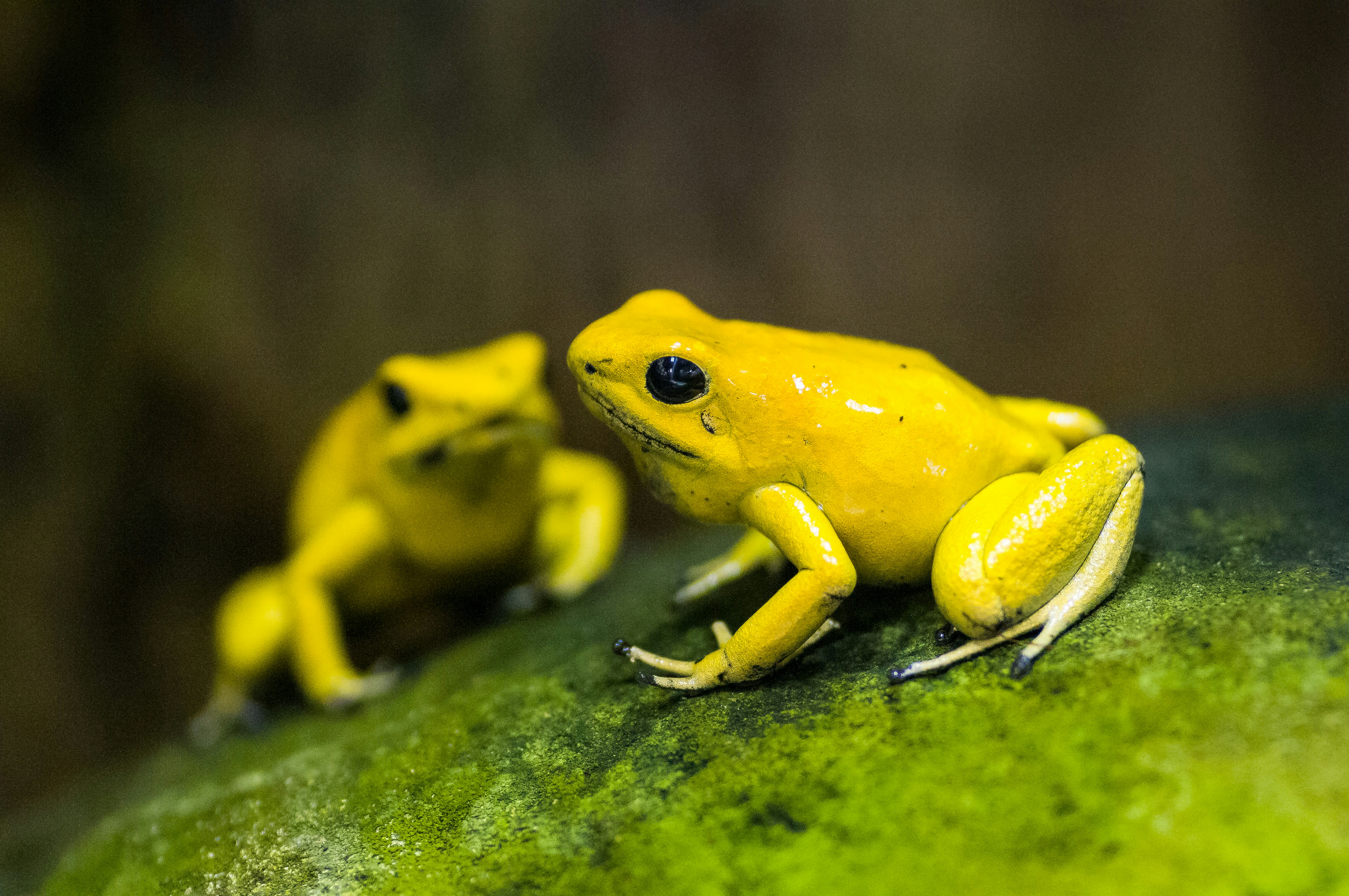
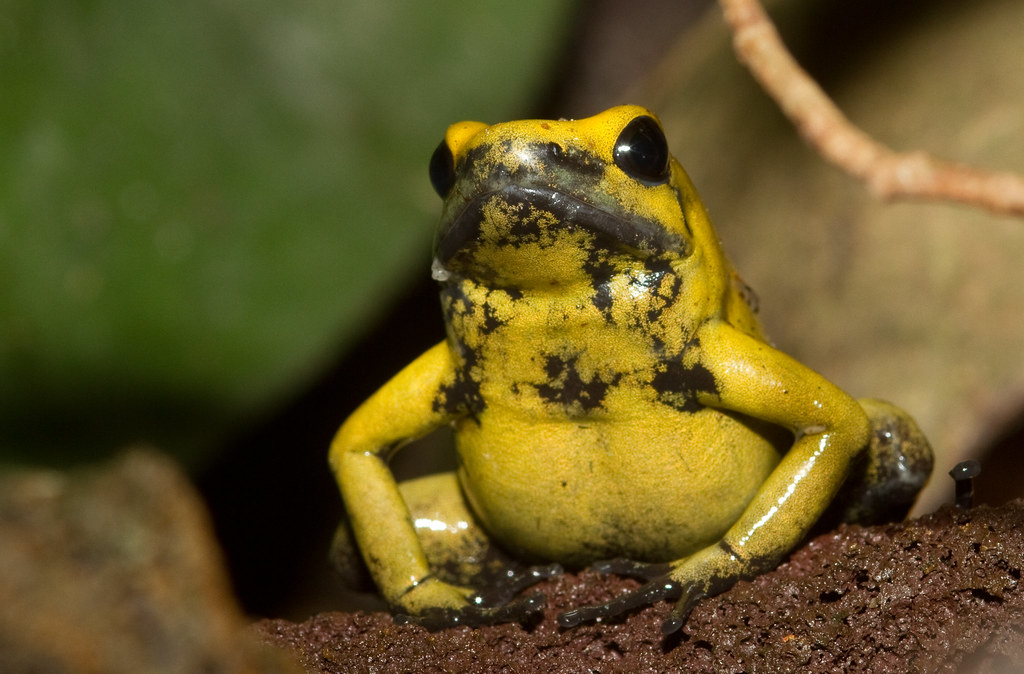
Golden Poison Frog

Scientific name: Phyllobates terribilis

Type: Amphibian Main biome: Tropical Jungle Difficulty: Alta

One of the most venomous frogs in the world, with intense yellow coloration.

Quick facts

  • Approximate size 4–5 cm
  • Average weight 8–10 g
  • Life expectancy 10–15 years (captivity)
  • Activity Diurnal
Golden Poison Frog
Golden Poison Frog

Basic information

  • 🏡 Home: very humid and rainy rainforests of the Colombian Pacific.
  • 🍏 Food: small invertebrates, especially ants and mites that provide toxic alkaloids.
  • 👫 Sexual dimorphism: males are usually slightly smaller and thinner than females.
  • 🐾 Predators: almost none in the wild; its venom is lethal to most vertebrates.

Life in the wild

What this species is like in its natural environment, with the climate, shelters and resources it needs.

Species overview

The golden poison frog is a symbol of the humid Chocó forests and a reminder of the chemical power of amphibians.

Natural habitat

Needs extremely humid rainforests, with constantly wet soils and refuges among roots and leaf litter.

Behavior

It is diurnal and territorial; males emit discrete calls to attract females and mark their space.

Special traits

Its skin concentrates batrachotoxins of enormous potency, one of the most extreme chemical defenses known in vertebrates.

Conservation and threats

Habitat loss and illegal capture for trade have placed it in serious threat categories.

Curiosities

Striking details about this species that help better understand its biology and role in ecosystems.

  • 🌧️ Indigenous communities have used its venom on arrow tips for hunting.
  • A single individual could contain enough venom to affect many mammals.
  • 🔎 In captivity, without its natural diet, it loses much of its toxicity.
  • 🧪 Despite its fame, it is a shy and reserved animal.

Welfare profile

Summary of the most critical points if this species is kept in captivity at specialized centers.

Facilities and space Critical

In captivity requires highly controlled terrariums and is considered a species for institutions or very experienced keepers.

Water, light and microclimate Critical

Water and air quality must be excellent, avoiding contaminants and chemicals.

Handling and stress Very delicate

Direct handling should be practically non-existent, performing any task with specific tools and protocols.

Golden Poison Frog in captivity

General information intended for professional facilities and educational projects. Not intended to encourage capture or improvised keeping of wild amphibians.

⚠️ Amphibians are particularly vulnerable to pollution, emerging diseases and improper handling. Before keeping species like this, it is essential to review local regulations and seek qualified advice.

Suitable facilities

Maintenance is more justifiable in centers participating in conservation or research programs.

Feeding in responsible centers

  • Diet is based on small and varied prey, supplemented to avoid deficiencies.
  • Fruit flies, springtails and micro crickets.
  • Essential calcium and vitamin supplementation.

Handling and welfare

Enclosures should allow observation without the need to open frequently.

Ethical message

At an educational level, it serves to discuss the relationship between diet, toxins and conservation of complex ecosystems.

Imagen ampliada