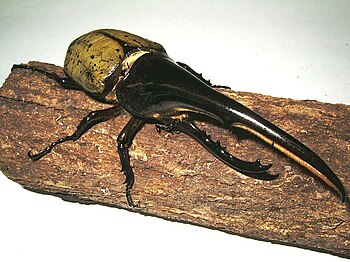
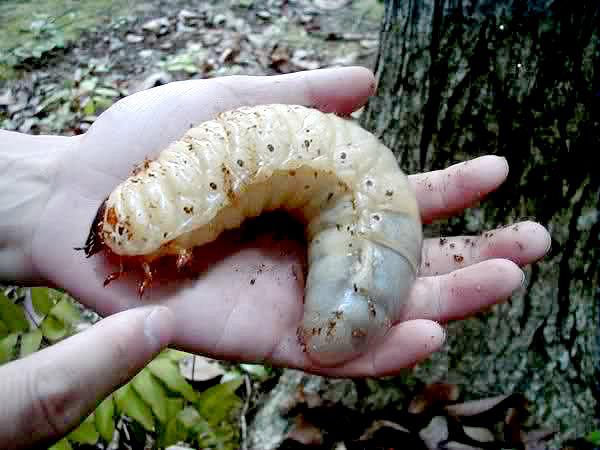
Hercules Beetle

Scientific name: Dynastes hercules

Type: Insect Main biome: Tropical Jungle Difficulty: Alta

Giant of the tropical rainforests whose legendary strength has made it a popular symbol.

Quick facts

  • LengthUp to 17 cm (males with horns)
  • Average weight30–80 g
  • Life expectancyLarva, years; Adult, months
  • ActivityMainly nocturnal
Hercules Beetle
Hercules Beetle

Basic information

  • 🏡Habitat: humid tropical rainforests with abundant wood and decomposing leaf litter.
  • 🍏Diet: larvae eat decomposing wood; adults feed on sap, fruits, and sugary juices.
  • 👫Sexual dimorphism: males with large cephalic and thoracic horns; females without horns and with more robust body.
  • 🐾Predators: birds, insectivorous mammals, and other rainforest predators; larvae are exposed in the substrate.

Life in the wild

How this species lives in its natural environment, with the climate, shelters and resources it needs.

Species overview

The Hercules beetle is an emblem of the megafauna of insects in American tropical rainforests.

Natural habitat

It needs mature forests with abundant dead wood and stable high-humidity microclimates.

Behavior

Larvae live buried for years, while adults fly at night to feed and reproduce.

Special features

Its size and horns make it one of the most recognizable beetles in the world.

Conservation and threats

Forest loss and excessive collection can affect local populations; careful management is required.

Curiosities

Striking details about this species that show its biology and ecology in a different way.

  • 🌿It is capable of moving objects several times its weight.
  • Males use their horns to fight for access to females.
  • 🔎Humidity changes can make its shell appear lighter or darker.
  • 🧬It is highly sought after in entomological collections and in the exotic pet trade.

Welfare profile

Aspects to consider if this species is kept in captivity in specialized centers.

Space and facilitiesHigh

In captivity it needs large volumes of substrate rich in organic matter for larval development.

Environmental conditionsHigh

Maintaining stable humidity and temperature is key to its survival.

Handling and stressHigh

Handling and transport can cause injuries to horns and legs.

Hercules Beetle in captivity

General information aimed at professional facilities and authorized centers.

⚠️ Before keeping insects like this species, it is important to consult local regulations and always consider whether it is really necessary to remove them from their natural environment.

Suitable facilities

Its maintenance should be reserved for specialized institutions and experienced breeders.

Feeding in responsible centers

It is preferable to use captive-bred lines rather than capture wild specimens.

Handling and welfare

Educational projects can use it to discuss the role of insects in the decomposition of organic matter.

Ethical message

Trade must be regulated to avoid pressure on wild populations.

Imagen ampliada