Hoatzin
Scientific name: Opisthocomus hoazin
Leaf-eating specialist with a fermenting digestive system similar to ruminants.
Quick facts
- Approximate length 60–70 cm
- Average weight 700–900 g
- Life expectancy 15–20 years (estimated)
- Activity Diurnal
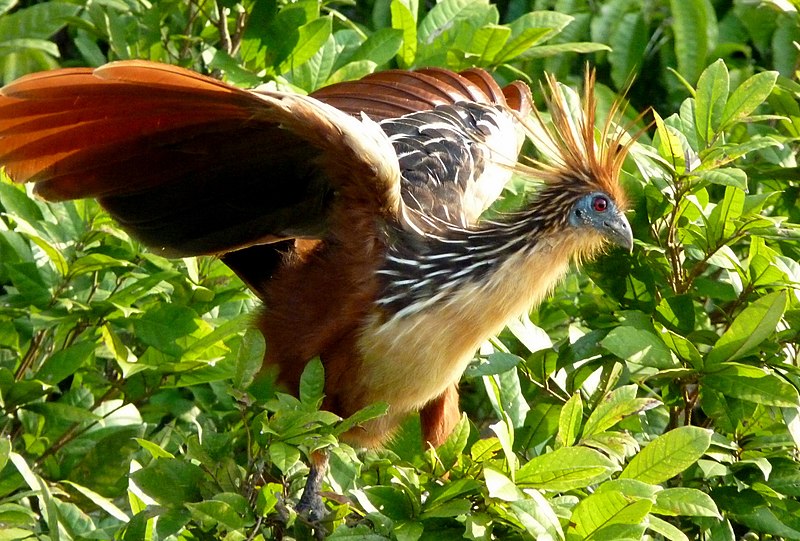
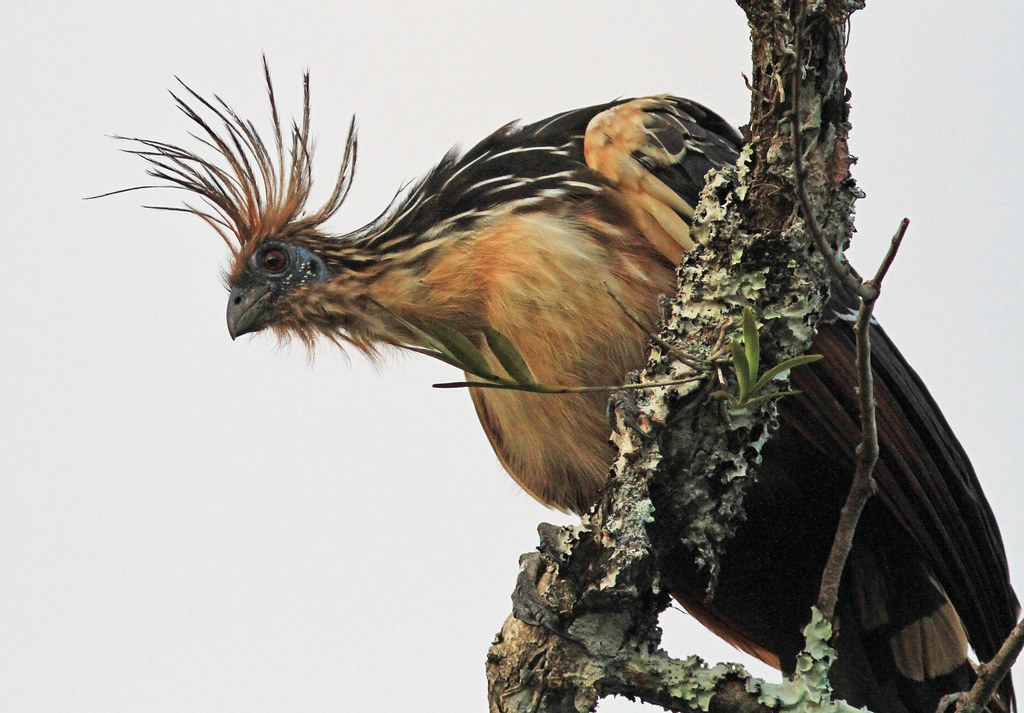
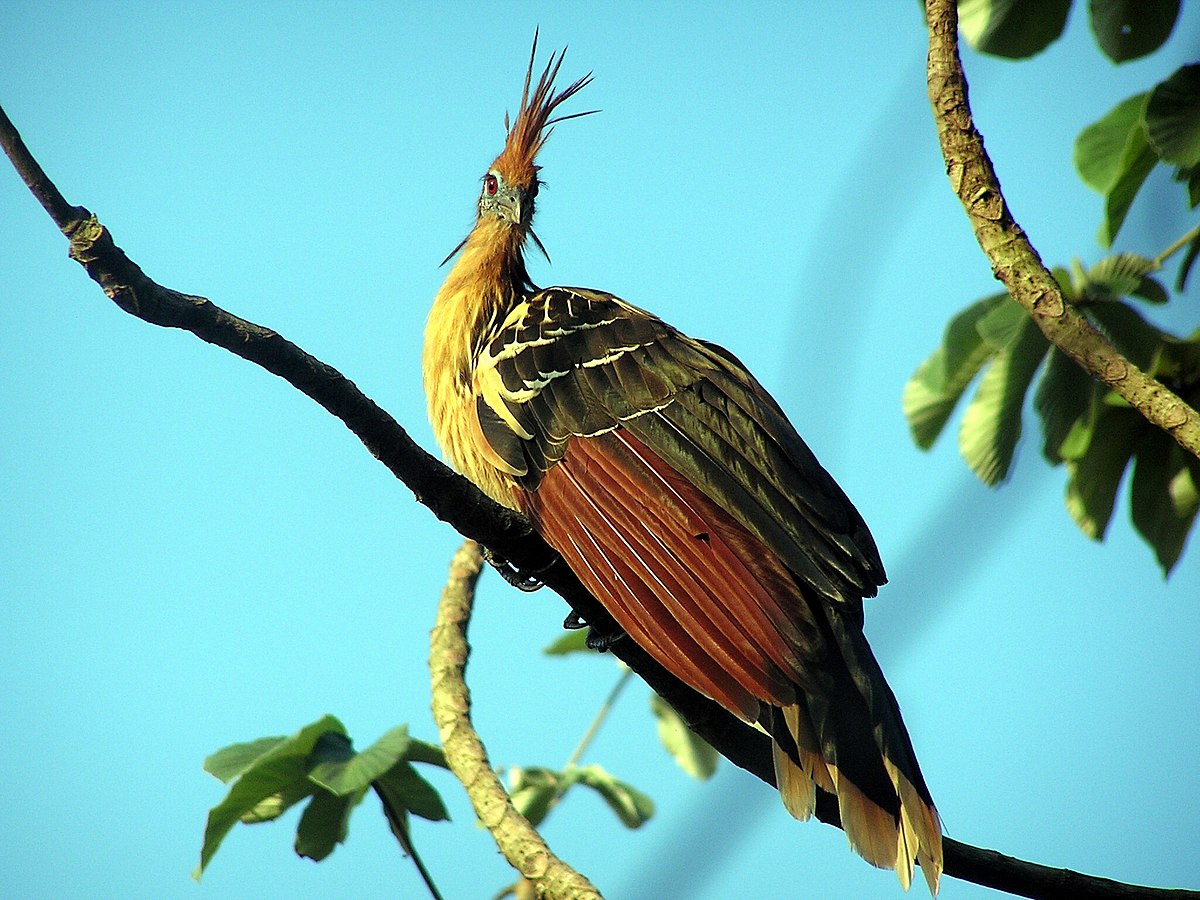
Scientific name: Opisthocomus hoazin
Leaf-eating specialist with a fermenting digestive system similar to ruminants.
What Hoatzin is like in its natural environment, with the climate, shelters and resources it needs.
The hoatzin is one of the most unique birds in the Amazon, with unique biology and appearance.
Inhabits dense vegetation along river and lagoon edges, using branches over water for moving, resting and nesting.
Moves clumsily among branches and usually lives in small family groups. When threatened, chicks can drop into the water and climb back up.
Its folivorous diet and fermenting digestive system differentiate it from most birds. Chicks with wing claws recall primitive characteristics.
Currently not among the most threatened species, but depends on conservation of Amazonian wetlands and riparian forests.
Striking details about Hoatzin that show its biology and ecology in a different way.
Aspects to consider if Hoatzin is kept in captivity at specialized centers.
Would require enclosures with dense vegetation over water and constant access to appropriate leaves for diet, something very complex to reproduce.
Water quality and vegetation stability are key to allowing natural behavior.
Direct handling should be very limited; it is a bird that stresses easily and whose welfare depends on very specific environmental conditions.
General information aimed at professional facilities and authorized centers. Not intended to promote private keeping of wildlife without proper training and permits.
Rarely kept in captivity; attempts require complex wetland enclosures and carefully selected leaf diets.
Any ex situ program must rely on prior research and close collaboration with specialists.
The public should understand that many species, like the hoatzin, are not good candidates for captive exhibition.
Priority should be conserving their Amazonian habitats, which also benefit many other species.
This information has an educational purpose and does not replace the advice of specialized professionals or consultation of current wildlife and animal welfare legislation.