Molly
Scientific name: Poecilia sphenops y variedades
Active fish that adapts well to peaceful community aquariums with good water quality.
Quick facts
- Approximate size6–10 cm
- Average weight4–8 g
- Life expectancy3–5 years (captivity)
- ActivityDiurnal
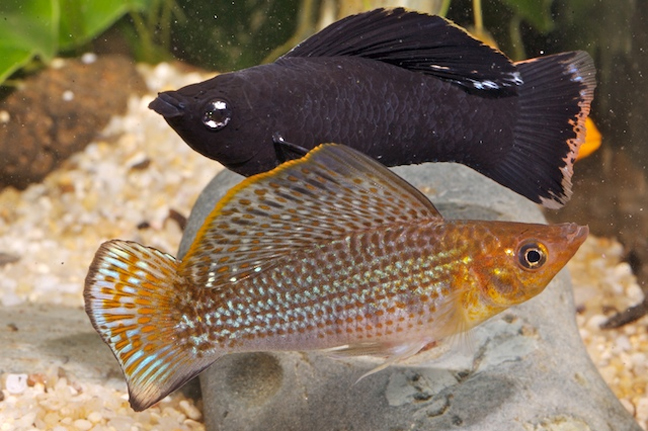
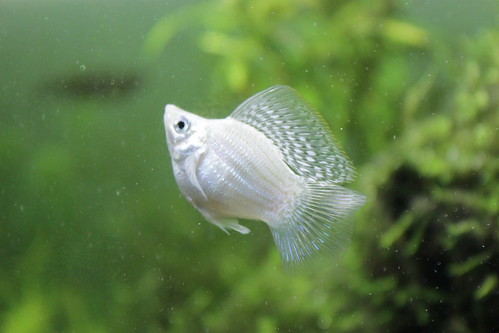
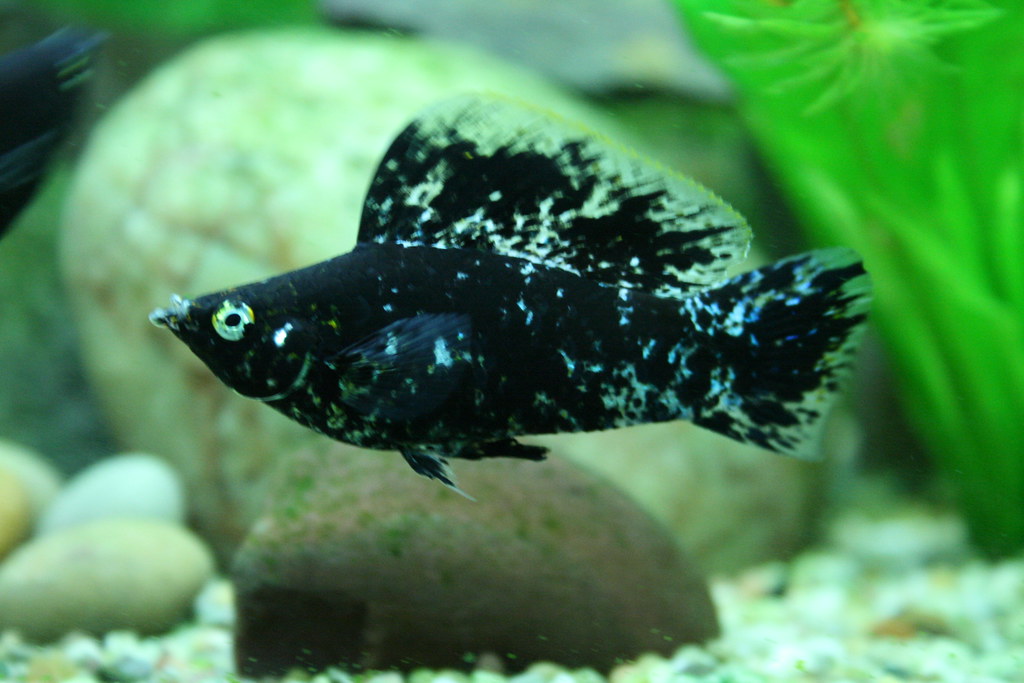
Scientific name: Poecilia sphenops y variedades
Active fish that adapts well to peaceful community aquariums with good water quality.
How this species lives in its natural environment, with the waters, shelters and resources it needs.
The molly is a versatile and robust fish widely used in community aquariums.
It occupies warm waters with vegetation and access to more open areas for swimming.
It forms active groups; males persistently court females.
Its tolerance to slightly brackish waters makes it interesting for coastal biotopes.
As a common species and widely bred in captivity, it is not considered globally threatened.
Striking details about this species that help better understand its biology and role in aquatic ecosystems.
Summary of the most critical points if this species is kept in aquariums, ponds or specialized facilities.
It needs aquariums with space to swim and vegetation where to take refuge.
It requires stable and well-filtered water; tolerates a wide range of parameters if they are stable.
It is quite hardy and tolerates human presence well when conditions are adequate.
General information aimed at professional facilities, public aquariums and educational projects. It does not intend to promote capture or impulsive keeping of aquatic fauna.
Ideal for community aquariums with calm and similarly sized companions.
The diet includes quality dry food, algae, and live or frozen prey.
Dense vegetation helps fry survive and reduces stress in adults.
It is important to avoid releases into natural waters, as they can compete with native species.
Many aquatic species suffer from massive captures, uncontrolled trade and irresponsible releases. The priority should always be to protect rivers, lakes and seas, reduce pollution and consume seafood responsibly.