Monarch Butterfly

Scientific name: Danaus plexippus

Type: Insect Main biome: Temperate Forest Difficulty: Alta

Migratory lepidopteran that travels thousands of kilometers between North America and Mexico.

Quick facts

  • Wingspan8–10 cm
  • Average weightApprox. 0.5 g
  • Life expectancyFrom weeks to several months (migratory generation)
  • ActivityDiurnal
Monarch Butterfly
Monarch Butterfly
Monarch Butterfly

Basic information

  • 🏡Habitat: grasslands, fields, gardens, and open forests where there are plants of the genus Asclepias.
  • 🍏Diet: caterpillars feed almost exclusively on milkweed; adults sip nectar from various flowers.
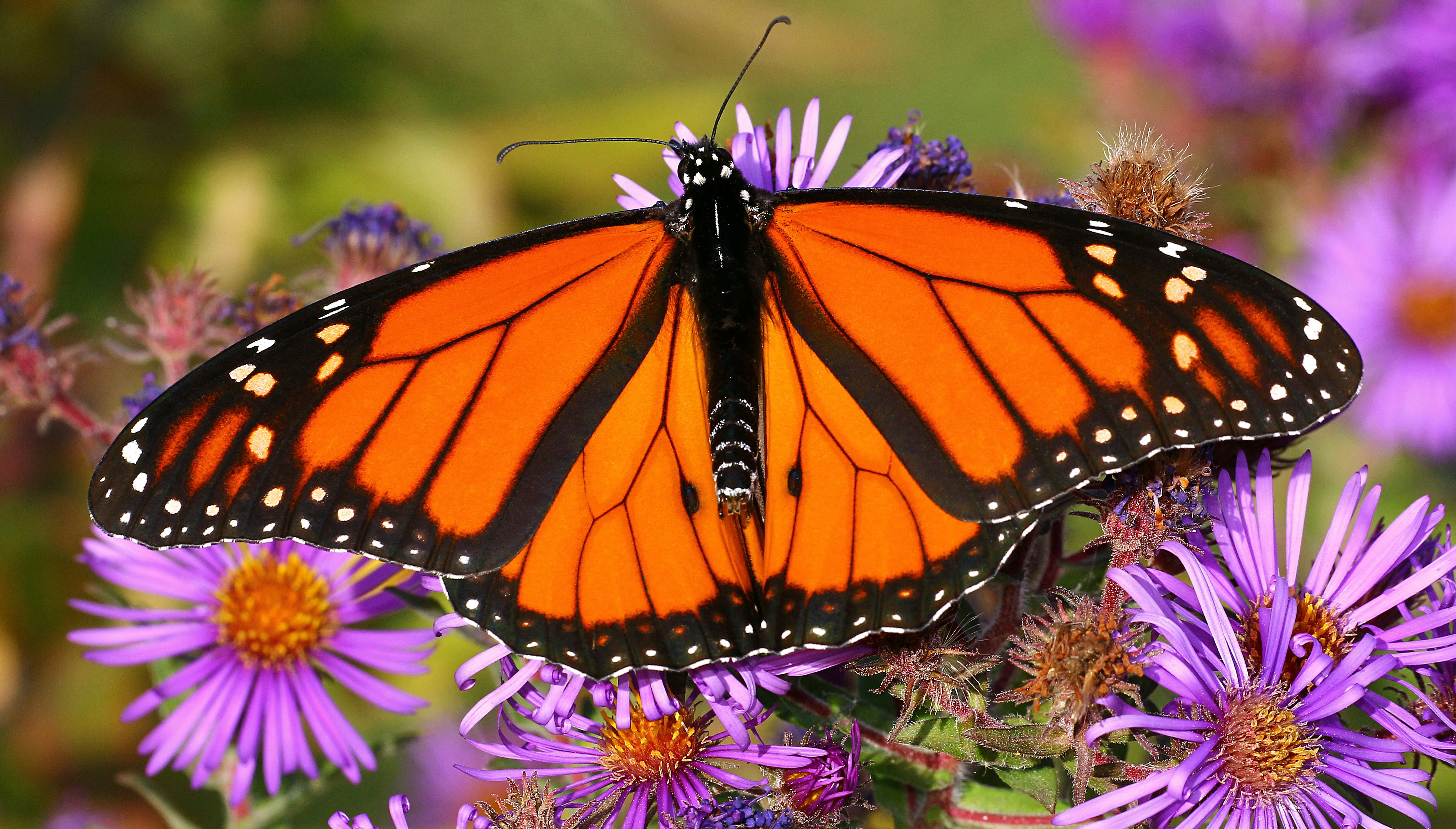
  • 👫Sexual dimorphism: males have a black spot on each hind wing and slightly finer veins.
  • 🐾Predators: some birds and arthropods, although their toxicity deters many predators.

Life in the wild

The monarch butterfly is an icon of animal migrations.

Migration cycle

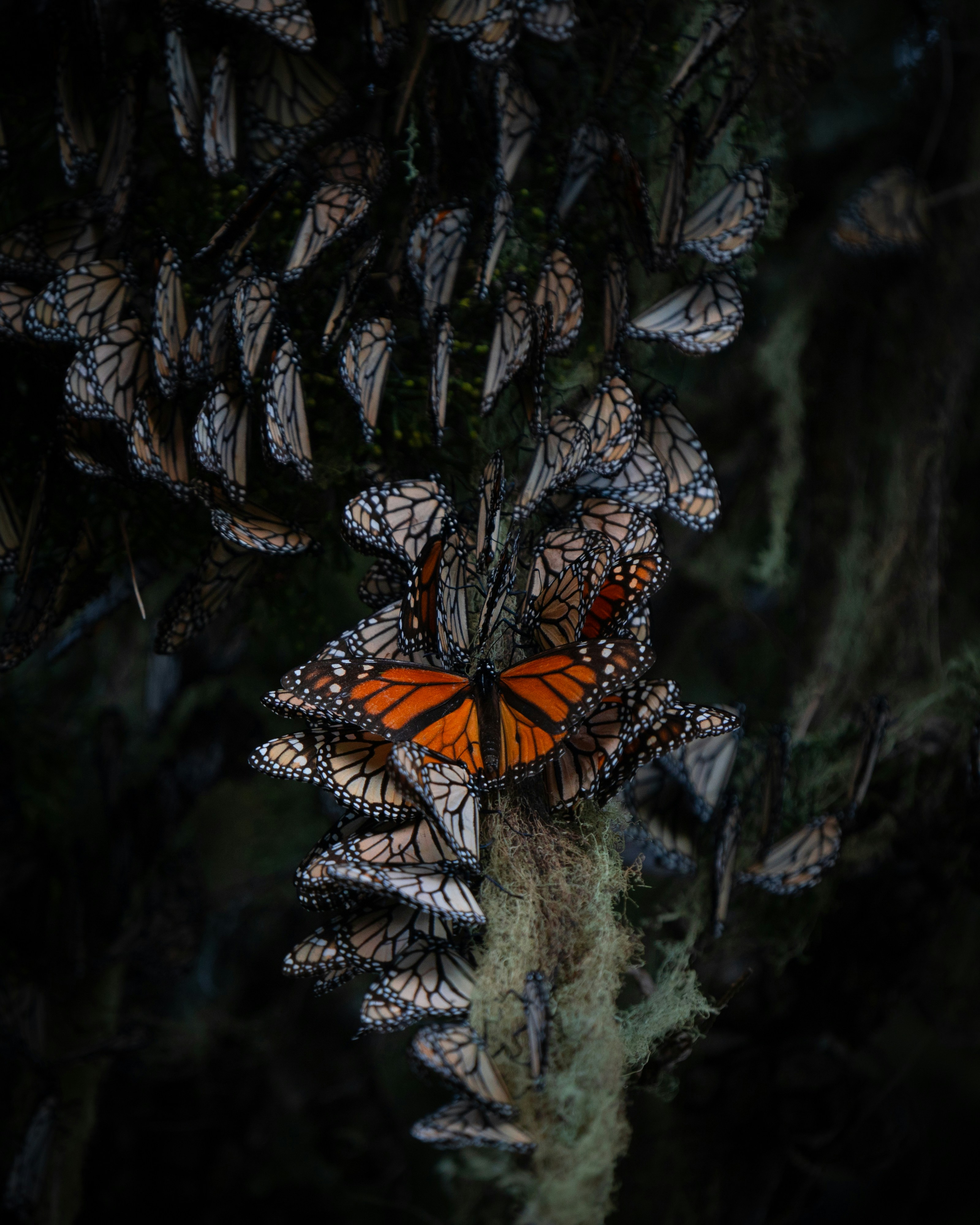
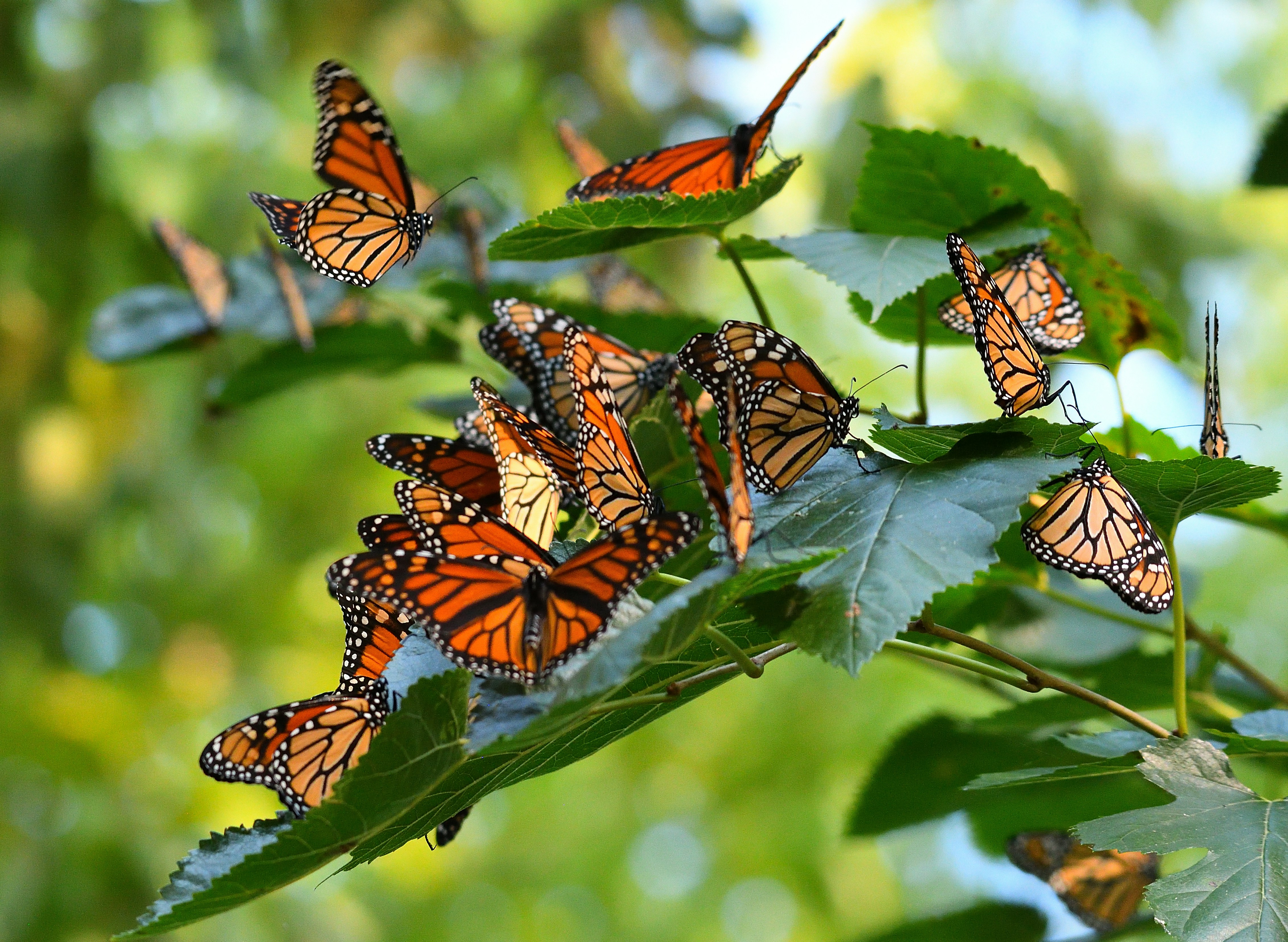
Each year, millions of monarchs travel from Canada and the United States to the oyamel forests of Mexico, where they spend the winter grouped in large colonies.

Host plants

Caterpillars feed almost exclusively on plants of the genus Asclepias (milkweed), from which they obtain toxins that make them unappetizing to many predators.

Ecological importance

They act as pollinators and are part of complex food webs. Their disappearance would be a significant loss for the ecosystems where they live.

Threats

Habitat loss, pesticide use, and climate change are reducing their populations and fragmenting their migration routes.

Curiosities

Surprising aspects of the biology and migration of the monarch butterfly.

  • 🧭The complete migration is carried out in several generations: no butterfly makes the entire round trip.
  • 🌎It recognizes patterns of the sun and the Earth's magnetic field to orient itself.
  • 🌿Its orange and black colors warn predators of its toxicity.
  • 📏Wintering colonies can completely cover tree branches.

Monarch butterfly in captivity?

This species is closely linked to its migrations and natural habitats. In general, it is not considered a suitable companion animal.

⚠️ Indiscriminate breeding or trade of monarch butterflies can interfere with wild populations and conservation projects. Any handling must be linked to serious scientific or educational initiatives.
Suitability as a petLow

Its migration cycle and specific needs make it inappropriate as a companion animal for individuals.

Educational / conservation projectsMedium

In some places, they are bred in a controlled manner for environmental education or research, always under scientific criteria and specific regulations.

Imagen ampliada