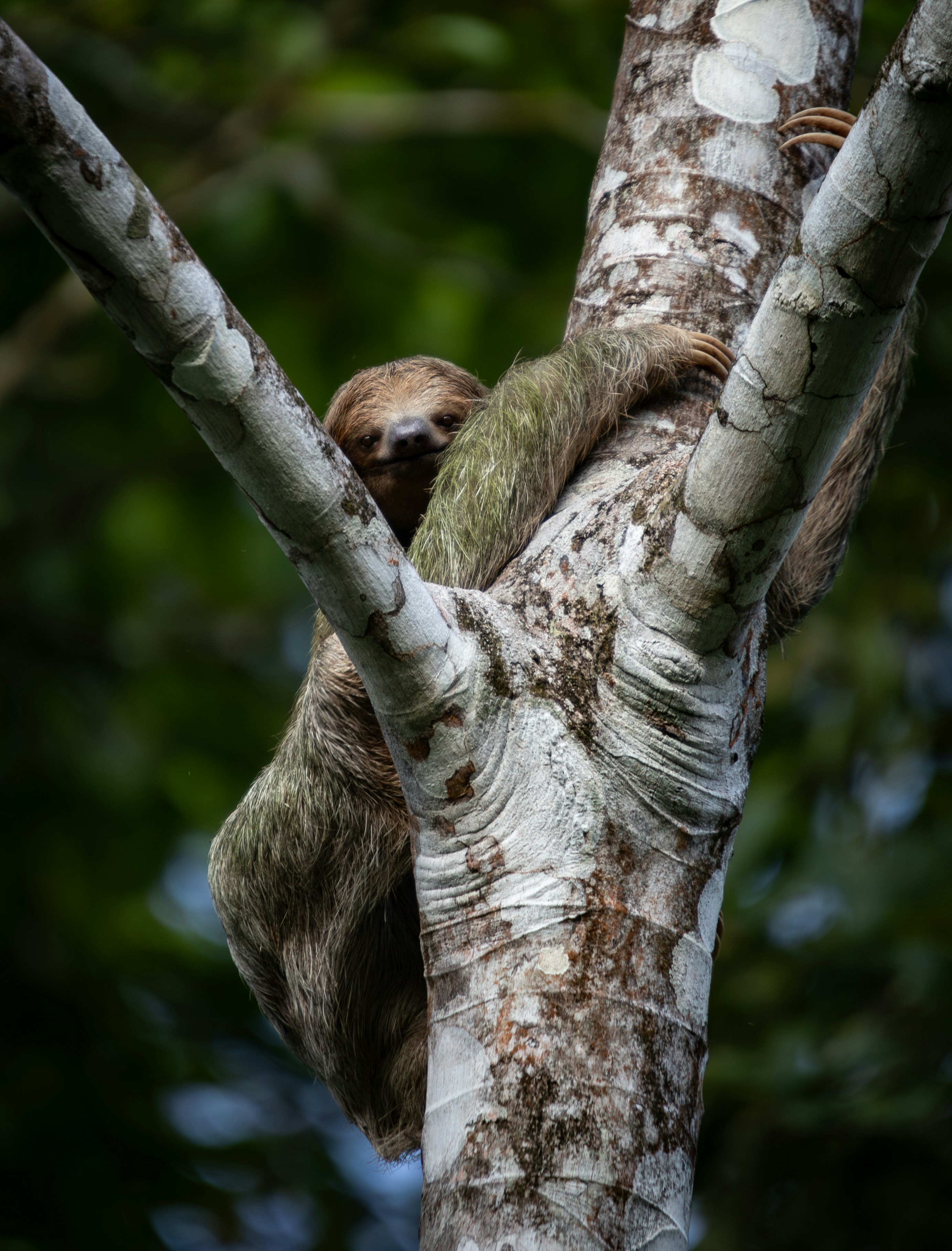
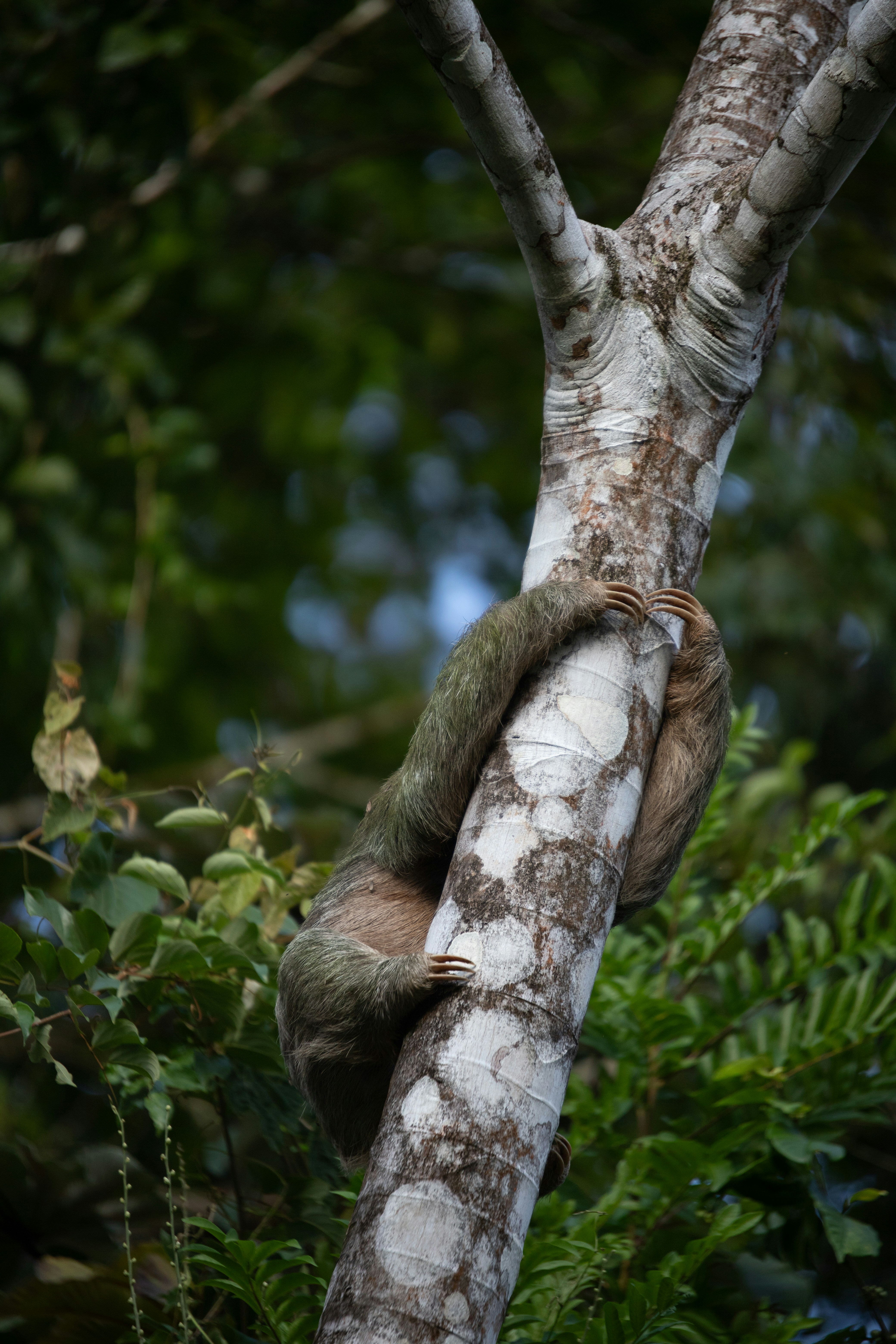
Three-Toed Sloth

Scientific name: Bradypus variegatus

Type: Mammal Main biome: Tropical Jungle Difficulty: Alta

Arboreal mammal with very slow movements that spends most of its time hanging from trees.

Quick facts

  • Approximate size45–75 cm
  • Average weight3.5–5.5 kg
  • Life expectancy20–30 years
  • ActivityDiurnal / nocturnal
Three-Toed Sloth
Three-Toed Sloth

Basic information

  • 🏡Home: humid tropical rainforests, where it lives almost exclusively in the tree canopy.
  • 🍏Food: leaves and tender shoots from certain tree species, which it digests very slowly.
  • 👫Sexual dimorphism: in some species males have different colored dorsal patches; females have more uniform tones.
  • 🐾Predators: jaguars, ocelots, large raptors and occasionally humans; vulnerable when descending to the ground.

Life in the wild

What this species is like in its natural environment, with the climate, shelters and resources it needs.

Species overview

The three-toed sloth is an emblematic arboreal mammal of American tropical rainforests, adapted to a very slow life among the branches.

Natural habitat

Prefers humid forests with closed canopy and abundant lianas, allowing it to move without descending to the ground.

Behavior

Spends most of the day inactive, clinging to branches. Moves extremely slowly and dedicates many hours to resting and digesting.

Special traits

Its low body temperature, slow digestion and musculature adapted for prolonged gripping reduce energy expenditure.

Conservation and threats

Deforestation and forest fragmentation drastically reduce its habitat. Road kills and capture for tourist photos are also threats.

Curiosities

Striking details about this species that show its biology and ecology in a different way.

  • 🌍Its metabolism is so slow it can take days to digest a meal.
  • Descends to the ground only every few days to defecate.
  • 🔎Its fur hosts algae and small invertebrates that help it camouflage.
  • 🧠Its lifestyle depends entirely on the presence of mature, connected trees.

Welfare profile

Aspects to consider if this species is kept in captivity at specialized centers.

Facilities and spaceCritical

In captivity would need tall enclosures with many trees or structures allowing continuous hanging.

Light, temperature and environmentCritical

Requires very specific temperature, humidity and diet; small changes can affect digestion and overall health.

Handling and stressVery delicate

Extremely sensitive to stress from handling and constant human presence.

Three-Toed Sloth in captivity

General information aimed at professional facilities and authorized centers. Not intended to promote private keeping of wildlife without proper training and permits.

⚠️ Capture and trade of mammals like this species are regulated in many countries. Essential to verify legal origin of animals and prioritize responsible breeding programs and habitat conservation.

Suitable facilities

Maintenance should be limited to centers with rescue or conservation projects in countries of origin.

Feeding in responsible centers

  • Diet must closely replicate the leaves it consumes in the wild.
  • Fresh cecropia leaves and other specific species.
  • Difficult outside its natural range.

Handling and welfare

Handling should be minimal, avoiding picking up the animal except for urgent veterinary reasons.

Ethical message

A clear example of a species that suffers especially in captivity and whose protection depends on conserving its rainforest.

Imagen ampliada